 Back
lab 14 - Microbiology Lab Study Guide: Biochemical Reactions (Coagulase, Urease, Catalase, Oxidase)
Study Guide - Smart Notes
 Tailored notes based on your materials, expanded with key definitions, examples, and context.
lab 14 - Microbiology Lab Study Guide: Biochemical Reactions (Coagulase, Urease, Catalase, Oxidase)
Q1. What is the biological basis of the coagulase test, and how is it used to distinguish Staphylococcus aureus from Staphylococcus epidermidis?
Background
Topic: Coagulase Test
This question tests your understanding of the coagulase enzyme and its role in differentiating pathogenic Staphylococcus species.
Key Terms and Concepts:
Coagulase: An enzyme that causes plasma to clot by converting fibrinogen to fibrin.
Staphylococcus aureus: Pathogenic, coagulase-positive.
Staphylococcus epidermidis: Commensal, coagulase-negative.
Step-by-Step Guidance
Understand that coagulase is produced by S. aureus but not by S. epidermidis.
Recognize that the test involves mixing bacteria with plasma and observing for clot formation.
Clotting indicates a positive coagulase reaction, which is characteristic of S. aureus.
Consider why this test is important for distinguishing between pathogenic and non-pathogenic staphylococci.
Try solving on your own before revealing the answer!
Final Answer:
The coagulase test detects the presence of the coagulase enzyme, which causes plasma to clot. S. aureus is coagulase-positive, forming clots, while S. epidermidis is coagulase-negative and does not. This test is used to differentiate pathogenic S. aureus from other staphylococci.
Q2. What is the principle of the urease test, and how do you interpret the results?
Background
Topic: Urease Test
This question tests your understanding of urease enzyme activity and its detection using pH indicators.
Key Terms and Formula:
Urease: Enzyme that hydrolyzes urea into ammonia and carbon dioxide.
Phenol red: pH indicator that turns pink in alkaline conditions.
Step-by-Step Guidance
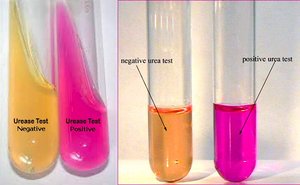
Know that urease-positive bacteria break down urea, releasing ammonia and increasing pH.
Phenol red changes from yellow (acidic) to pink (alkaline) as pH increases.
Compare the color of the medium after incubation to determine if the organism is urease-positive or negative.
Consider the implications for bacterial identification based on urease activity.
Try solving on your own before revealing the answer!
Final Answer:
Urease-positive organisms turn the medium bright pink due to ammonia production and increased pH. Urease-negative organisms leave the medium yellow. This test helps identify bacteria like Proteus vulgaris (positive) and E. coli (negative).
Q3. What is the biological basis of the catalase test, and how do you interpret the results?
Background
Topic: Catalase Test
This question tests your understanding of catalase enzyme activity and its role in detoxifying hydrogen peroxide.
Key Terms and Formula:
Catalase: Enzyme that breaks down hydrogen peroxide into water and oxygen.
Hydrogen peroxide: Toxic byproduct of aerobic metabolism.
Step-by-Step Guidance
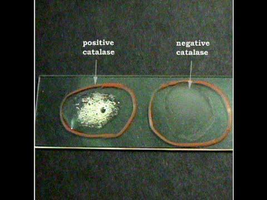
Understand that catalase-positive bacteria produce bubbles when hydrogen peroxide is added.
Bubbles indicate oxygen release, confirming catalase activity.
Compare reactions between different bacterial species to determine catalase status.
Consider the clinical significance of catalase testing in differentiating bacterial families.
Try solving on your own before revealing the answer!
Final Answer:
Catalase-positive bacteria produce visible bubbles due to oxygen release when hydrogen peroxide is added. Catalase-negative bacteria do not produce bubbles. This test distinguishes Streptococcaceae (negative) from Micrococcaceae (positive).
Q4. What is the principle of the oxidase test, and how do you interpret the results?
Background
Topic: Oxidase Test
This question tests your understanding of cytochrome oxidase activity and its detection using colorimetric reagents.
Key Terms and Formula:
Cytochrome oxidase: Enzyme involved in the electron transport chain.
Oxidase reagent: Colorless compound that turns purple when oxidized.
Step-by-Step Guidance
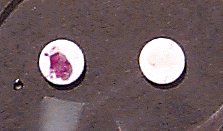
Know that oxidase-positive bacteria rapidly turn the reagent purple due to cytochrome oxidase activity.
Observe the color change within 30 seconds to determine positivity.
Compare reactions between different bacterial species to identify oxidase status.
Consider the role of the electron transport chain in bacterial respiration.
Try solving on your own before revealing the answer!
Final Answer:
Oxidase-positive bacteria turn the reagent purple within 30 seconds, indicating cytochrome oxidase activity. Oxidase-negative bacteria do not change color. This test helps differentiate Pseudomonas (positive) from Enterobacteriaceae (negative).
