Back
BackMicrobiology MBY161: Study Guide and Syllabus Overview
Study Guide - Smart Notes
 Tailored notes based on your materials, expanded with key definitions, examples, and context.
Introduction to Microbiology MBY161
Overview
This study guide provides a comprehensive introduction to the field of Microbiology, as taught in the MBY161 module at the University of Pretoria. The course covers the diversity of microorganisms, their structure and function, microbial growth and control, principles of disease and epidemiology, and selected examples of microbial diseases. The curriculum is designed to build foundational knowledge for advanced studies in microbiology and related disciplines.
Module Structure and Themes
Core Topics
The Microbial World and You: Definitions, classification, history, and significance of microorganisms. Includes bacteria, archaea, viruses, fungi, and protozoa.
Observing Microorganisms: Principles and applications of microscopy, including light and electron microscopy, staining techniques, and specimen preparation.
Cell Structure and Function: Comparative anatomy of prokaryotic and eukaryotic cells, including cell walls, membranes, organelles, and specialized structures.
Microbial Growth: Physical and chemical requirements, growth media, measurement methods, and growth phases.
Control of Microbial Growth: Physical and chemical methods, sterilization, disinfection, and evaluation of antimicrobial agents.
Antimicrobial Drugs: Mechanisms of action, resistance, and clinical applications.
Classification of Microorganisms: Taxonomy, phylogeny, and identification methods.
Principles of Disease and Epidemiology: Pathogenesis, Koch’s postulates, disease classification, and epidemiological concepts.
Microbial Pathogenicity: Mechanisms of infection, host interactions, and toxin production.
Bacterial and Viral Diseases: Selected examples, including mechanisms, symptoms, and treatments.
Viruses, Viroids, and Prions: Structure, taxonomy, replication, and clinical significance.
Eukaryotic Microorganisms: Fungi, algae, protozoa, their roles in health, disease, and the environment.
Learning Outcomes
Define and classify microorganisms and understand their roles in nature and human health.
Explain the principles and applications of microscopy and staining.
Describe the structure and function of prokaryotic and eukaryotic cells.
Understand microbial growth requirements and methods for measuring and controlling growth.
Discuss the mechanisms of antimicrobial drugs and microbial resistance.
Apply principles of taxonomy and systematics to classify microorganisms.
Explain the principles of disease, epidemiology, and microbial pathogenicity.
Discuss selected examples of bacterial, viral, fungal, and protozoan diseases.
Assessment and Tutorials
Assessment Structure
Class tests (10% of semester mark)
Tutorials (30% of semester mark)
Semester tests (60% of semester mark)
Final examination (50% of final year mark)
Attendance and completion of all tutorials and assessments are compulsory for passing the module.
Tutorial Themes
Tutorial 1: Microorganism definitions, classification, history, microscopy, and cell anatomy.
Tutorial 2: Microbial growth requirements, cultivation, measurement, and growth control.
Tutorial 3: Classification, epidemiology, and mechanisms of disease and pathogenicity. Includes a practical experiment on antimicrobial efficacy.
Tutorial 4: Viruses, viroids, prions, and selected viral diseases.
Prescribed Textbook
Tortora G.J., Funke B.R., Case C.L. Microbiology: An Introduction, 13th Edition, Pearson (or 12th Edition).
Lecture slides and additional resources are available on the Mastering Microbiology platform via ClickUP.
Contact and Support
Lecturers and tutorial coordinators are available via email for appointments and academic support.
All official updates and communications are posted on ClickUP.
Image
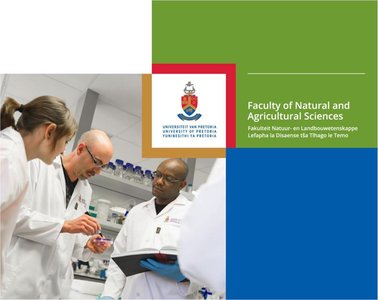
The following image is directly relevant as it visually represents the Faculty of Natural and Agricultural Sciences, which hosts the MBY161 Microbiology module: