 Back
BackMicrobiology Study Guide: Fungi, Protists, Viruses, and Epidemiology
Study Guide - Smart Notes
 Tailored notes based on your materials, expanded with key definitions, examples, and context.
Fungi: Structure, Reproduction, and Classification
Unique Structural Features and Organization of Fungi
Fungi are eukaryotic organisms with distinct structural features that differentiate them from other life forms. Their cell walls are composed primarily of chitin, a strong acetylated amino polysaccharide, and their cell membranes contain ergosterols, which are unique to fungi. - Cell Wall: Chitin provides tensile strength, making fungal cell walls robust. - Cell Membrane: Ergosterols are similar to cholesterol and are targeted by antifungal drugs like nystatin. - Hyphae: Most fungi possess hyphae, which are filamentous structures; some yeasts lack hyphae. - Nutrition: Fungi absorb nutrients; their cell walls prevent endocytosis.
Comparison of Fungi and Bacteria
Fungi and bacteria differ in cell type, membrane composition, cell wall structure, and reproductive mechanisms.
Feature | Fungi | Bacteria |
|---|---|---|
Cell Type | Eukaryotic | Prokaryotic |
Cell Membrane | Sterols present | Sterols absent |
Cell Wall | Glucans, mannans, chitin | Peptidoglycan |
Spores | Sexual & asexual | Endospores (not for reproduction) |
Metabolism | Chemoheterotrophic, aerobic/facultative anaerobic | Varied: heterotrophic, autotrophic, aerobic/anaerobic |
Forms of Fungal Reproduction
Fungi reproduce both sexually and asexually, with mechanisms varying between yeasts and filamentous fungi. - Asexual Spores: Includes sporangiospores, conidiospores, arthrospores, blastoconidia, and chlamydospores. - Sexual Spores: Zygospores, ascospores, and basidiospores are formed by fusion of haploid cells. - Yeast Reproduction: Fission yeasts divide symmetrically; budding yeasts divide asymmetrically, leaving bud scars. - Filamentous Fungi: Hyphae extend via vesicle transport and turgor pressure. 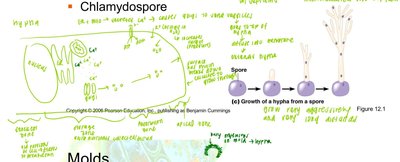
Fungal Alternation of Generations
Many fungi exhibit alternation of generations, switching between haploid and diploid phases. - Example: Saccharomyces cerevisiae alternates between diploid vegetative cells and haploid spores, triggered by environmental stress. - Sexual Reproduction: Involves plasmogamy (fusion of cytoplasm), karyogamy (fusion of nuclei), and meiosis.
Lichens
Lichens are mutualistic associations between a fungus and a photosynthetic partner (alga or cyanobacterium). - Structure: Alga produces carbohydrates; fungus provides holdfast. - Types: Foliose, fruticose, and crustose lichens.
Challenges in Eukaryotic Classification
Eukaryotes are difficult to classify due to reductive and convergent evolution, size, complexity, and endosymbiotic relationships. - Reductive Evolution: Loss of genes over time, leading to new forms. - Convergent Evolution: Similar features evolve independently. - Endosymbiosis: One organism lives inside another, e.g., mitochondria and chloroplasts.
Protists: Diversity, Motility, and Reproduction
Classification and Types of Protists
Protists are eukaryotic organisms not classified as animals, plants, or fungi. They include algae, plankton, and protozoa. - Algae: Contain chloroplasts and cellulose; can be unicellular or multicellular. - Plankton: Classified by size: microplankton, nanoplankton, picoplankton, and fantoplankton. - Protozoa: Highly diverse, with many kingdoms; include zooplankton (animal-like) and phytoplankton (plant-like).
Mechanisms of Motility in Protists
Protists move using various structures: - Flagella: Eukaryotic flagella; stramenopiles have hairy flagella. - Cilia: Short, numerous structures for movement. - Amoeboid Movement: Pseudopodia extend and contract. - Gliding: Movement on protein or carbohydrate slime. - Non-motile: Sporozoans lack motility.
Forms of Protozoa Reproduction
Protozoa reproduce both asexually and sexually. - Asexual: Fission, budding, or schizogony (multiple fission). - Sexual: Conjugation involves exchange of genetic material via a connecting tube. - Life Cycle: Trophozoite (active) → cyst (dormant) → reactivation. 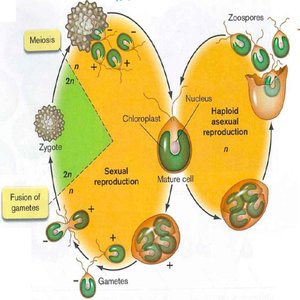
Endosymbiosis
Endosymbiosis is a relationship where one organism lives inside another, leading to organelles like mitochondria and chloroplasts. - Primary Endosymbiosis: Cyanobacteria give rise to chloroplasts. - Secondary Endosymbiosis: Protists engulf other eukaryotes, resulting in multiple membranes.
Viruses: Structure, Classification, and Replication
Structural Components of Viruses
Viruses are the smallest replicating units, consisting of: - Genome: DNA or RNA. - Capsid: Protein coat. - Envelope: Some viruses have a lipid envelope. - Spikes: Glycoproteins for host attachment.
Classification of Viruses
Viruses are classified by shape, genome type, and host range. - Shape: Helical, polyhedral, enveloped, complex. - Genome: DNA (ds or ss), RNA (ds or ss), retroviruses. - Baltimore Classification: Based on genome and replication pathway to mRNA.
Significance of Viral Classification
Classification helps predict replication mechanisms, host range, and pathogenicity.
Replication Events for Different Viruses (Baltimore Scheme)
- Group 1: dsDNA viruses (e.g., herpes) - Group 2: ssDNA viruses (e.g., parvovirus) - Group 3: dsRNA viruses (e.g., rotavirus) - Group 4: ssRNA (+) viruses (e.g., coronavirus) - Group 5: ssRNA (-) viruses (e.g., influenza) - Group 6: Retroviruses (e.g., HIV) - Group 7: Pararetroviruses (e.g., hepatitis B)
Virus, Viroids, and Prions
- Virus: Infectious particle with nucleic acid and protein coat. - Viroid: Naked RNA, no protein coat, infects plants. - Prion: Misfolded protein, causes neurodegenerative diseases.
Prophages vs. Proviruses
- Prophage: Bacteriophage DNA integrated into bacterial genome. - Provirus: Viral DNA integrated into eukaryotic genome (e.g., retroviruses).
Lytic, Lysogenic, and Slow Release Cycles
- Lytic Cycle: Virus replicates and lyses host cell. - Lysogenic Cycle: Viral genome integrates and replicates with host. - Slow Release: Virus exits cell without killing it.
Viral and Phage Reproductive Stages
- Attachment, Penetration, Biosynthesis, Maturation, Release are common to both.
Epidemiology and Pathogen Identification
Value of Identifying Pathogens
Identifying pathogens is crucial for diagnosis, treatment, and public health management.
Methods of Pathogen Identification
- Culture: Growing organisms in lab. - Staining: Visualizing cells under microscope. - Biochemical Testing: Assessing metabolic properties. - Molecular Testing: PCR, sequencing. - Serological Testing: Detecting antibodies. - Mass Spectrometry: Protein profiling.
Normal and Transient Microbiota
- Normal Microbiota: Permanently colonize host. - Transient Microbiota: Present temporarily, influenced by environment.
Microbiota Protection
- Gut Microbiota: Commensal and mutualistic, produce vitamins K and B, protect against pathogens.
Koch’s Postulates
Koch’s postulates are criteria for establishing a causal relationship between a microbe and a disease: 1. The microorganism must be found in all cases of the disease. 2. It must be isolated and grown in pure culture. 3. The cultured microorganism must cause disease when introduced into a healthy host. 4. It must be re-isolated from the experimentally infected host.
Specimen Collection
- Sterile Regions: CSF, peritoneal cavity. - Collection Methods: Symptomatic samples require fewer bacteria; asymptomatic require more.
Additional info:
- Fungi and animals share evolutionary relationships, making antifungal treatments challenging. - Endosymbiosis is a key concept in eukaryotic evolution. - The Baltimore classification scheme is fundamental for understanding viral replication.
