 Back
BackMicrobiology Study Guide: Infectious Diseases, Immunity, and Genetic Concepts
Study Guide - Smart Notes
 Tailored notes based on your materials, expanded with key definitions, examples, and context.
Hepatitis Viruses
Hepatitis A, B, C, D, and E
Hepatitis viruses are a major cause of liver disease worldwide. Each type has distinct epidemiology, transmission routes, and clinical features.
Hepatitis A: Caused by an enveloped, single-stranded RNA virus (Picornaviridae). Mainly transmitted via fecal–oral route. Vaccine available. Symptoms include fever, loss of appetite, joint pain, fatigue, abdominal pain, nausea, clay-colored stools, and jaundice. No chronic infection.
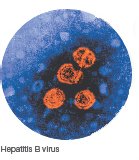
Hepatitis B: Enveloped, double-stranded DNA virus (Hepadnaviridae). Transmitted via blood, sexual contact, and vertical transmission. Vaccine available. Can cause chronic infection, especially in young children. Pathogenesis involves immune evasion and potential for cirrhosis.
Hepatitis C: Enveloped, single-stranded RNA virus (Flaviviridae). Transmitted via blood, sexual contact, and vertical transmission. No vaccine. Most common chronic bloodborne infection in the U.S. Chronic infection is frequent; treated with antivirals.
Hepatitis D: Enveloped, single-stranded RNA virus. Requires Hepatitis B virus for replication. Transmitted primarily via blood. Both acute and chronic infections occur. Prevention via Hepatitis B vaccination.
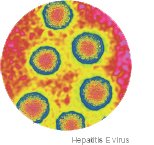
Hepatitis E: Nonenveloped, single-stranded RNA virus (Hepeviridae). Mainly fecal–oral transmission. No vaccine. Both acute and chronic infections occur. Prevention focuses on sanitation.
Disease | Causative Agent | Transmission | Chronic Infection | Diagnosis & Treatment |
|---|---|---|---|---|
Hepatitis A | Picornaviridae, ssRNA | Fecal–oral | No | HAV antibodies; rest, nutrition, fluids |
Hepatitis B | Hepadnaviridae, dsDNA | Blood, sexual, vertical | Yes (age-dependent) | HBV DNA, antigens; antivirals for chronic |
Hepatitis C | Flaviviridae, ssRNA | Blood, sexual, vertical | Yes (75–85%) | HCV antibodies; antivirals |
Hepatitis D | ssRNA, requires HBV | Blood, sexual, vertical | Yes | HDV antibodies; antivirals |
Hepatitis E | Hepeviridae, ssRNA | Fecal–oral | Yes | HEV antibodies; antivirals |
Arboviral Encephalitis: West Nile Virus
West Nile Virus
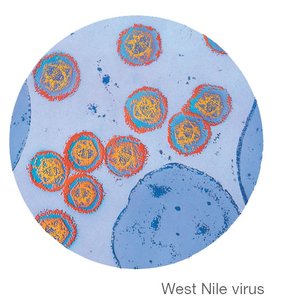
West Nile virus is an arbovirus transmitted by mosquitoes, causing neuroinvasive disease and encephalitis.
Causative Agent: Enveloped, single-stranded RNA virus (Flaviviridae).
Transmission: Zoonosis, mainly from birds to humans via Culex mosquitoes.
Symptoms: Fever, headache, meningitis, encephalitis.
Pathogenesis: Glycoproteins allow tissue binding; cytolysis is primary damage. Blocks interferon response.
Diagnosis: Antibody-based methods, RT-PCR.
Treatment: Supportive care only.
Rabies Virus
Rabies
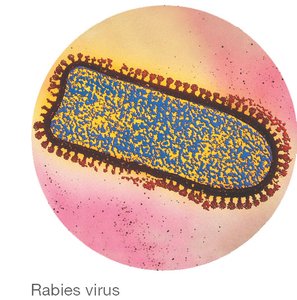
Rabies is a fatal zoonotic disease caused by the rabies virus, affecting the nervous system.
Causative Agent: Enveloped, single-stranded RNA virus (Rhabdoviridae).
Transmission: Animal bites, aerosolized droppings.
Symptoms: Fever, headache, hydrophobia, hallucinations, paralysis.
Pathogenesis: Virus travels from muscle cells to CNS; G protein aids cell penetration.
Diagnosis: RT-PCR, Negri bodies in brain tissue.
Treatment: Post-exposure prophylaxis with antibodies and vaccine; no cure after symptoms appear.
Meningitis and Encephalitis
Definitions and Causes
Meningitis is inflammation of the meninges; encephalitis is inflammation of the brain. Both can be caused by viruses, bacteria, fungi, or parasites.
Meningitis: Most commonly viral (nonpolio enteroviruses, HSV), but also bacterial (Streptococcus pneumoniae, Neisseria meningitidis, Haemophilus influenzae).
Encephalitis: Usually viral (HSV-1, West Nile), but can be bacterial, fungal, or parasitic.
Symptoms: Meningitis: fever, headache, stiff neck, nausea, photophobia. Encephalitis: fever, headache, disorientation, seizures.
Diagnosis: Lumbar puncture for CSF analysis, culture, imaging.
Treatment: Viral: supportive; Bacterial: antibiotics, vaccines available for some agents.
Condition | Location | Causative Agents | Symptoms | Diagnosis | Treatment |
|---|---|---|---|---|---|
Meningitis | Meninges | Viruses, bacteria | Fever, headache, stiff neck | CSF analysis | Supportive (viral), antibiotics (bacterial) |
Encephalitis | Brain | Viruses, bacteria | Fever, headache, disorientation | CSF analysis | Supportive (viral), antibiotics (bacterial) |


Systemic Infections and Clinical Vocabulary
Definitions
Systemic infections involve the spread of pathogens or toxins throughout the body, often via the bloodstream.
Bacteremia: Presence of bacteria in the blood.
Toxemia: Presence of toxins in the blood.
Viremia: Presence of viruses in the blood.
Sepsis: Body-wide immune response to infection.
Septicemia: Life-threatening systemic inflammatory response.
Septic Shock: Advanced stage of sepsis with organ failure.
Digestive System Infections
Colitis, Enteritis, Gastroenteritis, Gingivitis
Digestive system infections are characterized by inflammation of specific regions and are caused by various pathogens.
Colitis: Inflammation of the colon.
Enteritis: Inflammation of the intestines.
Gastritis: Inflammation of the stomach.
Gastroenteritis: Inflammation of the stomach and intestines.
Gingivitis: Inflammation of the gums, often due to plaque buildup.
Periodontal Disease and Dental Caries
Periodontal Disease: Caused by anaerobic bacteria biofilm (Porphyromonas gingivalis, Tannerella forsythia). Symptoms: swollen, bleeding gums, loose teeth.
Dental Caries: Caused by Streptococcus mutans. Symptoms: tooth sensitivity, pain, discoloration.
Prevention: Brushing, flossing, fluoride, reduced sugar intake.
Treatment: Antibiotics, plaque removal, fillings, crowns, root canal, tooth removal.

Rotaviral and Norovirus Gastroenteritis
Rotavirus: Nonenveloped, double-stranded RNA virus (Reoviridae). Causes watery diarrhea, fever, vomiting. Vaccines available.
Norovirus: Nonenveloped, single-stranded RNA virus (Caliciviridae). Causes vomiting, diarrhea, fever. No vaccine; prevention via sanitation.

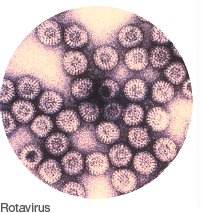
Clostridium difficile Pseudomembranous Colitis
Causative Agent: Clostridioides difficile, Gram-positive, spore-forming bacterium.
Transmission: Fecal–oral, healthcare-associated.
Symptoms: Diarrhea, fever, abdominal pain.
Pathogenesis: Toxins A and B damage colon; spores resist drugs.
Treatment: Metronidazole, vancomycin, rehydration.

Genetics: DNA to RNA and Mutations
Protein Synthesis: Transcription and Translation
Protein synthesis is the process by which cells read genetic information and produce proteins. It involves transcription (DNA to RNA) and translation (RNA to protein).
Transcription: RNA polymerase binds to promoter, unwinds DNA, synthesizes RNA from template, and releases RNA at termination sequence.
Translation: Ribosomes decode mRNA to build proteins.
Reverse Transcription: Some viruses use RNA as a template to make DNA (cDNA) via reverse transcriptase.
Types of RNA: mRNA (codons), tRNA (anticodon, carries amino acids), rRNA (forms ribosomes).
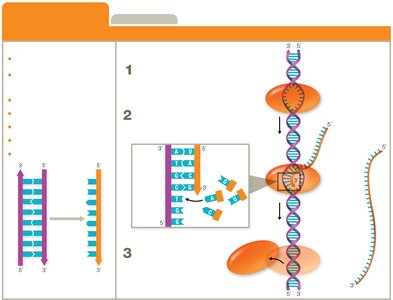
Mutations: Substitutions, Insertions, Deletions
Substitution: Incorrect nucleotide added.
Insertion: One or more nucleotides added.
Deletion: One or more nucleotides removed.
Effects: Silent (no change), missense (wrong amino acid), nonsense (stop codon), frameshift (altered reading frame).
Mutagens: Chemical, physical, biological agents that increase mutation rate. Carcinogens are mutagens that promote cancer.
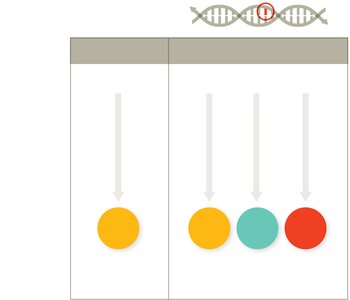
Immunity and Hypersensitivity
Types of Immunity
Active Immunity: Individual produces antibodies (infection or vaccination).
Passive Immunity: Individual receives antibodies (placenta, anti-venom).
Natural vs. Artificial: Natural (infection, maternal antibodies), artificial (vaccination, antibody therapy).
Hypersensitivity Reactions
Type I: IgE-mediated allergies (asthma, allergies).
Type II: IgG/IgM-mediated cytotoxic (hemolytic anemia, transfusions).
Type III: Immune complex (lupus, rheumatoid arthritis).
Type IV: T-cell-mediated delayed (diabetes mellitus type 1, celiac disease).
Type | Description | Examples |
|---|---|---|
I | IgE, allergies | Asthma, allergies |
II | IgG/IgM, cytotoxic | Hemolytic anemia, transfusions |
III | Immune complex | Lupus, rheumatoid arthritis |
IV | T-cell, delayed | Type 1 diabetes, celiac disease |
Autoimmune Diseases
Examples: Celiac disease, lupus, type 1 diabetes, rheumatoid arthritis, multiple sclerosis, Graves’ disease.
Symptoms: Joint/muscle pain, fatigue, rash, organ dysfunction, low-grade fever.
Antibiotic Resistance and Antimicrobial Drugs
Antibiotic Resistance Factors
Overuse/misuse of antimicrobials
Inappropriate use
Subtherapeutic dosing
Patient noncompliance
Use in animal feed
Antibiotic Targets and Examples
Cell Wall Inhibitors: Penicillin, vancomycin (target peptidoglycan synthesis).
Plasma Membrane Inhibitors: Daptomycin (disrupts membrane).
Protein Synthesis Inhibitors: Tetracycline (binds 30S ribosomal subunit).
Metabolic Pathways: Isoniazid (inhibits mycolic acid synthesis in Mycobacterium tuberculosis).
Kirby-Bauer Test
Used to determine bacterial susceptibility to antibiotics.
Zone of inhibition indicates effectiveness.
Mueller Hinton agar is standardized medium.
Reproductive System Infections
Bacterial Vaginosis, Cervical Cancer, Yeast Infection, Pelvic Inflammatory Disease
Bacterial Vaginosis: Overgrowth of harmful bacteria, disrupts vaginal flora. Symptoms: discharge, odor, itching. Treatment: antibiotics.
Cervical Cancer: Caused by high-risk HPV strains. Symptoms: abnormal bleeding, pelvic pain. Treatment: surgery, chemo, radiation.
Yeast Infection: Overgrowth of Candida albicans. Symptoms: itching, burning, thick discharge. Treatment: antifungals.
Pelvic Inflammatory Disease: Infection of upper reproductive organs, often from STDs. Symptoms: abdominal pain, discharge, fever. Treatment: antibiotics.
Microbial Growth and Homeostasis
Mesophilic Microbes and Homeostasis
Mesophiles: Grow best at 10–50°C; most pathogens are mesophilic.
Homeostasis: Biological systems maintain stable internal environment despite external changes.
