 Back
BackMicrobiology: The Microbial World and You – Chapter 1 Study Notes
Study Guide - Smart Notes
 Tailored notes based on your materials, expanded with key definitions, examples, and context.
Chapter 1: The Microbial World and You
Microbes in Our Lives
Microorganisms, or microbes, are organisms too small to be seen with the unaided eye. They play essential roles in various aspects of life, both beneficial and harmful.
Destructive actions: Some microbes are pathogenic, causing diseases and food spoilage.
Beneficial actions: Microbes decompose organic waste, generate oxygen via photosynthesis, and form the basis of aquatic food chains.
Industrial roles: Microbes produce chemical products (ethanol, acetone, vitamins), fermented foods (cheese, yogurt, bread), and products for manufacturing and disease treatment (cellulose, insulin).
Microorganisms include: Bacteria, archaea, fungi, protozoa, microscopic algae, viruses, and prions (though viruses and prions are not considered living).
The Microbiome
The human body hosts trillions of microbial cells, collectively known as the microbiome or microbiota. These microbes live stably on or in the body, contributing to health and disease prevention.
Normal microbiota: Microbes acquired before birth, colonizing the body indefinitely or transiently (transient microbiota).
Functions: Maintain health, prevent pathogenic growth, and train the immune system.
Human Microbiome Project: Studied typical microbiota and their relationship to disease.
National Microbiome Initiative: Explores microbial roles in ecosystems.

Naming and Classifying Microorganisms
Scientific Nomenclature
Microorganisms are named using a binomial system established by Carolus Linnaeus. Each organism has a genus and a specific epithet (species name).
Format: Names are italicized or underlined; genus is capitalized, species is lowercase.
Examples: Escherichia coli (named for Theodor Escherich, found in the colon), Staphylococcus aureus (describes clustered, spherical, gold-colored cells).
Abbreviation: After first use, genus may be abbreviated (e.g., E. coli).
Types of Microorganisms
Microorganisms are classified into several groups based on cellular organization and characteristics.
Bacteria: Prokaryotic, unicellular, peptidoglycan cell walls, divide by binary fission, may use flagella for movement.
Archaea: Prokaryotic, lack peptidoglycan, often live in extreme environments, include methanogens, halophiles, thermophiles.
Fungi: Eukaryotic, chitin cell walls, absorb organic chemicals, yeasts (unicellular), molds/mushrooms (multicellular).
Protozoa: Eukaryotic, absorb/ingest organic chemicals, motile via pseudopods, cilia, or flagella, reproduce sexually/asexually.
Algae: Eukaryotic, cellulose cell walls, photosynthetic, produce oxygen and carbohydrates.
Viruses: Acellular, DNA or RNA core, protein coat, replicate only in living host cells.
Multicellular Animal Parasites: Eukaryotic, include helminths (flatworms, roundworms), some microscopic stages.

Three Domains of Life
Carl Woese developed a classification system based on cellular organization:
Bacteria
Archaea
Eukarya: Includes protists, fungi, plants, and animals
A Brief History of Microbiology
Early Observations and Cell Theory
Microbiology began with the discovery of cells and microorganisms.
Robert Hooke (1665): Reported living things are composed of cells, marking the start of cell theory.
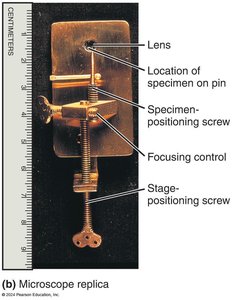
Anton van Leeuwenhoek (1673–1723): Observed "animalcules" (bacteria, protozoa) with magnifying lenses.

Spontaneous Generation vs. Biogenesis
Two hypotheses debated the origin of life:
Spontaneous generation: Life arises from nonliving matter.
Biogenesis: Living cells arise only from preexisting cells.
Key experiments:
Francesco Redi (1668): Showed maggots only appeared in meat exposed to flies.
John Needham (1745): Observed microbial growth in boiled broth in covered flasks.
Lazzaro Spallanzani (1765): No microbial growth in sealed, heated flasks.
Louis Pasteur (1861): Used S-shaped flasks to show microbes originate from air, not mystical forces.
The Golden Ages of Microbiology
Microbiology advanced rapidly during several "Golden Ages."
First Golden Age (1857–1914): Discoveries included fermentation, pasteurization, germ theory, aseptic techniques, and vaccines.
Second Golden Age: Focused on disease treatment with chemotherapeutic agents and antibiotics.
Third Golden Age: Genomics and recombinant DNA technology enabled new tools for studying and manipulating microbes.
Microbes and Human Welfare
Beneficial Activities of Microorganisms
Microbes contribute to recycling vital elements, sewage treatment, bioremediation, insect pest control, and biotechnology.
Microbial ecology: Study of relationships between microbes and their environment.
Bioremediation: Use of microbes to degrade pollutants.
Biotechnology: Use of microbes for practical applications (food, chemicals).
Recombinant DNA technology: Enables production of proteins, vaccines, and gene therapy.
Microbes and Human Disease
Normal Microbiota, Resistance, and Biofilms
Microbes normally present in the human body are called normal microbiota. They prevent pathogen growth and produce growth factors. Resistance is the body's ability to ward off disease, aided by skin, stomach acid, and immune chemicals.
Biofilms: Microbes attach to surfaces and grow into complex masses. Some biofilms are beneficial (protect mucous membranes), others are harmful (cause infections, resist antibiotics).

Emerging Infectious Diseases
Emerging infectious diseases (EIDs) are new or increasing in incidence. Factors include evolutionary changes, modern transportation, and increased human exposure.
Examples: COVID-19, Monkeypox, Zika virus, H1N1 influenza, Avian influenza, antibiotic-resistant infections (MRSA, Clostridium difficile, MDR-TB), Ebola, Marburg virus.
Major Fields in Microbiology
Bacteriology, Mycology, Parasitology, Immunology, Virology
Bacteriology: Study of bacteria.
Mycology: Study of fungi.
Parasitology: Study of protozoa and parasitic worms.
Immunology: Study of immunity.
Virology: Study of viruses.
Microbial Genetics, Molecular Biology, Genomics
Microbial genetics: Study of how microbes inherit traits.
Molecular biology: Study of how genetic information is carried in DNA molecules.
Genomics: Study of an organism's genes, enabling classification and understanding of microbiomes.
Summary Table: Types of Microorganisms
Type | Cell Type | Cell Wall | Reproduction | Example |
|---|---|---|---|---|
Bacteria | Prokaryote | Peptidoglycan | Binary fission | Escherichia coli |
Archaea | Prokaryote | None or pseudopeptidoglycan | Binary fission | Methanogens |
Fungi | Eukaryote | Chitin | Sexual/asexual | Yeast, mold |
Protozoa | Eukaryote | None | Sexual/asexual | Amoeba |
Algae | Eukaryote | Cellulose | Sexual/asexual | Volvox |
Viruses | Acellular | Protein coat | Host-dependent | Coronavirus |
Helminths | Eukaryote | None | Complex life cycle | Roundworm |
Microscopy Images of Microorganisms
The following images illustrate the diversity of microorganisms:
Bacteria: Rod-shaped cells (SEM, 3 μm scale).
Fungi: Sporangia of bread mold (SEM, 50 μm scale).
Protozoa: Amoeba with pseudopods (SEM, 50 μm scale).
Algae: Volvox colonies (LM, 300 μm scale).
Viruses: Enveloped coronaviruses (TEM, 40 nm scale).
Key Equations and Concepts
Binary Fission Equation: Bacterial population doubling:
Fermentation: Microbial conversion of sugar to alcohol (anaerobic):
Additional info: Academic context was added to clarify the roles of microbes, the history of microbiology, and the classification table. Images were included only when directly relevant to the explanation of microorganism types and microscopy observations.
