 Back
BackMicrobiology: The Microbial World and You – Chapter 1 Study Guide
Study Guide - Smart Notes
 Tailored notes based on your materials, expanded with key definitions, examples, and context.
Introduction to Microbiology
Microbes in Our Lives
Microbiology is the study of microorganisms, which are organisms too small to be seen with the unaided eye. Microbes include bacteria, fungi, protozoa, microscopic algae, and viruses. While some microbes are pathogenic, most are beneficial and play essential roles in the environment and human health.
Decomposition: Microbes decompose organic waste, recycling nutrients.
Photosynthesis: Algae and some bacteria generate oxygen.
Industrial Uses: Microbes produce chemicals (ethanol, acetone), fermented foods (cheese, yogurt), and products for manufacturing and medicine (insulin).
Health: Understanding microbes helps prevent food spoilage, disease, and epidemics.
The Microbiome
The microbiome refers to the community of microbes living stably on or in the human body. These microbes help maintain health, prevent pathogenic growth, and may train the immune system. The human body contains more bacterial cells than human cells.
Normal microbiota: Microbes acquired as newborns, colonizing the body indefinitely or transiently.
Colonization: Occurs only at sites providing nutrients and suitable environments.
Human Microbiome Project: Studied typical microbiota in various body regions.
National Microbiome Initiative: Explores microbial roles in ecosystems.
Probiotics: Live beneficial bacteria in foods/supplements.
Prebiotics: Compounds that promote growth/activity of beneficial microbes.
Naming and Classifying Microorganisms
Scientific Nomenclature
Carolus Linnaeus established the binomial system of nomenclature in 1735. Each organism has a genus and a specific epithet, both italicized or underlined. The genus is capitalized, the specific epithet is lowercase.
Example: Escherichia coli (E. coli) – honors Theodor Escherich, describes habitat (colon).
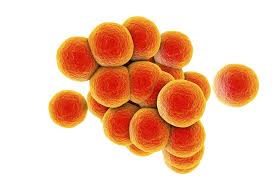
Example: Staphylococcus aureus (S. aureus) – describes clustered, spherical, gold-colored cells.
Classification of Microorganisms
Microorganisms are classified into three domains based on cellular organization: Bacteria, Archaea, and Eukarya. Complexity of cell structure determines whether an organism is prokaryotic or eukaryotic.
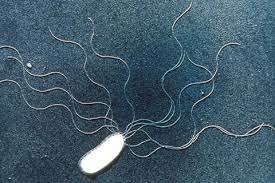
Bacteria: Prokaryotes, peptidoglycan cell walls, divide by binary fission, nutrition from organic/inorganic chemicals or photosynthesis, motile via flagella.
Archaea: Prokaryotes, lack peptidoglycan, often live in extreme environments (methanogens, halophiles, thermophiles), not known to cause human disease.
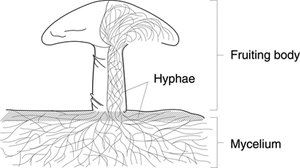
Fungi: Eukaryotes, chitin cell walls, absorb organic chemicals, yeasts (unicellular), molds/mushrooms (multicellular), mycelia composed of hyphae.
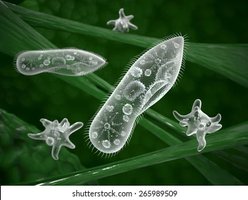
Protozoa: Eukaryotes, single-celled, absorb/ingest organic chemicals, motile via pseudopods, cilia, or flagella, free-living or parasitic, reproduce sexually/asexually.
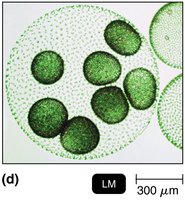
Algae: Eukaryotes, cellulose cell walls, photosynthetic, produce oxygen/carbohydrates, found in water/soil, reproduce sexually/asexually.
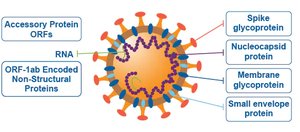
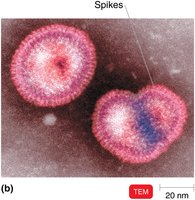
Viruses: Acellular, DNA or RNA core, protein coat (sometimes lipid envelope), replicate only in living host cells, inert outside hosts.
Multicellular Animal Parasites: Eukaryotes, multicellular, helminths (flatworms, roundworms), some have microscopic stages.
Disproving Spontaneous Generation
Cell Theory and Early Observations
Robert Hooke (1665) and Anton van Leeuwenhoek (1623–1673) made foundational observations using microscopes, leading to the cell theory: all living things are composed of cells, and cells arise from pre-existing cells.
Spontaneous Generation vs. Biogenesis
Spontaneous generation posited that life arises from nonliving matter, while biogenesis states that living cells arise only from pre-existing cells. Key experiments by Redi, Needham, Spallanzani, Virchow, and Pasteur tested these hypotheses.
Redi: Disproved spontaneous generation with decaying meat experiments.
Needham: Supported spontaneous generation with boiled broth experiments (likely contaminated).
Spallanzani: Disproved spontaneous generation with sealed, boiled broth.
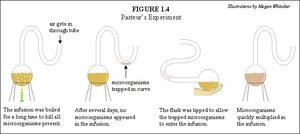
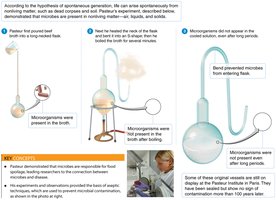
Pasteur: Used S-shaped flasks to show microbes originate from air, not mystical forces.
The Golden Age of Microbiology
Major Discoveries and Contributors
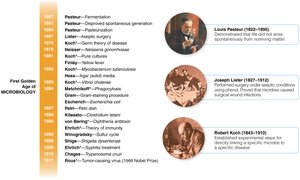
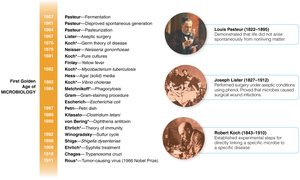
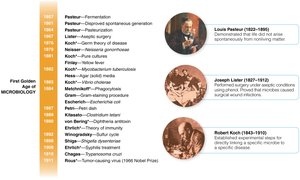
The period from 1857–1914 saw many discoveries linking microbes to disease, immunity, and antimicrobial drugs. Key figures include Pasteur, Lister, Koch, and Jenner.
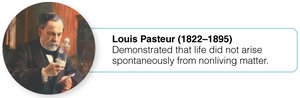
Pasteur: Demonstrated fermentation, pasteurization, and disproved spontaneous generation.
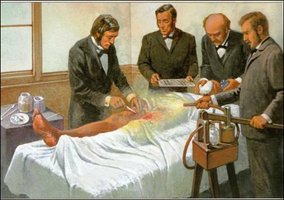
Lister: Used antiseptics to prevent surgical infections.
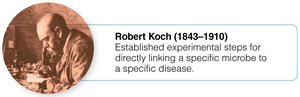
Koch: Developed Koch's postulates to link specific microbes to diseases.
Jenner: Developed vaccination for smallpox.
Germ Theory of Disease
The germ theory states that microorganisms (pathogens) can cause disease. Semmelweis, Lister, and Koch provided evidence for this theory, leading to improved hygiene and medical practices.
Modern Chemotherapy and Antibiotics
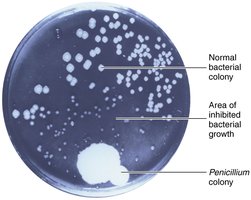
Chemotherapy is the treatment of disease with chemicals. Antibiotics are produced by bacteria and fungi to inhibit or kill other microbes. Key discoveries include Ehrlich's "magic bullet" (salvarsan for syphilis) and Fleming's discovery of penicillin.
Modern Developments in Microbiology
Subfields of Microbiology
Bacteriology: Study of bacteria.
Mycology: Study of fungi.
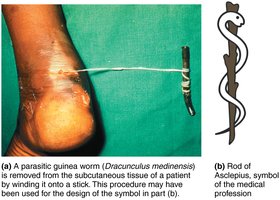
Parasitology: Study of protozoa and parasitic worms.
Immunology: Study of immunity.
Virology: Study of viruses.
Molecular Genetics and Genomics
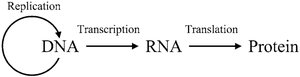
Microbial genetics studies inheritance in microbes. Molecular biology examines how DNA directs protein synthesis. Genomics analyzes an organism's genes, aiding classification and understanding of microbial functions.
Recombinant DNA: DNA formed by combining genetic material from different organisms.
Key discoveries: Beadle & Tatum (genes encode enzymes), Avery et al. (DNA is hereditary material), Watson & Crick (DNA structure), Jacob & Monod (mRNA role).
Microbes and Human Welfare
Beneficial Activities of Microorganisms
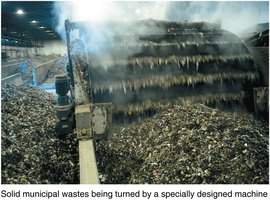
Microbes play vital roles in recycling elements, sewage treatment, bioremediation, and insect pest control.
Recycling: Convert carbon, oxygen, nitrogen, sulfur, and phosphorus into usable forms.
Sewage treatment: Microbes convert organic materials into by-products like CO2.
Bioremediation: Bacteria degrade pollutants (oil, mercury).
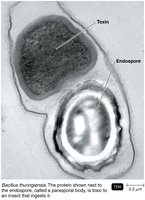
Insect control: Bacillus thuringiensis produces toxins fatal to insects.
Biotechnology and Recombinant DNA Technology
Biotechnology uses microbes for practical applications (food, chemicals). Recombinant DNA technology enables production of proteins, vaccines, and enzymes, and gene therapy.
Microbes and Human Disease
Normal Microbiota, Resistance, and Biofilms
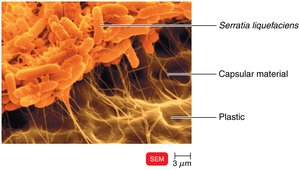
Normal microbiota are microbes present in and on the human body, preventing pathogen growth and producing growth factors. Resistance is the body's ability to ward off disease, aided by skin, stomach acid, and antimicrobial chemicals. Biofilms are microbial communities attached to surfaces, often resistant to antibiotics.
Emerging Infectious Diseases (EIDs)
EIDs are new or increasing diseases, often caused by pathogens overcoming host resistance. Examples include COVID-19, Zika virus, MERS, H1N1 influenza, avian influenza, MRSA, Ebola, and Marburg virus.
COVID-19: Caused by SARS-CoV-2, transmitted via droplets, diagnosed by rRT-PCR, prevented by hygiene and vaccination.
Zika virus: Transmitted by mosquitoes, causes birth defects.
MERS: Caused by MERS-CoV, related to SARS.
MRSA: Methicillin-resistant Staphylococcus aureus, resistant to multiple antibiotics.
Ebola/Marburg: Hemorrhagic fevers, high mortality, transmitted via body fluids.
Summary Table: Classification of Microorganisms
Group | Cell Type | Cell Wall | Reproduction | Nutrition |
|---|---|---|---|---|
Bacteria | Prokaryotic | Peptidoglycan | Binary fission | Organic/inorganic/photosynthesis |
Archaea | Prokaryotic | No peptidoglycan | Binary fission | Varied/extreme environments |
Fungi | Eukaryotic | Chitin | Sexual/asexual | Absorption |
Protozoa | Eukaryotic | None | Sexual/asexual | Absorption/ingestion |
Algae | Eukaryotic | Cellulose | Sexual/asexual | Photosynthesis |
Viruses | Acellular | None | Host-dependent | Host-dependent |
Helminths | Eukaryotic | None | Sexual | Parasitic |
Key Equations and Concepts
Central Dogma of Molecular Biology:
Pasteurization: Application of heat to kill harmful microbes in beverages.
