 Back
BackModern Methods for Measuring Microbial Communities and Activities
Study Guide - Smart Notes
 Tailored notes based on your materials, expanded with key definitions, examples, and context.
I. Culture-Dependent Analyses of Microbial Communities
Enrichment Culture Techniques
Enrichment culture is a foundational method in microbial ecology for isolating specific microorganisms from natural samples by providing selective conditions that favor the growth of the desired organism while inhibiting others. This approach is essential for studying the physiology and genetics of microbes in pure culture.
Selective Media: Media are formulated to mimic the ecological niche of the target organism, often by omitting or including specific nutrients or electron acceptors/donors.
Incubation Conditions: Parameters such as temperature, pH, oxygen availability, and light are adjusted to match the natural habitat of the organism.
Example: The isolation of Azotobacter uses a medium lacking fixed nitrogen, selecting for aerobic nitrogen-fixing bacteria.
The Winogradsky Column
The Winogradsky column is a classic artificial ecosystem used to enrich and study diverse microbial populations, especially phototrophic and anaerobic bacteria. It demonstrates the development of microbial gradients and metabolic interactions in a stratified environment.
Structure: A glass column is filled with mud, organic substrates, and minerals, then overlaid with water and incubated in light.
Microbial Gradients: Oxygenic phototrophs (algae, cyanobacteria) dominate the upper layers, while anoxygenic phototrophs (purple and green sulfur bacteria) and sulfate reducers develop in anoxic zones.
Applications: Used to isolate and study bacteria involved in sulfur and carbon cycling.

II. Culture-Independent Microscopic Analyses of Microbial Communities
Fluorescence In Situ Hybridization (FISH) and Advanced Imaging
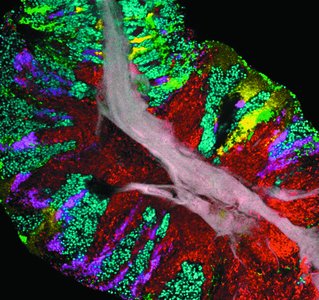
FISH is a powerful technique for identifying and visualizing specific microbial taxa within complex communities using fluorescently labeled nucleic acid probes that hybridize to unique rRNA sequences. Advanced variations, such as CLASI-FISH, allow simultaneous detection of many species.
Principle: Fluorescent probes bind to rRNA within intact cells, enabling visualization and quantification of specific groups.
CLASI-FISH: Uses combinatorial labeling and spectral imaging to distinguish over 100 species in a single sample, each with a unique spectral signature.
Application: Reveals spatial organization and metabolic interactions in natural communities, such as the human oral microbiome.
III. Classical Procedures for Isolating Microbes
Streak Plate and Dilution Methods
After enrichment, pure cultures are obtained using classical microbiological techniques:
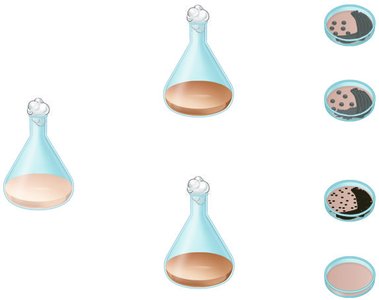
Streak Plate: Isolates single colonies on solid media for further purification.
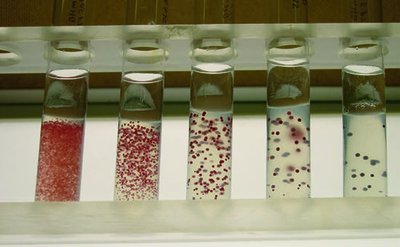
Agar Dilution Tubes: Useful for anaerobes; colonies develop within agar, and repeated dilution yields pure cultures.
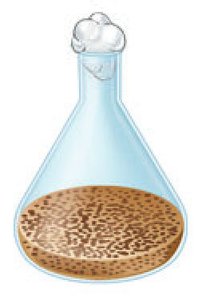
Most-Probable-Number (MPN): Estimates viable cell numbers by serial dilution and statistical analysis of growth in liquid media.
IV. Measuring Microbial Activities in Nature
Winogradsky Column: Visualizing Microbial Gradients
The Winogradsky column visually demonstrates the development of microbial gradients and the succession of different metabolic groups in a stratified environment. The color changes in the column reflect the presence of various phototrophic and chemotrophic bacteria.
Color Bands: Indicate the presence of purple sulfur bacteria, green sulfur bacteria, and other groups based on their pigments and metabolic activities.
Ecological Insight: Shows how environmental gradients (e.g., oxygen, sulfide) structure microbial communities.

V. Summary Table: Enrichment Methods for Phototrophic Bacteria
Enrichment strategies for isolating phototrophic bacteria are summarized below:
Incubation Condition | Organisms Enriched | Inoculum Source |
|---|---|---|
Incubation in air, N2 as nitrogen source | Cyanobacteria | Pond/lake water, mud, sewage, moist soil |
NO3- as nitrogen source, 55°C | Thermophilic cyanobacteria | Hot spring microbial mat |
Anoxic incubation, H2 or organic acids, N2 as nitrogen source | Purple nonsulfur bacteria, heliobacteria | Mud, pasteurized soil, microbial mats |
H2S as electron donor | Purple and green sulfur bacteria | Same as above |
Additional info: Table adapted and summarized from the original text for clarity.
VI. Key Concepts and Applications
Enrichment Bias: Fast-growing 'weed' species may dominate in laboratory cultures, potentially overlooking ecologically significant but slower-growing organisms.
Culture-Independent Methods: Techniques like FISH, CLASI-FISH, and advanced imaging allow direct study of microbial diversity and interactions in situ, without the need for cultivation.
Winogradsky Column: A model system for studying microbial ecology, gradients, and metabolic cooperation in a controlled environment.
