 Back
BackOrganic Chemistry Foundations for Biochemistry and Microbiology
Study Guide - Smart Notes
 Tailored notes based on your materials, expanded with key definitions, examples, and context.
Organic Chemistry: The Chemistry of Carbon
Importance of Carbon in Biology
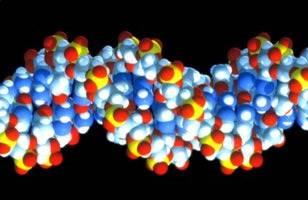
Organic chemistry is fundamentally the study of carbon-containing compounds, which are central to biochemistry and the molecular basis of life. Carbon's unique bonding properties allow it to form a vast array of molecules, including carbohydrates, fats, proteins, hormones, and nucleic acids. These compounds are essential for cellular structure and function.
Organic compounds have a carbon framework and are prevalent in biological systems.
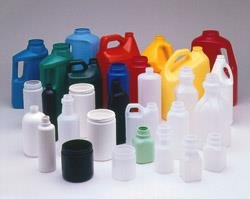
Carbon-based molecules are also found in consumer products such as plastics, medicines, and textiles.
Some carbon compounds (e.g., carbonates, carbides) are considered inorganic.
Carbon: Abundance and Allotropes
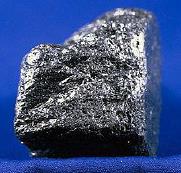
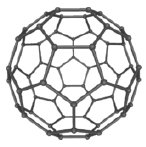
Carbon is the fourth most abundant element in the universe and the most abundant in biological organisms. It exists in several allotropes, each with distinct physical properties:
Diamond: Hard, transparent structure.
Graphite: Soft, black, and conductive.
Buckyball (C60): Spherical molecule.
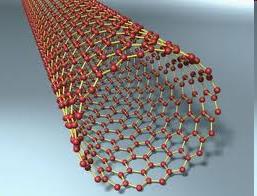
Carbon nanotube: Cylindrical nanostructure.

Atomic Structure and Bonding of Carbon
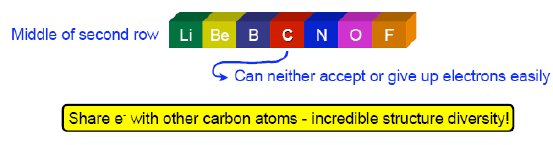
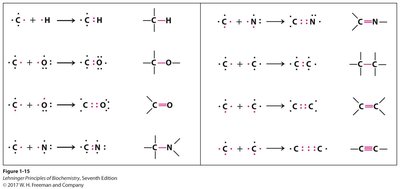
Carbon is the sixth element in the periodic table, with an atomic number of 6 and a mass number of 12. Its ground state electronic configuration is 1s2 2s2 2p2. Carbon follows the octet rule, sharing electrons to form covalent bonds, as it cannot easily accept or donate four electrons.
Forms four covalent bonds to complete its octet.
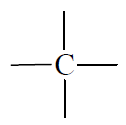
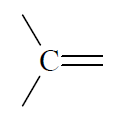
Bonding combinations include: four single bonds, two double bonds, one triple and one single bond, or one double and two single bonds.
Carbon Bonding and Molecular Diversity
Bonding Combinations
Carbon's ability to form multiple types of bonds (single, double, triple) with itself and other elements enables the creation of diverse molecular structures.
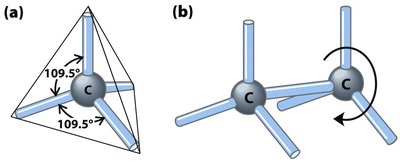
Single bonds allow for free rotation and various conformations.
Double and triple bonds restrict rotation, leading to geometric isomerism.
Carbon Geometries and Conformations
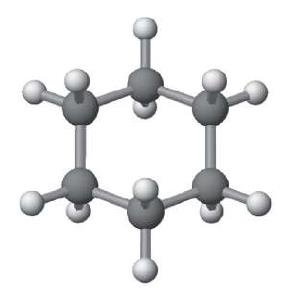
Carbon atoms can form straight chains, branched chains, and rings. The versatility of carbon bonding leads to an immense variety of possible compounds, even with a limited number of atoms.
Rotation around single bonds creates different conformations.
Assuming only single bonds, a 20-carbon network with hydrogen can form over 360,000 different compounds.
Alkanes and Isomerism
Alkanes: Structure and Representation
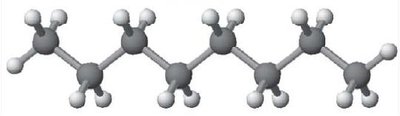
Alkanes are hydrocarbons containing only single bonds between carbon atoms. They are represented by skeletal formulas, where each line represents a bond and each corner or end represents a carbon atom.
Alkanes are saturated hydrocarbons.
Skeletal formulas simplify complex structures.
Isomerisation
Isomers are molecules with the same atoms and bonds but different arrangements. The spatial arrangement of atoms can significantly affect biological properties.
Structural isomers: Different connectivity of atoms.
Stereoisomers: Same connectivity, different spatial arrangement.
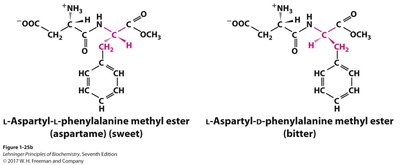
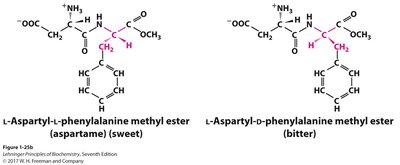
Chirality and Stereoisomerism
Chirality
A chiral carbon atom is bonded to four different groups, resulting in non-superimposable mirror images called enantiomers. Chirality is crucial in biochemistry, as enantiomers can have drastically different biological effects.
Chiral molecules have the same functional groups and participate in similar chemical reactions.
Biological systems often distinguish between enantiomers.
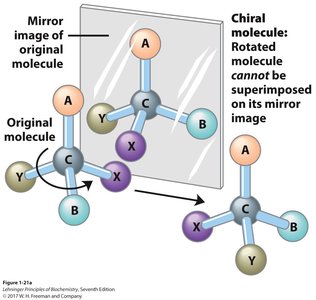
Enantiomers and Diastereomers
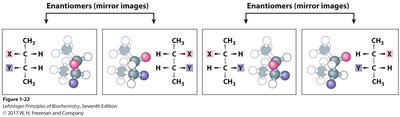
Enantiomers are mirror images, while diastereomers are not. The number of possible stereoisomers depends on the number of chiral centers (2n for n centers).
Enantiomers differ at all chiral centers.
Diastereomers differ at some, but not all, chiral centers.
Geometric Isomerism and Bond Rotation
Bond Rotation and π Bonds
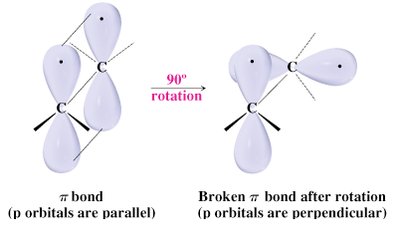
Rotation around double bonds (π bonds) is severely restricted, requiring significant energy to break the bond. This restriction leads to geometric isomerism in alkenes.
Single bond rotational barrier: 12 kJ/mol
Double bond rotational barrier: 260 kJ/mol
Geometric Isomerism in Alkenes
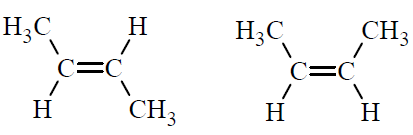
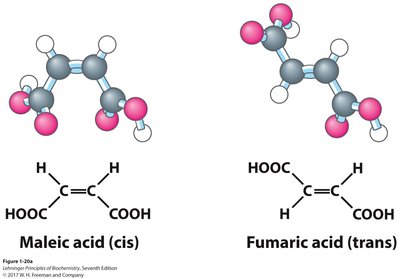
Alkenes can exhibit geometric isomerism (cis/trans) when each carbon in the double bond is attached to two different groups. These isomers have the same molecular formula and connectivity but differ in spatial arrangement.
Cis isomer: Substituents on the same side.
Trans isomer: Substituents on opposite sides.
Biological Relevance of Geometric Isomers
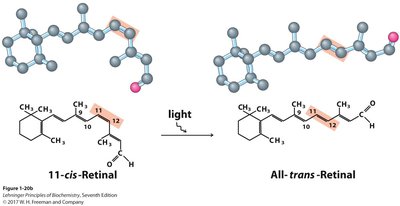
Geometric isomers can have distinct biological functions. For example, light detection in the eye involves conversion between cis and trans forms of retinal, triggering a nerve impulse.
Elements Essential for Life and Functional Groups
Essential Elements
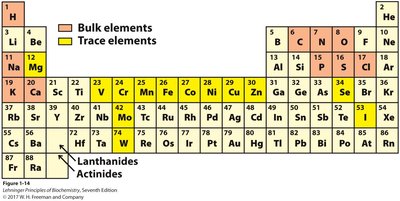
Besides carbon, elements such as hydrogen, oxygen, nitrogen, phosphorus, and sulfur are common in biological molecules. Metal ions (e.g., K+, Na+, Ca2+, Mg2+, Zn2+, Fe2+) play important roles in metabolism.
Polarity and Electronegativity
Physical properties like solubility, melting point, and boiling point depend on intermolecular forces, which are influenced by molecular structure and polarity. Electronegativity differences between atoms create polar bonds.
Polar molecules: Strong dipole-dipole interactions, possible hydrogen bonding.
Non-polar molecules: Weak dispersion forces.
Biomolecules often have both polar and non-polar regions.
Functional Groups in Biomolecules
Non-Polar Groups: Hydrocarbons
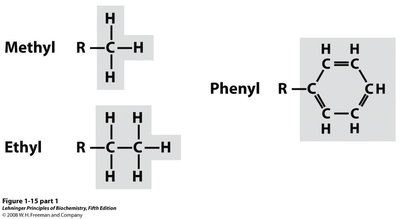
Hydrocarbon groups (methyl, ethyl, propyl, butyl) are non-polar and composed entirely of carbon and hydrogen. Aromatic rings (phenyl) are a special type of hydrocarbon group.
Benzene and Aromaticity
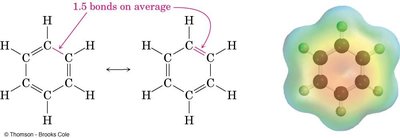
Benzene (C6H6) is the parent of all aromatic compounds. Its structure is planar and hexagonal, with equal bond lengths and electron density distributed across all six C–C bonds.
Polar Functional Groups
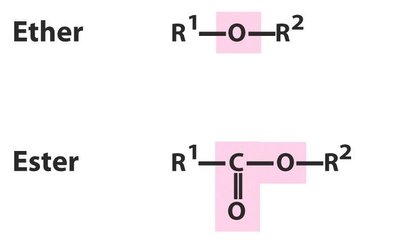
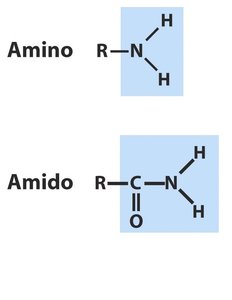
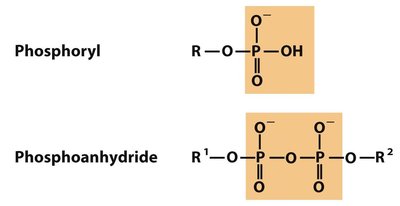
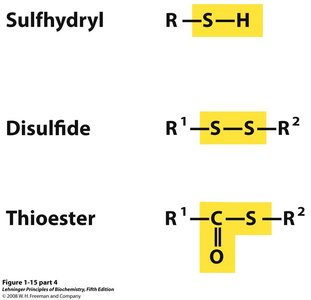
Polar groups containing oxygen, nitrogen, phosphorus, and sulfur impart specific chemical properties to biomolecules. These include carbonyl, carboxyl, hydroxyl, amine, amide, phosphodiester, and sulfhydryl groups.
Sugars: Carbonyls and hydroxyls
DNA: Sugars and phosphodiesters
Fats/oils: Hydrocarbons, carboxyls, esters
Proteins: Amines and amides
Alcohols, Aldehydes, Ketones, Carboxylic Acids, Esters, Amines, and Amides
Alcohols
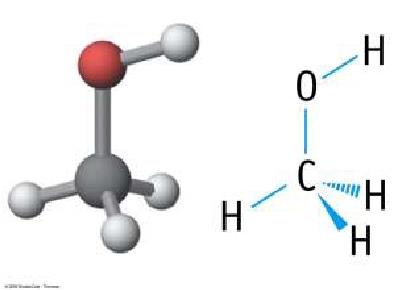
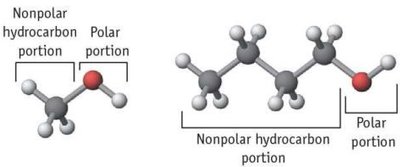
Alcohols contain a hydroxyl group (-OH) attached to a saturated carbon. They are named with the suffix 'ol' (e.g., methanol, ethanol). Smaller alcohols are more water-like, while larger ones behave more like hydrocarbons.
Carbonyl Compounds: Aldehydes and Ketones
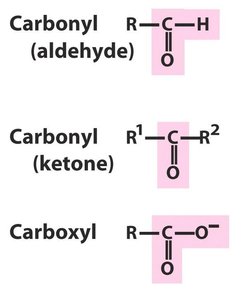
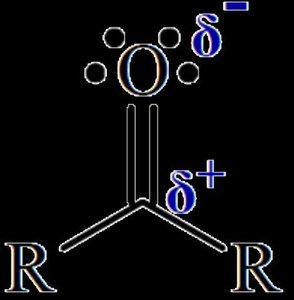
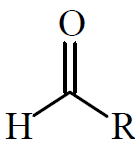
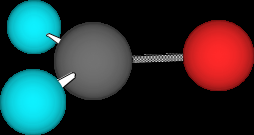
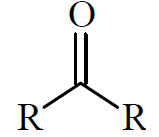
Carbonyl groups (C=O) are present in aldehydes and ketones. Aldehydes have one alkyl and one hydrogen attached to the carbonyl, while ketones have two alkyl groups. Both are polar and can participate in dipole-dipole interactions, but lack hydrogen bonding.
Carboxylic Acids
Carboxylic acids contain both a hydroxyl and a carbonyl group attached to the same carbon. They are named with the suffix 'oic acid' (e.g., methanoic acid, butanoic acid). Carboxylic acids are weak acids and can form stable hydrogen-bonded pairs, resulting in high boiling points.
Formula | Common Name | Source | IUPAC Name | Melting Point | Boiling Point |
|---|---|---|---|---|---|
HCO2H | formic acid | ants | methanoic acid | 8.4 ºC | 101 ºC |
CH3CO2H | acetic acid | vinegar | ethanoic acid | 16.6 ºC | 118 ºC |
CH3CH2CO2H | propionic acid | milk | propanoic acid | -20.8 ºC | 141 ºC |
CH3(CH2)2CO2H | butyric acid | butter | butanoic acid | -5.5 ºC | 164 ºC |
Esters
Esters are formed by the condensation reaction between an alcohol and a carboxylic acid, producing water. They are named by combining the alkyl group from the alcohol and the acid, with the suffix 'oate' (e.g., methyl butanoate). Esters are polar, often have pleasant odors, and are common in biological systems.
Boiling points: Higher than hydrocarbons, lower than alcohols/carboxylic acids.
Solubility: Often water-soluble, but decreases with larger R-groups.
Amines and Amides
Amines are organic derivatives of ammonia, classified as primary (RNH2), secondary (R2NH), or tertiary (R3N). Amines are polar, can act as bases, and are generally water-soluble. Amides are formed by condensation between amines and carboxylic acids, and are important in protein structure.
Amino acids contain both amine and carboxylic acid groups.
Amide bonds link amino acids in proteins.
Summary of Key Concepts
Carbon's bonding versatility and geometries enable molecular diversity.
Isomerism (structural, geometric, and chiral) affects biological properties.
Polarity influences physical properties and intermolecular interactions.
Functional groups (O, N, P, S) define biomolecule reactivity and function.
Condensation and hydrolysis reactions are central to biomolecule synthesis and breakdown.
