 Back
BackOverview and Structure of Viruses (Chapter 13 Study Notes)
Study Guide - Smart Notes
 Tailored notes based on your materials, expanded with key definitions, examples, and context.
Overview of Viruses
Key Characteristics of Viruses
Viruses are unique infectious agents that differ fundamentally from cellular life forms. They are acellular, obligate intracellular parasites, meaning they require a host cell to replicate and cannot carry out metabolic processes independently.
Acellular: Viruses lack a cytoplasmic membrane, organelles, and cytosol.
Obligate Parasites: They must infect a host cell to reproduce.
Small Size: Viruses are much smaller than bacteria and eukaryotic cells.
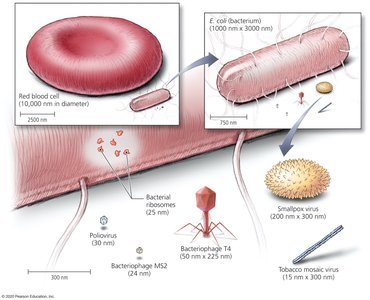
Viral Structure
Extracellular and Intracellular States
Viruses exist in two main states: extracellular (virion) and intracellular.
Extracellular State (Virion): The complete virus particle outside a host cell, consisting of a nucleic acid core (DNA or RNA) surrounded by a protein coat (capsid). Some virions possess an additional phospholipid envelope.
Intracellular State: Once inside a host cell, the capsid is removed, and the virus exists as nucleic acid, directing the host's machinery for replication.
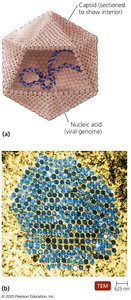
Capsid Structure and Viral Shapes
The capsid is composed of protein subunits called capsomeres and determines the overall shape of the virus. Viruses are classified by their capsid morphology:
Helical: Capsomeres arranged in a spiral, forming a rod-shaped structure.
Polyhedral: Capsid forms a many-sided (often icosahedral) shape.
Complex: Capsid structures that do not fit into the other categories, often with additional features such as tails or complex outer walls.
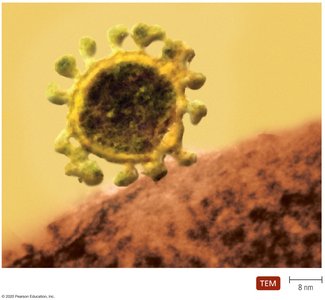
The Viral Envelope
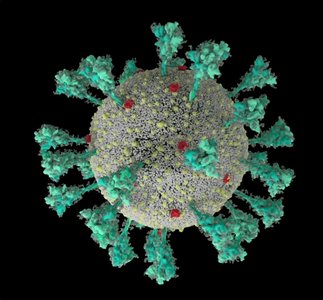
Some viruses possess an envelope derived from the host cell membrane during viral replication or release. The envelope contains both host-derived phospholipids and virally encoded proteins, including glycoprotein spikes important for host recognition.
Composition: Phospholipid bilayer and proteins (some are glycoproteins).
Origin: Acquired from the host cell membrane.
Function: Envelope proteins and glycoproteins facilitate attachment to host cells and immune evasion.
Fragility: Enveloped viruses are generally more sensitive to environmental conditions than naked viruses.

Genetic Material of Viruses
Types and Organization
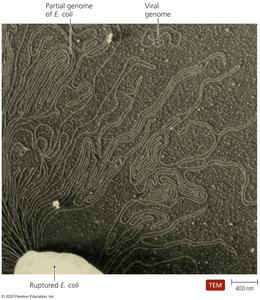
The nature of the viral genome is a primary criterion for virus classification. Viral genomes may be composed of DNA or RNA, but never both, and can vary in structure:
Types: Double-stranded DNA (dsDNA), single-stranded DNA (ssDNA), double-stranded RNA (dsRNA), or single-stranded RNA (ssRNA).
Organization: Genomes may be linear, circular, segmented, or unsegmented.
Size: Viral genomes are much smaller than those of cells, encoding only essential viral proteins.
Hosts and Specificity of Viruses
Host Range and Tropism
Viruses can infect all forms of life, but most are highly specific for their host species and even cell types within a host. This specificity is termed viral tropism.
Host Range: Some viruses infect only a single species or cell type, while others (generalists) can infect multiple hosts or tissues.
Viral Tropism: Determined by the interaction between viral surface proteins and specific receptors on the host cell surface.

Mechanism of Specificity
The affinity of viral surface proteins (such as glycoprotein spikes) for complementary host cell receptors determines which cells a virus can infect.
Attachment: Viral proteins bind to specific molecules on the host cell membrane, initiating infection.
Example: The spike protein of SARS-CoV-2 binds to the ACE2 receptor on human cells.
Viral Replication
Lytic Replication Cycle
Viral replication is dependent on the host cell's machinery. The lytic cycle is a common replication strategy, resulting in the destruction of the host cell. The five stages are:
Attachment: Virus binds to host cell surface.
Entry: Virus or its genome enters the host cell (via direct penetration, membrane fusion, or endocytosis).
Synthesis: Host machinery synthesizes viral components.
Assembly: New virions are assembled from synthesized components.
Release: New virions exit the host cell, often causing cell lysis.

Persistent Viral Infections and Latency
Persistent Infections
Some viruses can establish persistent infections, remaining in the host for extended periods, sometimes for life. These infections may be chronic or latent.
Chronic Infection: Virus is continuously present at low levels.
Latent Infection: Virus remains dormant (latent) within host cells and can reactivate later.

Latency in Animal Viruses
Latent viruses (proviruses) can integrate into the host genome, remaining inactive for years. Reactivation can lead to recurrent disease episodes.
Example: Varicella Zoster Virus (VZV) causes chickenpox; the virus can remain latent and reactivate as shingles.
Permanence: Integration of proviral DNA into host DNA is permanent.

Review Questions and Key Terms
Are viruses prokaryotes? Answer: False. Viruses are acellular and not classified as prokaryotes or eukaryotes.
What consists of a capsid and viral nucleic acid? Answer: Nucleocapsid.
How do animal viruses generally attach to host cells? Answer: By glycoprotein spikes or other viral surface molecules binding to complementary molecules on the host cell surface.
