 Back
BackParasitic Worms (Helminths): Diversity, Structure, and Medical Importance
Study Guide - Smart Notes
 Tailored notes based on your materials, expanded with key definitions, examples, and context.
Parasitic Worms (Helminths)
Overview of Parasitic Worms
Parasitic worms, also known as helminths, are eukaryotic organisms that infect humans and animals. While not considered 'true' microbes due to their size and complexity, they are important in microbiology because of their medical significance. Helminths can reproduce both asexually and sexually and are heterotrophic, relying on organic material for nutrition. They are typically classified based on body shape into flatworms (including tapeworms and flukes) and roundworms (including pinworms, hookworms, and heartworms).
Eukaryotic: Possess membrane-bound organelles and a defined nucleus.
Reproduction: Both asexual and sexual reproduction observed.
Metabolism: Heterotrophic, requiring organic substrates.
Classification: Based on body shape—flatworms (Platyhelminthes) and roundworms (Nematoda).
Diversity of Parasitic Worms
Tapeworms (Cestodes)
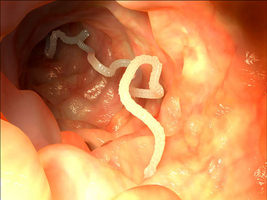
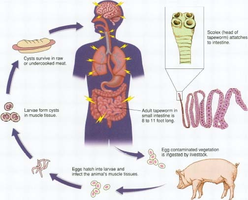
Tapeworms are flat, segmented worms that inhabit the intestines of their hosts. They absorb nutrients directly through their skin and can grow to several meters in length. Infection typically occurs through ingestion of undercooked or contaminated meat containing larval cysts.
Body Structure: Long, ribbon-like, segmented body; head (scolex) with suckers/hooks for attachment.
Transmission: Ingestion of cysts in undercooked meat (e.g., beef, pork, fish).
Symptoms: Often asymptomatic, but can cause abdominal pain, weight loss, and digestive disturbances.
Life Cycle: Involves intermediate hosts (livestock or fish) and definitive hosts (humans).
Flukes (Trematodes)
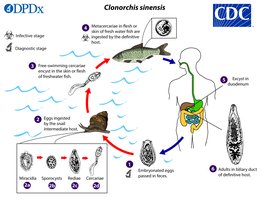
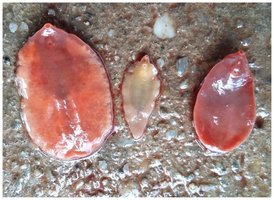
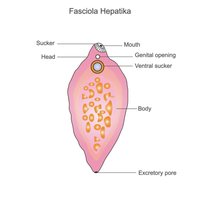
Flukes are unsegmented, leaf-shaped flatworms that infect various organs, including the liver, lungs, and blood vessels. They have complex life cycles involving multiple hosts, often including snails as intermediate hosts.
Body Structure: Leaf-shaped, unsegmented, with suckers for attachment.
Transmission: Ingestion of contaminated water or undercooked aquatic animals.
Symptoms: Depend on the organ infected; may include liver enlargement, jaundice, or respiratory symptoms.
Life Cycle: Complex, involving snails and vertebrate hosts.
Roundworms (Nematodes)
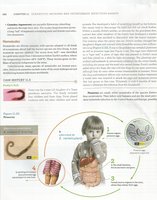
Roundworms are cylindrical, unsegmented worms that infect the intestines, blood, or tissues of their hosts. They are among the most common helminth infections worldwide and include pinworms, hookworms, and heartworms.
Pinworms (Enterobius vermicularis): Small, white worms inhabiting the digestive tract; cause itching and appetite loss. Most common worm infection in the U.S.
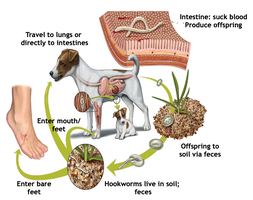
Hookworms: Soil-dwelling larvae penetrate skin, migrate to intestines; cause anemia and protein deficiencies. Common in warm, moist climates.
Heartworms (Dirofilaria immitis): Affect dogs and cats; transmitted by mosquitoes; reside in the heart and pulmonary arteries.
Comparative Table: Major Groups of Parasitic Worms
Group | Body Shape | Key Examples | Transmission | Symptoms |
|---|---|---|---|---|
Tapeworms (Cestodes) | Flat, segmented | Taenia solium, Taenia saginata | Ingestion of cysts in meat | Abdominal pain, weight loss |
Flukes (Trematodes) | Flat, leaf-shaped | Schistosoma, Clonorchis, Fasciola | Contaminated water/food | Liver, lung, or blood symptoms |
Roundworms (Nematodes) | Round, unsegmented | Ascaris, Enterobius, Ancylostoma, Dirofilaria | Soil, fecal-oral, vector-borne | GI, anemia, tissue damage |
Medical and Public Health Importance
Diagnosis and Prevention
Diagnosis of helminth infections often involves stool examination for eggs or larvae, serological tests, and imaging. Prevention includes proper sanitation, cooking meat thoroughly, and controlling vectors such as mosquitoes.
Stool examination: Microscopic identification of eggs or larvae.
Serology: Detection of antibodies or antigens.
Prevention: Hygiene, sanitation, vector control, and food safety.
Examples and Applications
Tapeworm infection: Acquired by eating undercooked pork or beef; can be prevented by proper cooking.
Schistosomiasis: Caused by blood flukes; controlled by snail eradication and improved water sanitation.
Heartworm disease: Prevented in pets by regular administration of prophylactic medications.
Additional info: Parasitic worms are a major cause of morbidity worldwide, especially in regions with poor sanitation. Their complex life cycles often require multiple hosts, making control challenging. Some helminths can modulate the host immune response, leading to chronic infections.
