 Back
BackStudy Notes: Chapter 24
Study Guide - Smart Notes
 Tailored notes based on your materials, expanded with key definitions, examples, and context.
Overview of DNA Viruses
Classification and General Features
DNA viruses that cause human disease are classified into several families based on their genome type (double-stranded or single-stranded DNA), presence or absence of an envelope, size, and host range. The main families include Poxviridae, Herpesviridae, Papillomaviridae, Polyomaviridae, Adenoviridae, Hepadnaviridae, and Parvoviridae.
dsDNA viruses: Poxviridae, Herpesviridae, Papillomaviridae, Polyomaviridae, Adenoviridae
ssDNA viruses: Parvoviridae
Mixed genome: Hepadnaviridae (contains both dsDNA and ssDNA)
Poxviridae
Structure and Transmission
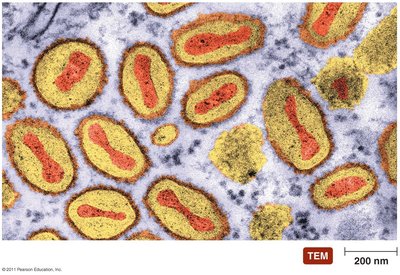
Poxviruses are large, complex, enveloped dsDNA viruses. They infect many mammals, but most animal poxviruses are species-specific and cannot infect humans. Human infection typically occurs through inhalation, requiring close contact.
Main human diseases: Smallpox (variola), molluscum contagiosum
Transmission: Close contact, inhalation of viral particles
Stages of Poxvirus Lesions
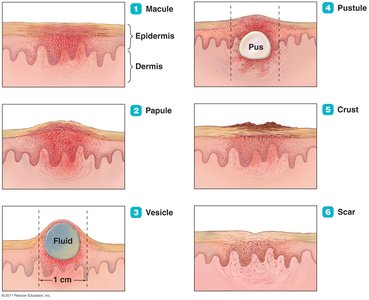
Poxvirus infections progress through distinct skin lesion stages: macule, papule, vesicle, pustule, crust, and scar.
Macule: Flat, reddened area
Papule: Raised, solid lesion
Vesicle: Fluid-filled blister
Pustule: Pus-filled lesion
Crust: Dried exudate over healing lesion
Scar: Permanent mark after healing
Smallpox (Variola)
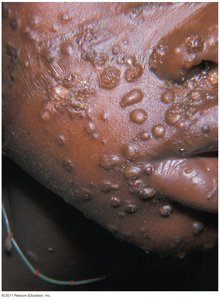
Smallpox, caused by Orthopoxvirus, was a highly contagious and deadly disease, now eradicated. It existed in two forms: variola major (severe) and variola minor (milder). The virus spread via the bloodstream to the skin, causing characteristic pox and scarring, especially on the face.
Eradication factors: Effective vaccine, no animal reservoirs, obvious symptoms, lack of asymptomatic cases, transmission only via close contact
Molluscum Contagiosum
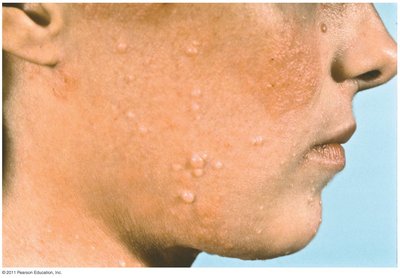
Caused by Molluscipoxvirus, this disease is spread by direct contact, affecting children, sexually active individuals, and immunocompromised patients. It presents as smooth, waxy papules on the face, trunk, and genitalia. Immunocompetent individuals usually recover without treatment.
Herpesviridae
Structure and Latency
Herpesviruses are enveloped, polyhedral dsDNA viruses. They are notable for their ability to establish latent infections, remaining dormant in host cells and reactivating later. Human herpesviruses are designated HHV-1 through HHV-8.
Human Herpesviruses 1 and 2 (HHV-1, HHV-2)
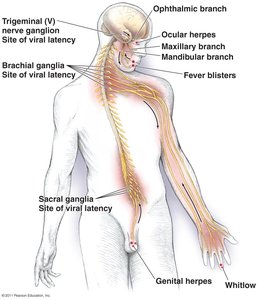
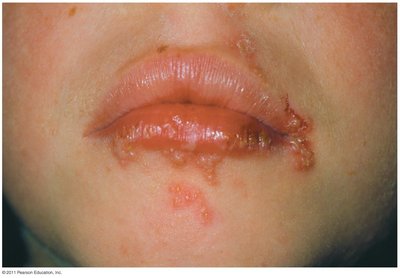
These viruses cause slow-spreading skin lesions and are commonly known as herpes simplex viruses (HSV-1 and HSV-2). They infect mucous membranes and skin, with latency established in nerve ganglia.
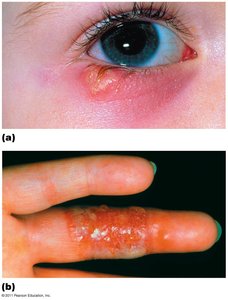
Types of infections: Oral herpes, genital herpes, ocular herpes, whitlow, neonatal herpes
Transmission: Close bodily contact, entry through mucous membrane breaks
Latency: Virus remains dormant in nerve ganglia, reactivating under certain conditions
Human Herpesvirus 3 (Varicella-Zoster Virus, VZV)
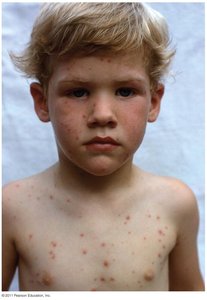
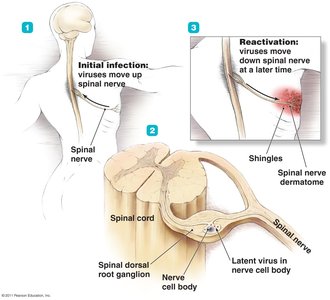
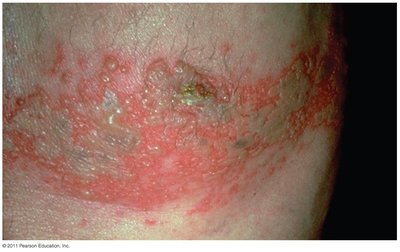
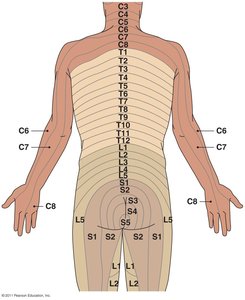
VZV causes two diseases: varicella (chickenpox) in children and herpes zoster (shingles) in adults. The virus enters via the respiratory tract or eyes, spreads through the bloodstream, and causes characteristic skin lesions. Latent virus can reactivate as shingles, typically in a single dermatome.
Human Herpesvirus 4 (Epstein-Barr Virus, EBV)
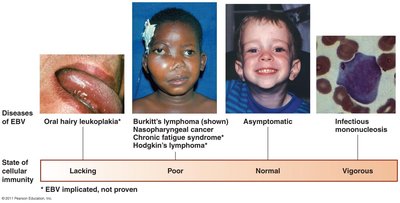
EBV is transmitted via saliva and initially infects the pharynx and salivary glands, then B lymphocytes. It can cause infectious mononucleosis, Burkitt's lymphoma, and other diseases, depending on the host's immune status. The virus becomes latent in B cells and can suppress apoptosis.
Human Herpesvirus 5 (Cytomegalovirus, CMV)
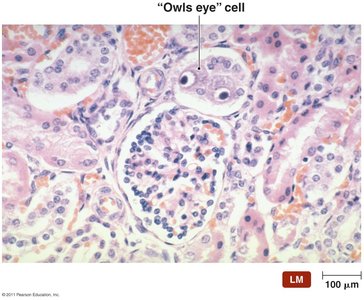
CMV causes cells to enlarge and is commonly transmitted through bodily secretions, requiring close contact. Most infections are asymptomatic, but complications can occur in fetuses, newborns, and immunodeficient patients. Diagnosis is based on the presence of "owl's eye" cells.
Other Herpesviruses
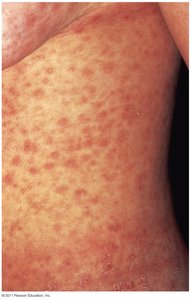
HHV-6 (Roseolovirus): Causes roseola, a pink rash, and may be linked to multiple sclerosis.
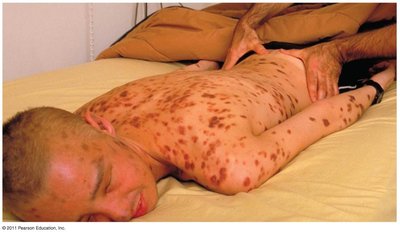
HHV-8 (Rhadinovirus): Associated with Kaposi's sarcoma, especially in immunocompromised individuals.
Papillomaviridae and Polyomaviridae
Papillomavirus Infections
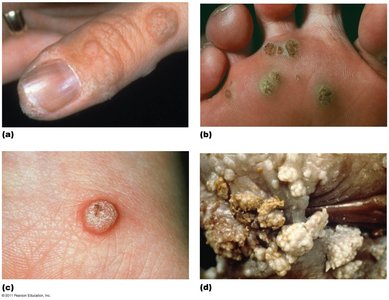
Papillomaviruses cause benign epithelial growths known as warts (papillomas), which can occur on various body surfaces. Genital warts are associated with an increased risk of cancer. Transmission occurs via direct contact and fomites, and autoinoculation can spread warts on the same individual.
Polyomavirus Infections
Polyomaviruses can cause tumors and other diseases. BK and JC viruses are widespread; their outcomes depend on immune status. In immunocompromised individuals, BK virus can cause severe urinary tract infections, while JC virus can cause progressive multifocal leukoencephalopathy, a fatal CNS disease.
Adenoviridae
Structure and Diseases
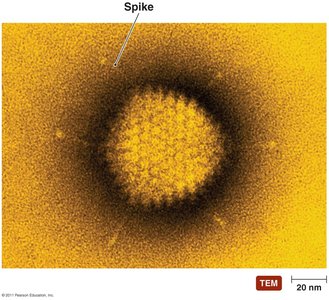
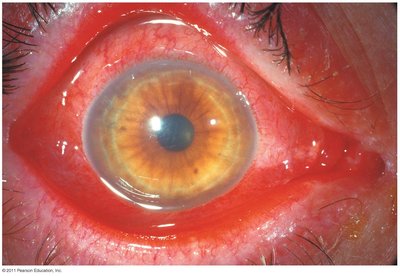
Adenoviruses are non-enveloped, linear dsDNA viruses. They are a common cause of respiratory infections (common cold), spread via respiratory droplets. They can also cause mild diarrhea and conjunctivitis (pinkeye).
Hepadnaviridae
Structure and Replication
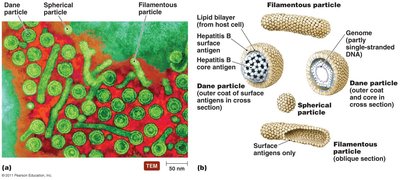
Hepadnaviruses are enveloped DNA viruses with a genome containing both single- and double-stranded DNA. Hepatitis B virus (HBV) is unique among DNA viruses in replicating through an RNA intermediary.

Hepatitis B Infections
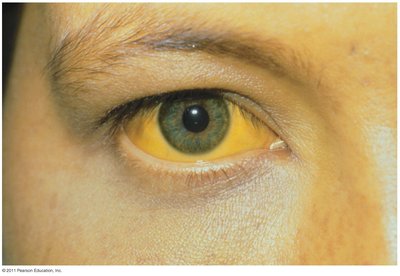
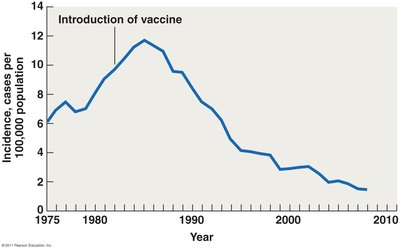
HBV causes hepatitis (liver inflammation), with symptoms such as jaundice, liver enlargement, abdominal distress, and bleeding. It is transmitted via body fluids (saliva, semen, vaginal secretions), often through needles, sexual contact, or childbirth. Chronic infection increases the risk of liver cancer.
Parvoviridae
Structure and Disease
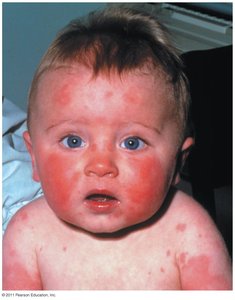
Parvoviruses are the smallest DNA viruses and the only human pathogens with a single-stranded DNA genome. The B19 virus causes erythema infectiosum (fifth disease), characterized by a red rash that is aggravated by sunlight.
Summary Table: Major DNA Virus Families and Diseases
Family | Genome | Envelope | Main Diseases |
|---|---|---|---|
Poxviridae | dsDNA | Yes | Smallpox, molluscum contagiosum |
Herpesviridae | dsDNA | Yes | Herpes simplex, chickenpox, shingles, mononucleosis, CMV, roseola, Kaposi's sarcoma |
Papillomaviridae | dsDNA | No | Warts, cervical cancer |
Polyomaviridae | dsDNA | No | BK/JC virus diseases |
Adenoviridae | dsDNA | No | Common cold, conjunctivitis |
Hepadnaviridae | dsDNA/ssDNA | Yes | Hepatitis B |
Parvoviridae | ssDNA | No | Fifth disease |
