 Back
Phylogenetic Diversity of Bacteria: Major Phyla, Cell Structure, and Ecological Roles Chapter 16
Study Guide - Smart Notes
 Tailored notes based on your materials, expanded with key definitions, examples, and context.
Chapter 16: Phylogenetic Diversity of Bacteria
Tree of Life
Domain (very well organized, 3 main)
Kingdom (plant animal or fungus)
Phylum - has an -es in old times but now often -ota
Class -
Order - ends in -ales
Family - ends in -aceae
Species
Genus
(strain) - strain vary a lot for their characteristic for bacteria - ends in ATCC 123
Overview of Bacterial Phylogeny
The phylogenetic diversity of bacteria encompasses a wide range of evolutionary lineages, each with distinct structural, metabolic, and ecological characteristics. Modern classification relies heavily on molecular data, especially 16S rRNA gene sequences, to delineate major phyla and their relationships.
Major Phyla: Proteobacteria, Firmicutes, Actinobacteria, Bacteroidetes, Cyanobacteria, Spirochetes, Chlamydiota, Planctomycetes, Deinococcus-Thermus, and others.
Phylogenetic Trees: Visual representations of evolutionary relationships among bacterial groups.
Ecological Roles: Bacteria are found in diverse habitats and play crucial roles in nutrient cycling, symbiosis, and pathogenesis.
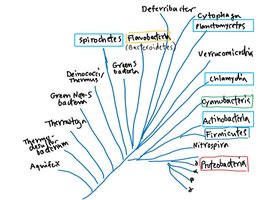
Major Phyla of Bacteria
Bacterial phyla are classified based on genetic, structural, and metabolic features. The proportion of taxa cultured varies among phyla, with some groups being well-studied and others primarily known from environmental DNA.
Proteobacteria: Most abundant, diverse metabolism, many pathogens.
Firmicutes: Gram-positive, low GC content, many pathogens and fermenters.
Actinobacteria: Gram-positive, high GC content, antibiotic producers.
Bacteroidetes: Gram-negative, common in gut and aquatic environments.
Cyanobacteria: Oxygenic photosynthesizers, important in global C and N cycles.
Spirochetes: Helical morphology, unique motility, some pathogens.
Chlamydiota: Intracellular parasites, reduced genomes.
Planctomycetes: Unique cell structures, aquatic habitats.
Deinococcus-Thermus: Radiation and heat-resistant bacteria.
Phylum Proteobacteria (Pseudomonadota)
General Characteristics
Proteobacteria are the most abundant and metabolically diverse group of bacteria. All members are Gram-negative and share similarities in their 16S rRNA genes. They include several classes: alpha, beta, gamma, delta, and epsilon.
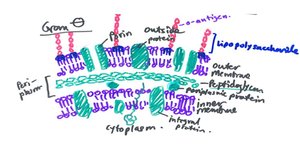
Gram-Negative Envelope (didermal): Thin peptidoglycan layer, outer membrane with lipopolysaccharide (LPS), less sensitive to penicillin.
Diverse Metabolism: Chemoautotrophs, chemoheterotrophs, photoautotrophs, photoheterotrophs.
Pathogenicity: Many human pathogens are found in this phylum.
figure below is there outer evnvelope.
Major Classes and Niches
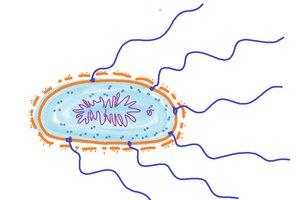
Pseudomonads (Gamma): Chemoheterotrophic, utilize many organic substrates, no fermentation, catalase and oxidase positive, polar flagella, some opportunistic pathogens (e.g., Pseudomonas aeruginosa), some used in bioremediation (cyanide at Homestake). O2 and NO3- respiration. Polar flagella. Figure 1 on left/looks like a white tampon.
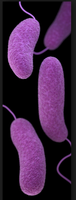
Vibrionales (Gamma): Chemoheterotrophic, aquatic environments associate with fish or squids (aquatic vertebrates), includes Vibrio cholerae (cholera pathogen) a human pathogen and Vibrio fischeri (luminescent mutualist). Figure 2 below (purple guys)
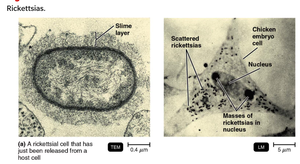
Rickettsia (Alpha): Intracellular parasites of animla cell, transmitted by arthropod vectors Ex. ticks, cause diseases like Rocky Mountain spotted fever and epidemic typhus. figure 3 below. They are pathogens not mutaligists
Enterobacteriales (Gamma): Enteric bacteria, Chemohetortophs, facultative anaerobes, Respiratory/fermentative, catalase positive, oxidase negative, common in animal gut (can portist in aquatic habitat as well), includes pathogens like Salmonella, Shigella, and Escherichia coli. K12 commensual, model organism, O157:H7-hemolytic uremic syndrome. Figure 4 below
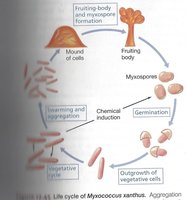
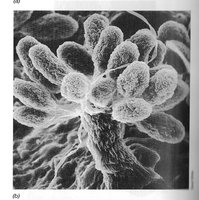
Myxobacteria (Delta): Exhibit complex life cycles with gliding motility and formation of multicellular fruiting bodies (myxospores). Figure 5 below

Phylum Chlamydiota (Chlamydias)
General Characteristics
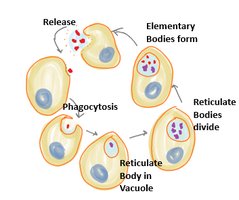
Chlamydias are obligate intracellular parasites of animal cells. They lack many metabolic enzymes and peptidoglycan. Chlamydia trachomatis is a major cause of sexually transmitted disease (SDT) and blindness.
Reduced Genome: Depend on host for many metabolic functions.
Unique Life Cycle: Alternates between infectious elementary bodies and replicative reticulate bodies.
Phylum Spirochetes (Spirochaeota)
General Characteristics
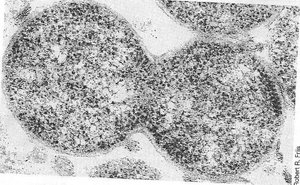
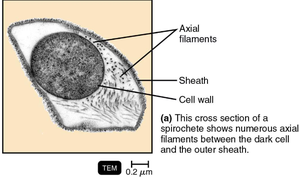
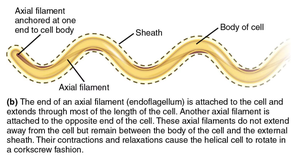
Spirochetes are long, thin, helical bacteria with a unique motility system involving periplasmic bundles of flagella (axial filaments). They are Gram-negative and chemoheterotrophic, with some species being pathogenic: borrelia boffola, Basiliscus pathogen
Helical Morphology: Enables corkscrew-like movement.
Pathogens: Includes agents of syphilis and Lyme disease.
Phylum Bacteroidetes (Bacterodota)
General Characteristics
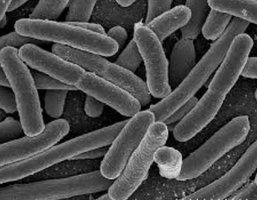
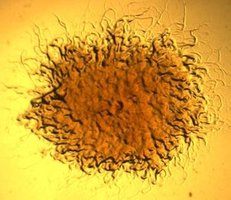
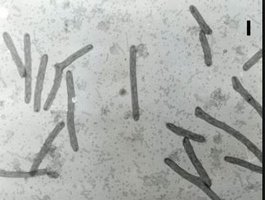
Bacteroidetes are Gram-negative, chemoheterotrophic bacteria commonly found in the human colon and aquatic environments. They exhibit gliding motility and form irregular, flat, spreading colonies.
Bacteroides: Anaerobic, abundant in human gut.
Flavobacterium: Aerobic, found in streams, includes fish pathogens.
Motility: Gliding motility is distinctive.
Phylum Planctomycetes (Planctomycetota)
General Characteristics
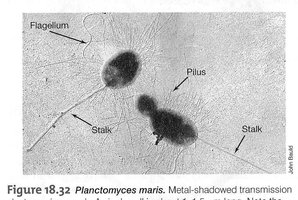
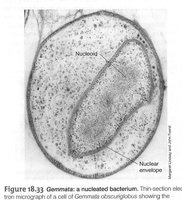
Planctomycetes are aquatic bacteria with unique cell structures, including membrane-bound compartments and stalks. Some species have chromosomes surrounded by infolded plasma membrane, resembling a nuclear envelope. Sometimes have subcellular cells that often resemble a nuclues.
Organelles: May possess S-layer cell walls and internal compartments.
Cell Morphology: Stalked cells, pilus, and flagella, nucleus like structure that is actually the infoldings plasma membrane.
Vary in their metabolism, fairly common in environment but tough to culture.
Phylum Firmicutes (Bacilliota)
General Characteristics
Firmicutes are Gram-positive bacteria with low GC content in their DNA. They are mostly chemoheterotrophic, very common, and include many human pathogens, fermenters, and endospore-formers.
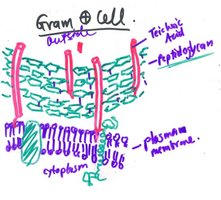
Gram-Positive Envelope: Thick peptidoglycan layer, teichoic acids.
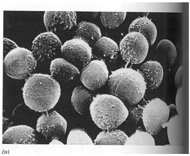
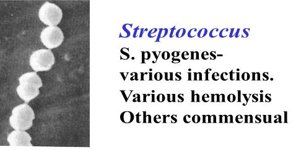
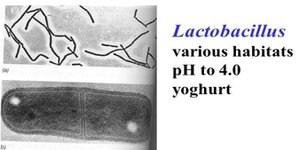
Common Genera: Staphylococcus, Lactobacillus (some produce yougurt from milk), Streptococcus (several major pathogens), Bacillus, Clostridium.
Metabolism: Fermentation of carbohydrates, production of lactic acid, aerobic and anaerobic respiration.
Pathogenicity: Includes major pathogens and commensals.
Endospore-Forming Firmicutes
Bacillus: often with flagella, common in may habitats, Aerobic, forms resistant endospores, some produce antibiotics or insecticidal toxins.
Clostridium: Chemoheterotrophic, Obligate anaerobes (anerobic), forms endospores, many pathogens, found in soil and animal GI tracts.
Example: Bacillus anthracis (anthrax), Clostridium botulinum (botulism).
Mycoplasmatota (mycoplasmas, tenericutes)
parasites of animals and plants
no cell wall
highly variable shapes
can cuase a typical phneomea
very small genome size
Phylum Actinobacteria (Actinobacterota)
General Characteristics
Actinobacteria are Gram-positive bacteria with high GC content in DNA. Majority are chemohetertropic. They include many antibiotic producers, pathogens, and filamentous forms (e.g., Streptomyces).
Antibiotic Production: Many genera produce clinically important antibiotics.
Acid-Fast Bacteria: Mycobacterium species have unique cell envelopes and are medically significant. Mycolic acid wall, waxy colonies resist antispectics, antibiotics, slow growth (M. tuberculosis, M. leprae)
Filamentous (actinobacteria) Morphology: Some form mycelia and conidiospores. Gram positive, aerobic, mycelial growth, conidiospores, rough colonies, abundant in soils, form numerous antibiotics. Many antibiotics we use are from Actinobacteria.
Phylum Cyanobacteria
General Characteristics
Cyanobacteria are photoautotrophic bacteria that perform oxygenic photosynthesis. They fix CO2 via the Calvin Cycle and contain chlorophyll and phycobilin in thylakoids, gas vacoules, carboxysomes. The are the ancestors of Chloroplasts. Cyanobacteria are primary producers in aquatic environments and can fix nitrogen.
Photosynthetic Pigments: Chlorophyll a, phycobilins.
Ecological Importance: Ancestors of chloroplasts, abundant in sea and freshwater, primary producers, nitrogen fixation.
Environmental Impact: Can cause poor water quality due to blooms.
Phylum Deinococcus-Thermus
General Characteristics
This phylum includes bacteria resistant to extreme conditions. Deinococcus radiodurans is highly resistant to radiation due to efficient DNA repair and condensed chromosomes. Thermus aquaticus is notable for its heat-stable DNA polymerase (Taq), used in PCR.
Extremely resistant to ionizing radiation. Donut like structure to chromsomes.
Cell Envelope: Thick peptidoglycan, outer membrane.
Metabolism: Chemoheterotrophic, adapted to hot springs.
Thermus aquatics
gram negative
variable cells
chemohetrotropihic
found in hot springs
Heat stable DNA polymerase
Taq polymerase-used for PCR
Discussion Questions
What photosynthetic and accessory pigments are present in Cyanobacteria? What sort of electron transport system (ETS) do they have?
What three unique subcellular structures are often present within the cells of Cyanobacteria?
What is the function of the heterocyst cells of Cyanobacteria, and how do they differ from normal cells?
Where are purple sulfur bacteria, such as Chromatium, found? What do their cells contain? What kind of ETS do they have?
Where are the purple non-sulfur bacteria found? What is their source of carbon, and what kind of photosynthetic ETS do they have?
What kinds of bacteria are diazotrophs, and what habitats are they found in? What kinds of symbioses do some of them have with other organisms?
Where are the autotrophic ammonia oxidizing bacteria found? What enzymes do they possess? What other microbes often live in consortia with them?
What is a methylotroph, and what are some examples of them? Where do they live and what key enzymes do they have?
What is a methanotroph? What unique enzyme do they have, and what is their relation to other methylotrophs? What habitats do they occupy, and what is their environmental importance?
Describe the unique life cycle of Myxobacteria. What eukaryotic organism does it remind you of?
Additional info:
16S rRNA gene sequencing is the primary method for bacterial phylogenetic classification.
Gram-positive and Gram-negative cell envelopes differ in peptidoglycan thickness and presence of outer membrane.
Endospore formation is a survival strategy in Firmicutes, especially Bacillus and Clostridium.
Actinobacteria are important for soil health and antibiotic production.
Cyanobacteria contribute to global carbon and nitrogen cycles.
