 Back
BackChapter 7
Study Guide - Smart Notes
 Tailored notes based on your materials, expanded with key definitions, examples, and context.
Controlling Microbial Growth
Factors to Consider Before Choosing a Microbial Control Method
Before selecting an appropriate method for microbial control, several factors must be evaluated to ensure effectiveness and safety:
Susceptibility: Determine if the microorganism is susceptible to the chosen compound or method. Some microbes are more resistant than others.
Environmental Factors: Temperature, pH, and the presence of organic contaminants can affect the efficacy of disinfectants. Warm disinfectants generally work better than cold ones.
Site of Application: Consider whether the location can tolerate harsh chemicals, heat, or radiation. Some materials or surfaces may be damaged by certain treatments.
Definitions and Practical Uses of Microbial Control Methods
Key Terms in Microbial Control
Sterilization: The complete elimination of all forms of microbial life, including resistant forms such as endospores and prions. Used for surgical instruments and laboratory media.
Disinfection: The destruction of vegetative (actively growing) microorganisms, but not endospores. Commonly uses chemicals, UV light, or boiling water for surfaces and equipment.
Antisepsis: The application of chemical agents to living tissue to inhibit or destroy microorganisms.
Degermination: Mechanical removal of microbes from a limited area, such as cleaning skin with alcohol before an injection.
Sanitization: Reducing microbial populations to safe levels as determined by public health standards, often in food service environments.
Pasteurization: Uses heat to kill vegetative bacteria in liquids, reducing the number of microorganisms and eliminating dangerous pathogens to prevent foodborne illness. Does not sterilize.
Microbial Death and Its Significance
Definition and Importance
Microbial death refers to the permanent loss of reproductive capability in microorganisms. This concept is crucial for determining the effectiveness of sterilization and disinfection methods.
Microbial death occurs at a constant rate under specific conditions.
Understanding microbial death helps in designing protocols for sterilization and disinfection.
Physical Methods of Microbial Control
Temperature-Based Methods
Temperature is a critical factor in controlling microbial growth. Each species has an optimal temperature range for growth, and deviations can inhibit or kill microbes.
Thermal Death Point (TDP): The lowest temperature at which all organisms in a liquid suspension are killed in 10 minutes.
Thermal Death Time (TDT): The minimum time required to kill all organisms at a given temperature.
Decimal Reduction Time (D-value): The time in minutes required to kill 90% of a microbial population at a given temperature.
Heat Methods
Dry Heat: Involves direct flames, electric heating, or incineration. Suitable for metal and glass but less efficient than moist heat. Not suitable for heat-sensitive materials.
Moist Heat: Utilizes steam under pressure (autoclave), boiling water, or flowing steam. More effective than dry heat and can inactivate all fungi, bacteria, viruses, and spores, but not prions.

Other Physical Methods
Refrigeration/Freezing: Slows or halts microbial growth. Some pathogens can survive and reproduce at low temperatures. Freezing forms ice crystals that can damage cell membranes, but many microbes can survive for years.
Desiccation & Lyophilization: Drying inhibits microbial growth by removing water. Lyophilization (freeze-drying) combines freezing and drying to preserve organisms for long-term storage.
Osmotic Pressure: High solute concentrations (e.g., salt or sugar) create hypertonic environments, causing water loss from cells and inhibiting growth. Not always effective against molds.
Filtration: Physically removes microbes from liquids or gases using filters with small pore sizes. Essential for sterilizing heat-sensitive solutions like antibiotics and vaccines.
Radiation
Ionizing Radiation: Includes electron beams, gamma rays, and X-rays (wavelengths ~1 nm). Disrupts hydrogen bonds and oxidizes molecules, causing DNA damage and cell death. Used for sterilizing medical equipment and food.
Nonionizing Radiation: Includes UV light, radio, and microwaves (wavelengths >1 nm). Causes formation of new covalent bonds, altering proteins and DNA. Mainly used for air, transparent fluids, and surfaces due to poor penetration.
Effectiveness depends on exposure time, distance, shielding, and penetration ability.
Microbicidal vs. Microbiostatic Agents
Definitions
Microbicidal: Agents that destroy microbes. Subcategories include bactericidal (bacteria-killing), fungicidal (fungi-killing), and virucidal (virus-killing) agents.
Microbiostatic: Agents that inhibit microbial growth without killing. Examples include bacteriostatic and fungistatic agents.
Factors Influencing Antimicrobial Effectiveness
Population Size: Larger populations require more time to eliminate.
Population Composition: Different organisms have varying susceptibilities (e.g., endospores are more resistant).
Local Environment: Presence of biofilms or organic material (e.g., blood, feces) can protect microbes and reduce effectiveness.
Concentration: Higher concentrations of agents generally increase effectiveness, but some agents are more effective at lower concentrations.
Duration of Exposure: Longer exposure times increase effectiveness.
Temperature: Higher temperatures often enhance the activity of antimicrobial agents.
Measuring the Effectiveness of Disinfectants and Antiseptics
Common Methods
Bioassay Method: Test organisms are exposed to the disinfectant, then transferred to a growth medium. Turbidity indicates survival.
Use-Dilution Test: Measures the effectiveness of a disinfectant at different concentrations.
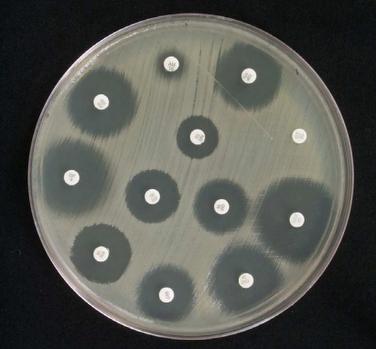
Disk-Diffusion Method: Filter paper disks with the agent are placed on an agar plate inoculated with bacteria. The "zone of inhibition" around the disk indicates effectiveness.
Antimicrobial Chemicals: Types, Advantages, and Disadvantages
Antimicrobial chemicals vary in their spectrum of activity, toxicity, and suitability for different applications. Common types include:
Alcohols: Effective against bacteria and fungi; not sporicidal. Used for skin antisepsis.
Halogens (e.g., chlorine, iodine): Broad-spectrum activity; used for water treatment and wound cleaning.
Phenolics: Disrupt cell membranes; used in disinfectants and antiseptics.
Quaternary Ammonium Compounds: Effective against bacteria, less so against spores and viruses; used for surface disinfection.
Aldehydes: Potent sterilants; used for medical equipment but can be toxic.
Heavy Metals: Inhibit microbial enzymes; limited use due to toxicity.
Advantages and disadvantages depend on the agent's spectrum, toxicity, stability, and cost.
Food Preservation Methods and Their Effectiveness
Pasteurization
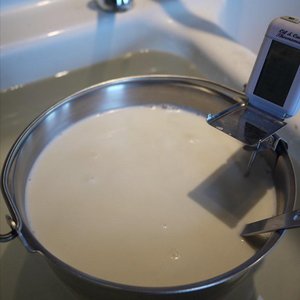
Pasteurization applies heat to liquids to kill pathogens and spoilage microbes. It does not sterilize but significantly reduces microbial load, making food safer for consumption.
Pressure Canning
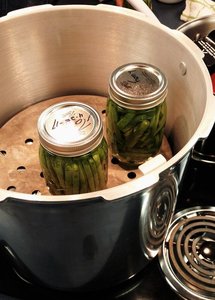
Pressure canning uses boiling to force air out of jars, creating a vacuum seal as the jar cools. This prevents contamination and creates an anaerobic environment, limiting microbial growth.
Food Irradiation
Food irradiation uses high-energy wavelengths to disrupt microbial DNA, reducing or eliminating pathogens. The process does not make food radioactive or produce dangerous substances, and nutritional value is largely preserved.
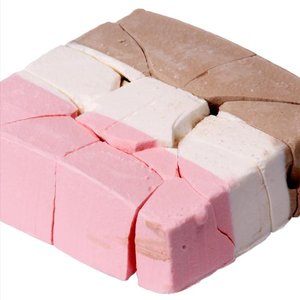
Additional info: Lyophilization is also used for long-term preservation of food and biological samples, as it prevents spoilage and maintains viability.
