 Back
BackPhysical and Chemical Methods of Microbial Control
Study Guide - Smart Notes
 Tailored notes based on your materials, expanded with key definitions, examples, and context.
Physical Methods of Microbial Control
Radiation
Radiation is a physical method used to control microbial growth by damaging cellular components, particularly DNA. The effectiveness of radiation depends on its wavelength, intensity, and duration of exposure. Shorter wavelengths have higher energy and are generally more effective at microbial destruction.
Ionizing Radiation: Includes gamma rays and X-rays. It has a high degree of penetration and acts primarily by ionizing water to form highly reactive hydroxyl radicals, which damage DNA and other cellular structures.
Applications: Low-level ionizing radiation is used to process spices, certain meats, and vegetables to reduce microbial load.

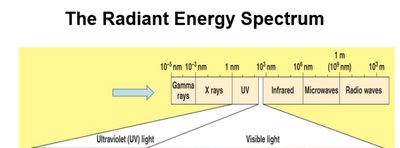
The Radiant Energy Spectrum
The radiant energy spectrum includes various types of electromagnetic radiation, each with different wavelengths and energies. Microbial control methods utilize specific regions of this spectrum, such as ultraviolet (UV) and ionizing radiation.
Wavelength and Energy: As wavelength increases, energy decreases. UV light, X-rays, and gamma rays are most relevant for microbial control.
UV Light: Effective for surface disinfection and air sterilization, but limited by poor penetration.
Ultraviolet (UV) Radiation
Ultraviolet radiation is a form of nonionizing radiation with limited penetration. It damages cells by forming thymine dimers in DNA, which interfere with DNA replication. The most effective germicidal wavelength is 260 nm.
Applications: Used to control microbes in the air and disinfect vaccines.
Limitations: UV radiation is less effective for deep disinfection due to its low penetration. It can also damage human tissues, causing burns and increasing the risk of skin cancers.
Microwaves: Kill microbes indirectly by heating materials, not by direct radiation effects.
Chemical Methods of Microbial Control
Principles of Effective Disinfection
The effectiveness of chemical disinfectants depends on several factors:
Concentration of disinfectant
Presence of organic matter
pH of the environment
Contact time with microorganisms
Degree of contact with microorganisms
Temperature
Conditions Influencing Microbial Control
The type of microorganism and the physical environment significantly affect the efficacy of chemical disinfectants.
Type of Microbe: Gram-positive bacteria are generally more susceptible to disinfectants than gram-negative bacteria. Pseudomonads can grow in some disinfectants. Mycobacterium tuberculosis is resistant to many disinfectants. Endospores are highly resistant to both chemical and physical methods.
Environment: Organic matter (e.g., vomit, feces) can inhibit disinfectant action. Warm temperatures enhance disinfectant activity.
Evaluating a Disinfectant
The disk-diffusion method (agar diffusion test) is commonly used to evaluate the effectiveness of disinfectants. This method measures the zone of inhibition around a disk soaked with the chemical agent, indicating microbial susceptibility.

Types of Disinfectants
Phenol, Phenolics, and Bisphenols
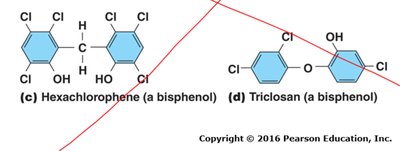
These compounds disrupt microbial cell membranes, inactivate enzymes, and denature proteins. Phenol (carbolic acid) was first used by Lister but is now rarely used due to its odor and skin irritation. Phenolics are chemically modified phenols combined with soaps or detergents for improved efficacy and reduced odor. Bisphenols contain two phenol groups connected by a bridge (e.g., hexachlorophene, triclosan).
Phenolics: Effective against a broad range of microbes, especially those with high lipid content in their cell walls, such as Mycobacterium.
Bisphenols: Common examples include hexachlorophene and triclosan. Triclosan inhibits fatty acid synthesis and is effective against Gram-positive bacteria, some fungi, and Gram-negative bacteria, but Pseudomonas aeruginosa is resistant.
Additional info: Phenolics and bisphenols are widely used in household disinfectants and antiseptics. Their effectiveness can be reduced by organic matter and soap residues.
