 Back
BackPractical Applications of Immunology: Vaccines and Immunological Diagnostic Tests
Study Guide - Smart Notes
 Tailored notes based on your materials, expanded with key definitions, examples, and context.
Vaccines: History and Types
History of Vaccination
Vaccination is a cornerstone of immunology and public health, providing protection against infectious diseases by stimulating the immune system to recognize and combat pathogens. The practice has evolved from early methods of variolation to modern, scientifically developed vaccines.
Early Practices: Ancient Chinese methods involved using ground smallpox pustules, which were inserted or inhaled to induce immunity.
Variolation in Europe: Lady Mary Montagu introduced the concept of variolation to Europe after observing it in Turkey, where infected fluids were introduced via the skin.
Edward Jenner: Discovered that dairy maids infected with cowpox (a less severe disease) did not contract smallpox. He used cowpox (Vaccinia virus) to induce immunity against smallpox, coining the term "vaccination" (from Latin vacca, meaning cow).
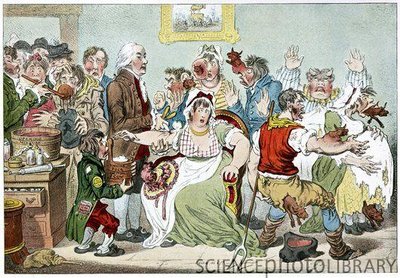
Impact of Vaccination
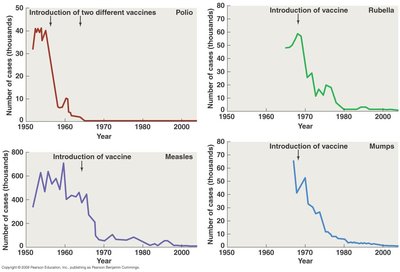
The introduction of vaccines has led to a dramatic reduction in the incidence of many infectious diseases, as evidenced by epidemiological data.
Polio, Rubella, Measles, Mumps: The number of cases of these diseases dropped sharply following the introduction of vaccines.
Common Vaccines in the United States
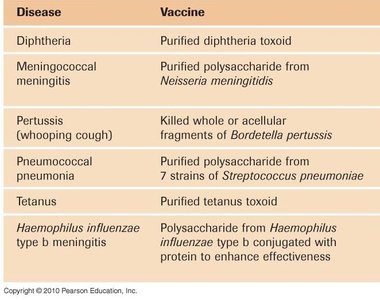
Several vaccines are routinely administered in the U.S. to prevent serious infectious diseases. These vaccines use different strategies to elicit protective immunity.
Disease | Vaccine |
|---|---|
Diphtheria | Purified diphtheria toxoid |
Meningococcal meningitis | Purified polysaccharide from Neisseria meningitidis |
Pertussis (whooping cough) | Killed whole or acellular fragments of Bordetella pertussis |
Pneumococcal pneumonia | Purified polysaccharide from 7 strains of Streptococcus pneumoniae |
Tetanus | Purified tetanus toxoid |
Haemophilus influenzae type b meningitis | Polysaccharide from Haemophilus influenzae type b conjugated with protein to enhance effectiveness |
Types of Vaccines
Attenuated Whole-Agent Vaccines
These vaccines use living but weakened (attenuated) microbes. They provide life-long immunity without the need for boosters, as the organisms can replicate in the body, increasing the antigenic dose.
Example: MMR vaccine (measles, mumps, rubella)
Limitation: Not recommended for immunocompromised patients.
Inactivated Whole-Agent Vaccines
These vaccines contain microbes that have been killed but retain their antigenic properties. They are safer for all patients but often require booster doses to maintain immunity.
Examples: Influenza, rabies vaccines
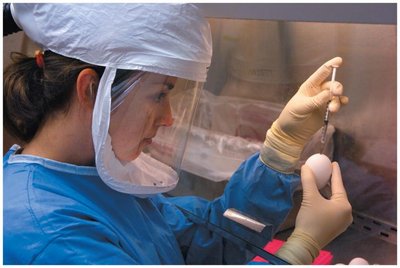
Production: Influenza virus is commonly grown in chicken eggs, which may cause allergic reactions in some individuals.
Subunit Vaccines
Subunit vaccines use only antigenic fragments of a microbe, such as surface proteins, to stimulate an immune response. These are often produced using recombinant DNA technology.
Advantage: Reduced risk of adverse reactions since only specific components are used.
Conjugated Vaccines
Conjugated vaccines are designed to enhance the immune response to weak antigens, such as polysaccharides, by linking them to a protein carrier (toxoid).
Example: Haemophilus influenzae type b (HiB) vaccine
Nucleic Acid Vaccines
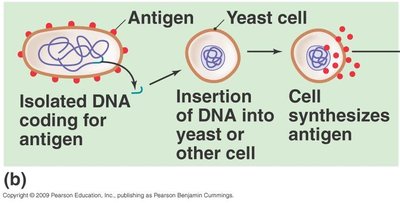
Nucleic acid vaccines involve the injection of DNA or mRNA encoding an antigen. Host cells produce the antigen, which then stimulates an immune response. These vaccines are stable, do not require refrigeration, and are considered safe.
Examples: Horse West Nile vaccine, research into Zika vaccine, and COVID-19 mRNA vaccines.
Progression of Vaccine Technology: COVID-19 Vaccines
The COVID-19 pandemic accelerated the development and deployment of nucleic acid vaccines, particularly mRNA vaccines.
BioNTech/Pfizer and Moderna: mRNA vaccines encased in lipid micelles.
Johnson & Johnson/Janssen: DNA vaccine delivered via attenuated adenovirus vector.
Vaccine Hesitancy and Social Issues
Despite their success, vaccines have faced public skepticism and misinformation, such as the debunked claim linking MMR vaccines to autism. Vaccine fears often stem from misunderstandings about adjuvants and preservatives.
Herd Immunity: Achieved when a high percentage of the population is immune, reducing disease spread.
Immunological Diagnostic Tests
Overview
Immunological tests are essential tools for diagnosing infectious diseases. They detect either antigens (from pathogens) or antibodies (produced in response to infection) in patient samples, often providing rapid and visual results.
Monoclonal Antibody Production
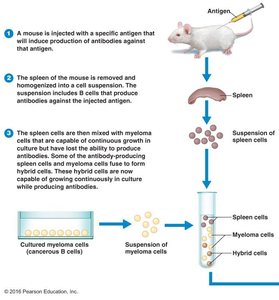
Monoclonal antibodies (Mabs) are identical antibodies produced by hybridoma cells, which are created by fusing antibody-producing spleen cells with myeloma (cancer) cells. Mabs are highly specific and have numerous diagnostic and therapeutic applications.
Applications: Organ transplant rejection prevention, pregnancy tests, treatment of autoimmune diseases (e.g., Humira for rheumatoid arthritis), and COVID-19 therapies.
Immunological Reaction-Based Tests
Precipitation Tests
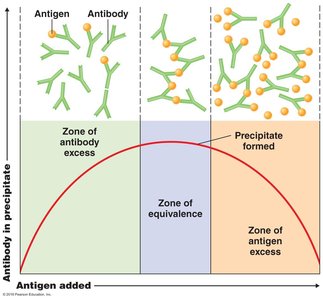
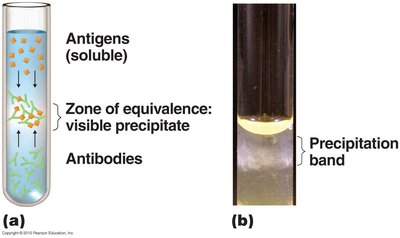
Precipitation reactions occur when antibodies bind to soluble antigens, forming an insoluble complex (precipitate) that falls out of solution. The reaction is optimal at a specific antigen-antibody ratio (zone of equivalence).
Example: Precipitin ring test, where antigen and antibody solutions form a visible band at the zone of equivalence.
Agglutination Tests
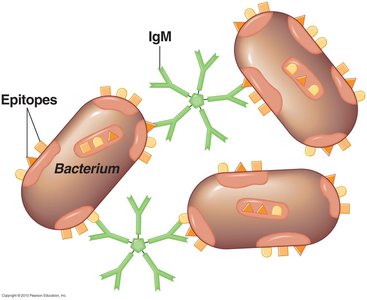
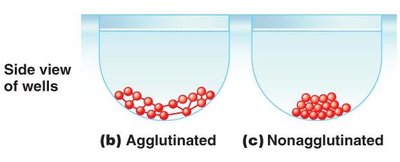
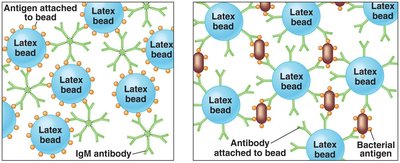
Agglutination involves the clumping of particles when antibodies bind to antigens on the surface of cells or beads. These tests are used to detect the presence of antibodies or antigens in a sample.
Direct Agglutination: Detects antibodies by their ability to clump whole cells (e.g., blood typing).
Indirect Agglutination: Uses latex or clay beads coated with antigen or antibody to visualize agglutination.
Hemagglutination
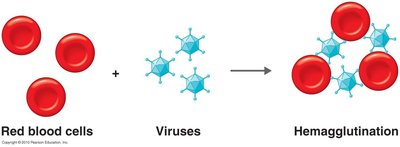
Hemagglutination is a specific type of agglutination involving red blood cells. It is used for blood typing and detecting certain viruses that cause red blood cells to clump.
Blood Typing: Antibodies cause clumping of red blood cells with specific antigens (A, B, O types).
Viral Hemagglutination: Some viruses can agglutinate red blood cells without antibodies.
Fluorescent Antibody Tests
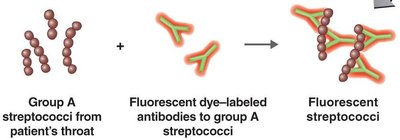
These tests use antibodies labeled with fluorescent dyes to detect the presence of specific antigens or antibodies under a UV microscope.
Direct Test: Detects antigens in patient samples using fluorescently labeled antibodies.
Indirect Test: Detects patient antibodies by using a secondary fluorescently labeled antibody.
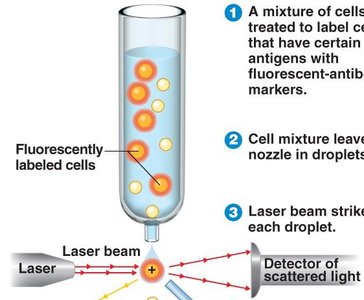
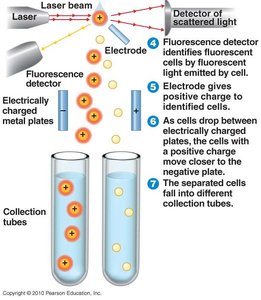
Fluorescence-Activated Cell Sorting (FACS)
FACS is a technique for sorting and counting cells labeled with fluorescent antibodies. It is commonly used to quantify CD4+ T cells in AIDS patients and to separate other cell types for research or clinical purposes.
ELISA: Enzyme-Linked Immunosorbent Assay
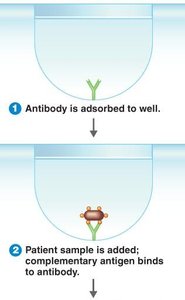
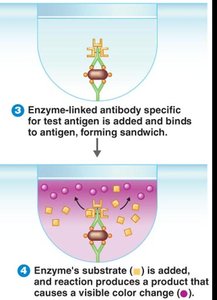
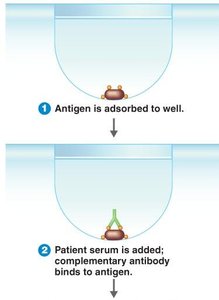
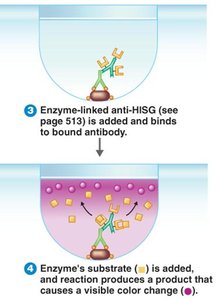
ELISA is a sensitive and versatile assay used to detect antigens or antibodies in patient samples. It relies on enzyme-linked antibodies and a colorimetric substrate for visual detection.
Direct ELISA: Detects antigens in patient serum using a capture antibody and an enzyme-linked detection antibody.
Indirect ELISA: Detects antibodies in patient serum using an antigen-coated well and an enzyme-linked anti-antibody.
Applications of ELISA: Home Pregnancy Tests
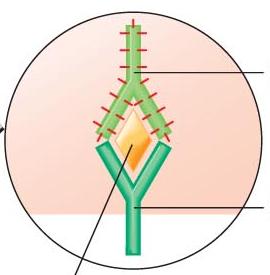
Home pregnancy tests are a common application of ELISA technology. They detect the hormone hCG in urine using a sandwich ELISA format, resulting in a visible color change in the test window.
Mechanism: Free monoclonal antibody specific for hCG is part of the test strip, and a capture antibody is bound to the test surface. The presence of hCG forms a sandwich, producing a color change.
Other Applications: ELISA is also used in tests for infectious diseases, allergies, and other home-based diagnostics.
