 Back
BackPractical Applications of Immunology: Vaccines and Their Role in Disease Prevention
Study Guide - Smart Notes
 Tailored notes based on your materials, expanded with key definitions, examples, and context.
Vaccines: Principles and Importance
Definition and Purpose of Vaccines
Vaccines are biological preparations designed to stimulate the immune system to recognize and combat specific pathogens without causing the disease itself. They contain either whole organisms or portions of organisms (antigens) that trigger the production of memory cells, providing long-term immunity.
Whole organism vaccines may use live or inactivated microbes.
Antigen-based vaccines use purified components or inactivated toxins.
Purpose: To induce immunity and prevent infectious diseases, especially those for which no cure exists.
Why Vaccines Are Needed
While some communicable diseases can be controlled through behavioral or environmental interventions (e.g., condom use for STIs, sanitation for cholera), these methods are not always effective. Bacterial diseases may be treated with antibiotics, but viral diseases often lack curative treatments. Thus, vaccines are the most effective means of controlling diseases with no cure.
Types of Vaccines
1. Attenuated Whole Agent Vaccines
These vaccines use live microbes that have been weakened (attenuated) through mutation so they cannot cause disease in healthy individuals. They closely mimic natural infection and stimulate both cell-mediated (T cell) and antibody-mediated (B cell) immune responses, often conferring life-long immunity.
Example: MMRV vaccine (Measles, Mumps, Rubella, Varicella)
Risk: Rarely, the organism may revert to a pathogenic form, posing a risk to immunocompromised individuals and pregnant women.
2. Inactivated Whole Agent Vaccines
These vaccines contain microbes that have been killed, eliminating the risk of causing disease. They are less likely to induce strong cell-mediated immunity but are safer for immunocompromised individuals.
Examples: Rabies, Influenza, Polio (viruses); Vibrio cholerae (bacteria)
3. Toxoids
Toxoids are inactivated toxins derived from purified proteins. The immune response targets the toxoid, providing protection against the effects of the toxin rather than the organism itself. Toxoid vaccines stimulate mainly antibody-mediated immunity and often require booster shots for sustained protection.
Example: DTaP vaccine (Diphtheria, Tetanus, Pertussis)they stimulate the antibody mediated response
Note: Immunity is shorter-lived and requires periodic boosters (e.g., every ten years).
4. Subunit Vaccines
Subunit vaccines contain purified components (antigens) from pathogens that are most likely to induce an immune response. They are extremely safe, as they do not contain the disease-causing agent itself, and primarily stimulate antibody-mediated immunity.
Examples: Streptococcus pneumoniae capsule polysaccharide (Pneumoshot), Hepatitis B viral coat proteins produced by genetically modified yeast
5. Conjugated Vaccines
Conjugated vaccines are designed to enhance the immune response in young children, whose immune systems do not respond well to capsular polysaccharides alone. By combining a polysaccharide antigen with a protein antigen, these vaccines elicit a stronger immune response.
Example: Haemophilus influenzae capsule combined with diphtheria toxoid
Benefit: Effective in children as young as 2 months
Vaccine Safety and Herd Immunity
Vaccine Safety
Vaccines are generally safe, but in very rare cases, live attenuated vaccines may cause the disease they are intended to prevent. This risk is primarily associated with immunocompromised individuals.
Herd Immunity
Herd immunity occurs when a significant portion of a population is immune to a disease, reducing its spread and protecting unvaccinated individuals. This is especially effective for diseases with only human reservoirs. However, declining vaccination rates can compromise herd immunity, leading to outbreaks of diseases like polio and measles.
Case Studies: Polio and Measles
Polio
Polio is a viral disease with a spectrum of severity:
99% of cases are mild.
1% result in paralytic poliomyelitis, which can cause permanent limb paralysis or death due to respiratory muscle involvement.
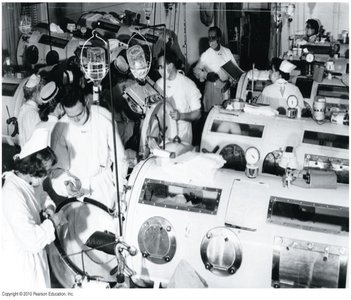
Measles
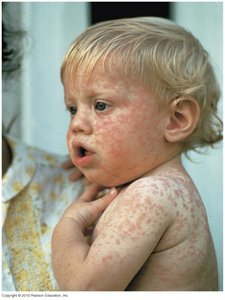
Measles is a highly contagious respiratory infection characterized by a distinctive rash. Complications can include permanent brain damage and, in rare cases, subacute sclerosing panencephalitis. Measles remains a significant cause of childhood mortality worldwide.
Summary Table: Types of Vaccines
Type of Vaccine | Main Feature | Immune Response | Examples | Notes |
|---|---|---|---|---|
Attenuated Whole Agent | Live, weakened microbes | Cell-mediated & antibody-mediated | MMRV | Risk of reversion; not for immunocompromised |
Inactivated Whole Agent | Killed microbes | Mainly antibody-mediated | Rabies, Influenza, Polio, Cholera | Safer, but may require boosters |
Toxoid | Inactivated toxins | Antibody-mediated | DTaP | Requires boosters |
Subunit | Purisubunit antigens | Antibody-mediated | Pneumoshot, Hepatitis B | Extremely safe |
Conjugated | Polysaccharide + protein | Antibody-mediated (stronger in children) | Hib vaccine | Effective in young children |
