 Back
BackPractical Applications of Immunology: Vaccines and Vaccine-Preventable Diseases
Study Guide - Smart Notes
 Tailored notes based on your materials, expanded with key definitions, examples, and context.
Practical Applications of Immunology
Vaccines: Historical Development and Definition
Vaccines are a cornerstone of immunology, providing protection against infectious diseases by stimulating the immune system. The practice began with variolation for smallpox and evolved through Jenner's use of cowpox material, leading to the term vaccination (from vacca, Latin for cow).
Variolation: Early method using dried smallpox scabs for inoculation (1400s–1700s).
Vaccination: Jenner's cowpox inoculation (1798), later named by Pasteur.
Vaccine: Suspension of organisms or their fractions to induce immunity.

Principles and Effects of Vaccination
Vaccination provokes a primary immune response, resulting in antibody production and memory cell formation. Subsequent exposures trigger a rapid, intense secondary response. Herd immunity occurs when most of the population is immune, reducing outbreaks.
Primary response: Formation of antibodies and memory cells.
Secondary response: Rapid, intense reaction upon re-exposure.
Herd immunity: Outbreaks are sporadic due to lack of susceptible individuals.
CDC-Recommended Vaccines to Prevent Bacterial and Viral Diseases
The CDC recommends various vaccines to prevent both bacterial and viral diseases. These vaccines differ in their composition, administration, and booster requirements.
Bacterial Diseases
H. influenzae type b: Polysaccharide vaccine for children.
Meningococcal ACWY/B: Purified polysaccharide vaccines for meningitis.
Pneumococcal pneumonia: Polysaccharide vaccines for children and adults.
Tetanus, diphtheria, pertussis: DTaP, Tdap, Td vaccines with regular boosters.
Viral Diseases
Chickenpox (varicella): Attenuated virus vaccine for infants.
COVID-19: mRNA vaccine, two-dose series.
Hepatitis A/B: Inactivated virus and recombinant antigen vaccines.
Human Papillomavirus (HPV): Virus-like particle vaccine.
Influenza: Inactivated and attenuated virus vaccines, annual administration.
Measles, mumps, rubella: Attenuated virus vaccines for infants and outbreak exposure.
Poliomyelitis: Inactivated virus vaccine.
Rabies: Inactivated virus vaccine for high-risk adults.
Rotavirus: Oral attenuated virus vaccine for infants.
Smallpox: Attenuated vaccinia virus for select groups.
Zoster (shingles): Virus antigen vaccine for older adults.
Types of Vaccines and Their Characteristics
Vaccines are classified based on their composition and method of action. Each type has distinct advantages and limitations.
Attenuated vaccines: Weakened pathogens, mimic natural infection, confer lifelong immunity, not for immunocompromised patients, risk of reversion to virulence.
Inactivated vaccines: Killed microbes, safer, require boosters, induce humoral immunity.
Subunit vaccines: Use antigenic fragments; includes recombinant, toxoid, and virus-like particle (VLP) vaccines.
Polysaccharide vaccines: Made from capsule molecules, not highly immunogenic.
Conjugated vaccines: Polysaccharide attached to protein carrier, effective in young children.
DNA vaccines: Injected DNA directs synthesis of protein antigen, stimulates both humoral and cellular immunity.
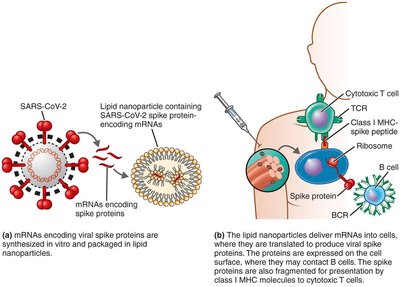
mRNA vaccines: mRNA in lipid nanoparticles directs synthesis of encoded antigen (e.g., COVID-19 spike protein).
Recombinant vector vaccines: Genetically modified avirulent viruses or bacteria deliver DNA coding for antigens.
Vaccine Production, Administration, and Safety
Modern vaccine production utilizes advanced technologies, including DNA, mRNA, and recombinant vectors, often without animal hosts. Adjuvants are added to enhance effectiveness. Administration methods vary, and safety is rigorously monitored.
Production: DNA, mRNA, and recombinant vector vaccines do not require animal hosts; plants are potential production systems.
Adjuvants: Substances like alum and monophosphoryl lipid A improve immune response via Toll-like receptors.
Administration: Oral, nasal, skin patch, and combination vaccines are used for ease and effectiveness.
Safety: Rare cases of disease from vaccines (e.g., oral polio); no evidence linking MMR to autism; mRNA vaccines have outstanding safety records.
Impact of Vaccines on Disease Prevention
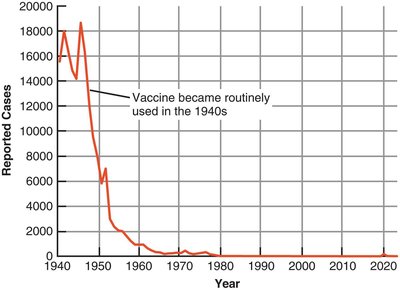
Immunization campaigns have dramatically reduced the incidence of vaccine-preventable diseases. For example, diphtheria cases dropped from over 15,000 in 1921 to only 14 since 1996 due to vaccination.
Persistent diseases: Some diseases persist due to low vaccination rates, poverty, and lack of infrastructure.
Booster requirements: Some vaccines need extra boosters for continued effectiveness.
Vaccine avoidance: Safety concerns can lead to reduced vaccination rates.
Global Initiatives and Disease Elimination
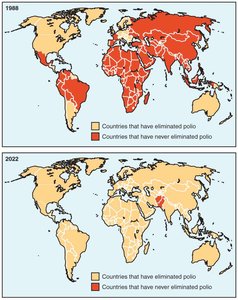
International campaigns aim to eliminate diseases such as measles, rubella, and polio. The Global Polio Eradication Initiative has succeeded in most regions, with only a few countries remaining endemic.
Measles and Rubella Initiative: Focused on disease elimination.
Global Polio Eradication Initiative: Most countries have eliminated polio; Afghanistan and Pakistan remain endemic.
Additional info: Vaccines are the safest and most effective means of preventing infectious diseases in children and adults, with ongoing research to improve their efficacy and accessibility worldwide.
