Back
BackPrinciples of Disease and Epidemiology: Microbiology Study Guide
Study Guide - Smart Notes
 Tailored notes based on your materials, expanded with key definitions, examples, and context.
Principles of Disease and Epidemiology
Symbiotic Relationships
Symbiotic relationships describe the interactions between two different organisms living together. These relationships are fundamental in microbiology, as they explain how microbes interact with their hosts and environments.
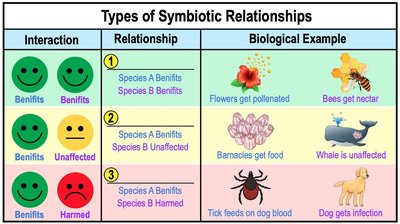
Mutualism: Both organisms benefit from the relationship. Example: Flowers get pollinated and bees get nectar.
Commensalism: One organism benefits, while the other is unaffected. Example: Barnacles get food and whale is unaffected.
Parasitism: One organism benefits at the expense of the other. Example: Tick feeds on dog blood and dog gets infection.
All pathogens are categorized as parasites.
The Human Microbiome
The human microbiome consists of communities of microbes that inhabit the human body. These microbes play essential roles in health, immunity, and disease.
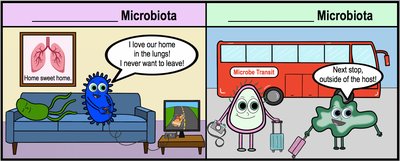
Resident Microbiota: Microbes that persist on/in the host for extended periods.
Transient Microbiota: Microbes that are only temporarily found in the body, often including pathogens.
Factors Influencing Microbiome Composition
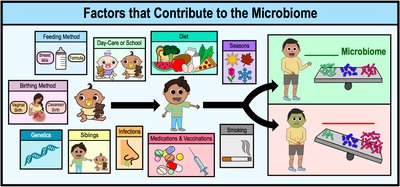
Many factors contribute to the composition and diversity of the human microbiome, including genetics, diet, environment, and medical interventions.
Feeding method (breastfeeding vs. formula)
Birthing method (vaginal vs. cesarean)
Diet, siblings, infections, medications, and vaccinations
Environmental exposures (day-care, seasons, smoking)
Microbiome and Innate Immunity
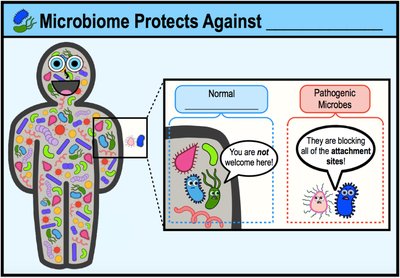
The microbiome is a crucial component of innate immunity, providing protection against pathogenic microbes by creating a competitive environment and blocking attachment sites.
Microbes outcompete pathogens for resources.
Microbes block pathogen attachment sites.
Microbes produce compounds harmful to pathogens.
Microbiome and Adaptive Immunity
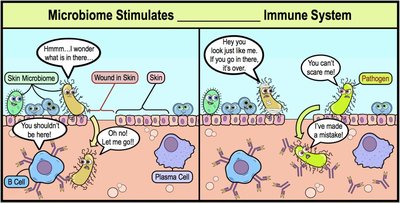
The microbiome can stimulate the adaptive immune system, preparing it to respond to pathogens not yet encountered.
Exposure to microbiota can lead to antibody production.
Antibodies may be effective against pathogens with similar antigens.
Microbiome Promotes Immune Tolerance
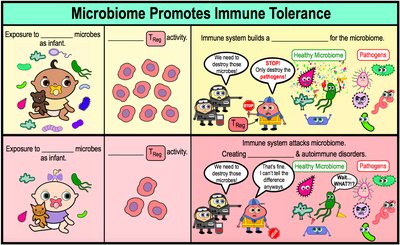
Immune tolerance is the ability of the immune system to distinguish harmless from harmful microbes, preventing autoimmunity. Regulatory T cells (TReg) play a key role in this process.
Early exposure to microbes increases TReg activity.
Insufficient exposure (hygiene hypothesis) increases risk of allergies and autoimmune disorders.
Microbiome and Nutrition
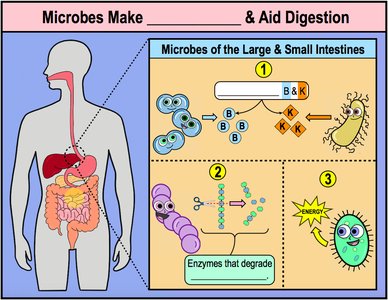
The intestinal microbiome produces essential nutrients and aids in digestion.
Production of vitamins (e.g., B and K)
Production of enzymes that degrade complex carbohydrates
Fermentation produces energy sources for epithelial cells
Koch’s Postulates
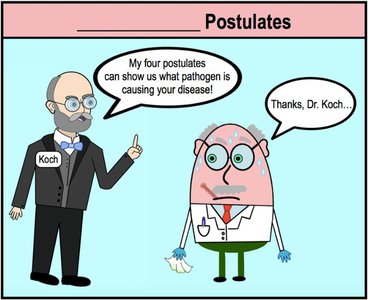
Koch’s postulates are a set of criteria used to determine if a particular microbe causes a particular disease. They are foundational in the study of infectious diseases.
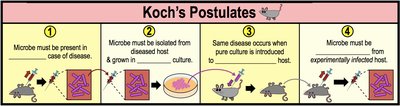
Postulate 1: Microbe must be present in every case of disease.
Postulate 2: Microbe must be isolated from diseased host and grown in pure culture.
Postulate 3: Same disease occurs when pure culture is introduced into a healthy host.
Postulate 4: Microbe must be re-isolated from experimentally infected host.
Limitations of Koch’s Postulates
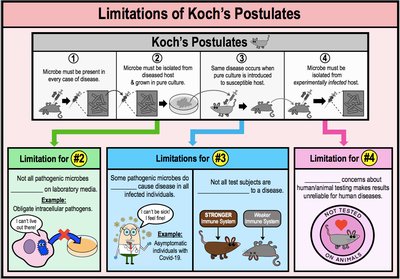
There are several limitations to Koch’s postulates, including inability to culture certain pathogens, asymptomatic carriers, and ethical concerns with human testing.
Not all pathogens can be cultured on laboratory media.
Some diseases have asymptomatic carriers.
Not all test subjects are susceptible to disease.
Ethical concerns with human/animal testing.
Molecular Koch’s Postulates
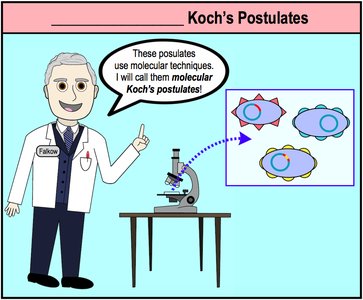
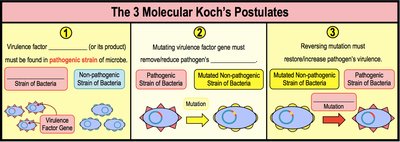
Molecular Koch’s postulates, proposed by Stanley Falkow, use molecular techniques to identify the genetic basis of microbial virulence factors.
Virulence factor must be found in pathogenic strains.
Mutating the virulence factor gene should reduce pathogenicity.
Reversing the mutation should restore/increase pathogenicity.
Characteristics of Infectious Disease
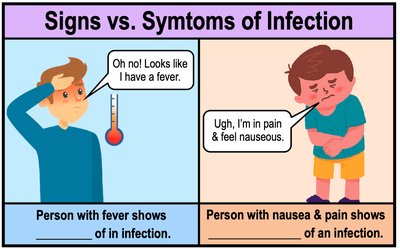
Infectious diseases are caused by pathogens and result in signs and symptoms in the host.
Signs: Objective evidence (e.g., fever, rash)
Symptoms: Subjective evidence (e.g., pain, nausea)
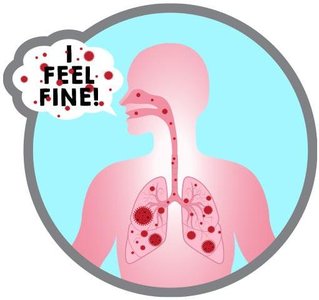
Asymptomatic Disease: No observable signs or symptoms
Communicable vs. Noncommunicable Diseases
Diseases can be classified based on their ability to spread between hosts.
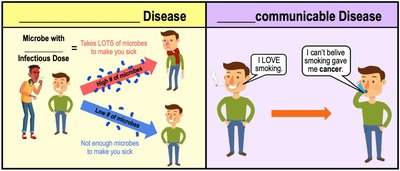
Communicable Diseases: Infectious diseases that spread between hosts
Noncommunicable Diseases: Diseases that do not spread between hosts (e.g., cancer)
Infectious Dose: Number of microbes required to establish infection
Primary vs. Secondary Infections
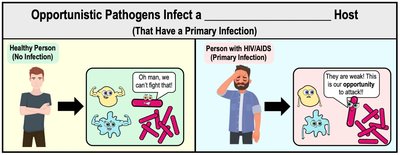
Primary infections are caused by primary pathogens, while secondary infections are caused by opportunistic pathogens in compromised hosts.
Primary Pathogens: Infect healthy individuals
Opportunistic Pathogens: Infect compromised hosts
Virulence
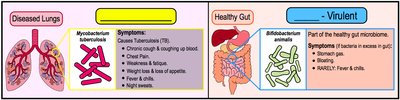
Virulence refers to the degree of pathogenicity of an organism. Virulence factors are traits that enable a microbe to cause disease.
High virulence = more likely to cause infection
Virulence factors include adhesins, capsules, toxins, and enzymes
Stages of Infectious Disease Progression
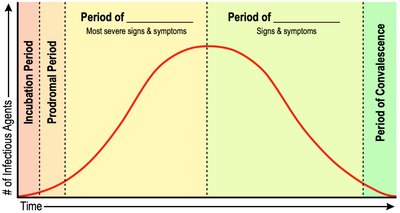
The progression of infectious disease involves several stages:
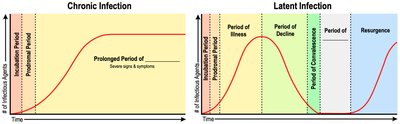
Incubation Period: Time between exposure and onset of symptoms
Prodromal Period: Early, vague symptoms
Period of Illness: Most severe signs and symptoms
Period of Decline: Signs and symptoms decrease
Period of Convalescence: Recovery and elimination of pathogen
Chronic and Latent Infections
Chronic infections involve prolonged illness, while latent infections involve periods of inactivity and resurgence.
Latency: Infection is inactive/hidden
Resurgence: Pathogen reactivates and replicates