 Back
Ch 14 Principles of Disease and Epidemiology: Structured Study Notes
Study Guide - Smart Notes
 Tailored notes based on your materials, expanded with key definitions, examples, and context.
Principles of Disease and Epidemiology
Pathology, Etiology, Infection, and Disease
Pathology is the scientific study of disease, focusing on its causes, development, and effects on the body. Etiology refers to the cause of a disease, while pathogenesis describes the process by which disease develops. Infection is the invasion or colonization of the body by pathogenic microorganisms, and disease is the abnormal state resulting from infection, impairing normal body functions.
Pathology: Study of disease, including etiology, pathogenesis, physiological changes, and final effects.
Etiology: The cause of a disease.
Infection: Invasion or colonization by pathogens.
Disease: Abnormal health state due to infection.
Normal Flora and Host Relationships
The human body hosts a variety of microorganisms known as normal flora, which reside in specific regions and play essential roles in health. These microbes can prevent the overgrowth of harmful organisms through microbial antagonism. The relationship between normal flora and the host can change, especially after antimicrobial therapy.
Normal flora: Microorganisms regularly found at anatomical sites.
Microbial antagonism: Competition between microbes that inhibits pathogens.
Examples: Candida albicans (yeast infection after antibiotics), Escherichia coli (produces bacteriocins), Clostridium difficile (post-antibiotic colitis).
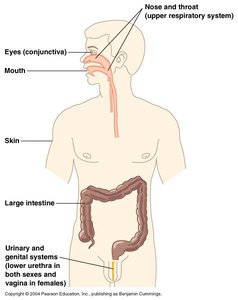
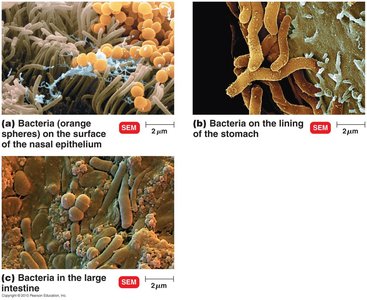
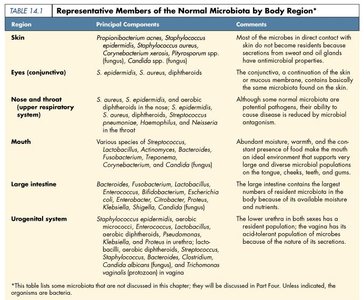
Region | Principal Components | Comments |
|---|---|---|
Skin | Propionibacterium acnes, Staphylococcus epidermidis, Staphylococcus aureus, Corynebacterium xerosis, Pityrosporum spp. (fungi), Candida spp. (fungi) | Most microbes in direct contact with skin do not become resident; skin is hostile environment. |
Eyes (conjunctiva) | S. epidermidis, S. aureus, diphtheroids | Conjunctiva is colonized by skin microbes; tears and lysozyme inhibit colonization. |
Nose and throat | S. aureus, S. epidermidis, aerobic diphtheroids, Streptococcus pneumoniae, Neisseria meningitidis, Haemophilus influenzae | Microbes colonize mucous membranes; some are opportunistic pathogens. |
Mouth | Streptococcus, Lactobacillus, Bacteroides, Actinomyces, Neisseria, Corynebacterium, Candida (fungi) | Abundant microbes; saliva and chewing dislodge microbes. |
Large intestine | Bacteroides, Fusobacterium, Lactobacillus, Bifidobacterium, Enterococcus, Enterobacter, Escherichia, Candida (fungi) | Largest microbial population; anaerobic environment. |
Urogenital system | Staphylococcus, Micrococcus, Enterococcus, Lactobacillus, Candida (fungi), Trichomonas (protozoa) | Lower urethra and vagina colonized; urine flushes microbes. |
Symbiotic Relationships
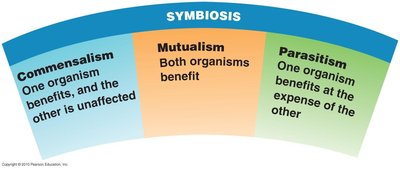
Microbes and hosts interact in various symbiotic relationships, including commensalism, mutualism, and parasitism. These relationships can shift depending on environmental or health changes.
Commensalism: One organism benefits, the other is unaffected.
Mutualism: Both organisms benefit.
Parasitism: One organism benefits at the expense of the other.
Koch’s Postulates and Etiology of Infectious Disease
Koch’s postulates are a set of criteria used to establish the causative relationship between a microbe and a disease. They are foundational in medical microbiology but have limitations, especially for pathogens that cannot be cultured.
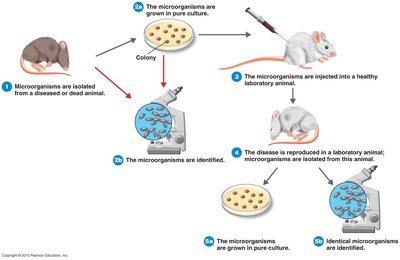
1. The same pathogen must be present in every case of the disease.
2. The pathogen must be isolated and grown in pure culture.
3. The cultured pathogen must cause the disease when inoculated into a healthy host.
4. The pathogen must be re-isolated from the experimentally infected host and shown to be the same as the original.
Limitations: Some pathogens (e.g., Treponema pallidum, Mycobacterium leprae) cannot be cultured.
Definitions: Symptoms, Signs, Syndrome
Understanding disease requires distinguishing between symptoms, signs, and syndromes.
Symptoms: Subjective changes felt by the patient (e.g., pain, malaise).
Signs: Objective changes observable or measurable (e.g., fever, lesions).
Syndrome: Group of symptoms or signs that accompany a disease.

Classification of Infectious Diseases
Diseases are classified based on their onset, duration, and mode of transmission.
Acute: Rapid onset, short duration.
Chronic: Slow onset, long duration.
Latent: Pathogen inactive for a period.
Communicable: Spread from host to host.
Contagious: Easily spread between individuals.
Non-communicable: Not spread between hosts.
Occurrence of Disease: Incidence and Prevalence
Incidence and prevalence are epidemiological measures used to describe disease frequency and impact.
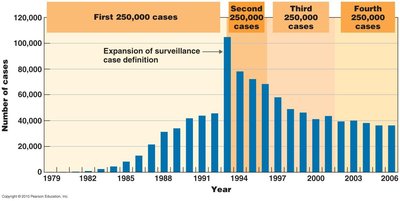
Incidence: Number of new cases in a specific time period.
Prevalence: Total number of cases (old and new) at a given time.
Applications: Incidence measures spread; prevalence measures severity and duration.
Frequency of Disease Occurrence
Diseases can be described by their frequency and distribution in populations.
Sporadic: Occurs occasionally (e.g., West Nile Virus).
Endemic: Constantly present (e.g., common cold).
Epidemic: Many cases in a short time in a specific area (e.g., influenza).
Pandemic: Worldwide epidemic (e.g., HIV).
Herd immunity: Large proportion of population immune, reducing disease spread.
Types of Infections and Host Involvement
Infections are categorized by their location and progression within the host.
Local: Confined to a small area (e.g., boils).
Systemic: Spread throughout the body (e.g., measles).
Focal: Local infection spreads via blood or lymph.
Primary: Initial infection.
Secondary: Subsequent infection by opportunistic pathogen.
Subclinical: Inapparent infection.
Bacteremia: Presence of bacteria in blood.
Septicemia: Rapid multiplication of bacteria in blood.
Toxemia: Presence of toxins in blood.
Viremia: Presence of viruses in blood.
Spread of Infection: Reservoirs
Reservoirs are continual sources of infection, including humans, animals, and non-living environments.
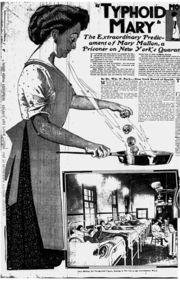
Human: Symptomatic or asymptomatic carriers (e.g., Typhoid Mary).
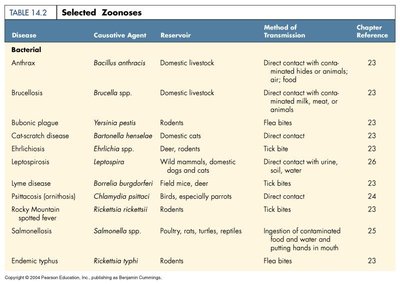
Animal: Zoonotic reservoirs; zoonoses are diseases transmitted from animals to humans.
Non-living: Soil, water (e.g., ringworm, botulism).

Disease | Causative Agent | Reservoir | Method of Transmission |
|---|---|---|---|
Anthrax | Bacillus anthracis | Domestic livestock | Direct contact with infected animals or animal products |
Brucellosis | Brucella spp. | Domestic livestock | Direct contact with contaminated milk, meat, or animal products |
Bubonic plague | Yersinia pestis | Rodents | Flea bites |
Cat-scratch disease | Bartonella henselae | Domestic cats | Direct contact |
Lyme disease | Borrelia burgdorferi | Field mice, deer | Tick bites |
Salmonellosis | Salmonella spp. | Poultry, reptiles | Ingestion of contaminated food or water |
Disease Transmission
Transmission of infectious diseases occurs via contact, vehicles, and vectors.
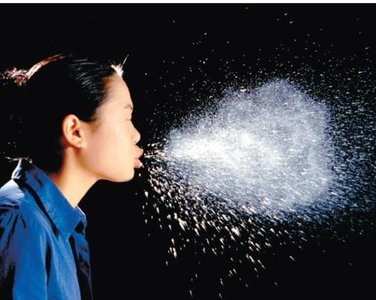
Contact transmission: Direct (person-to-person), indirect (fomites), droplet (short-range).
Vehicle transmission: Via food, water, blood, or air (airborne).
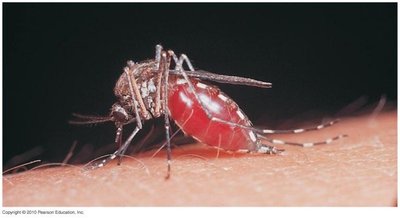
Vector transmission: Arthropods (mechanical or biological).
Development and Patterns of Disease
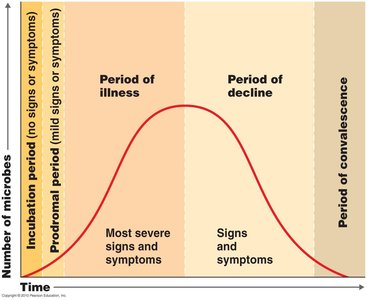
The progression of disease follows distinct stages, influenced by predisposing factors such as age, gender, genetics, climate, nutrition, and fatigue.
Incubation period: No signs or symptoms.
Prodromal period: Mild signs or symptoms.
Period of illness: Most severe signs and symptoms.
Period of decline: Signs and symptoms subside.
Period of convalescence: Recovery.
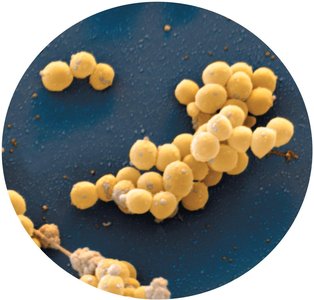
Nosocomial Infections
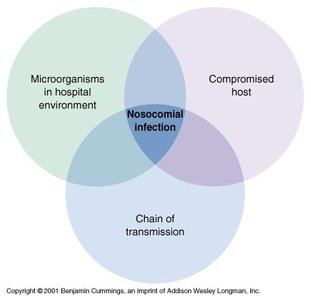
Nosocomial infections are acquired in healthcare settings and are a major cause of morbidity and mortality. They result from a combination of microorganisms in the environment, compromised hosts, and chains of transmission.
Common sites: Urinary tract, surgical sites, respiratory tract, skin, bloodstream.
Risk factors: Broken skin, suppressed immunity, impaired defense cells.
Prevention: Handwashing, aseptic technique, staff education, isolation rooms.
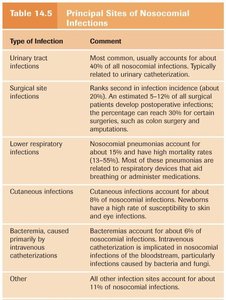
Type of Infection | Comment |
|---|---|
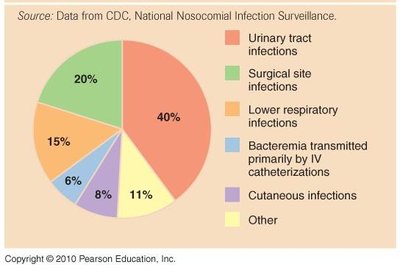
Urinary tract infections | Most common, about 40% of nosocomial infections; often related to catheterization. |
Surgical site infections | Second most common; 5-12% of surgical patients develop postoperative infections. |
Lower respiratory infections | Account for about 15%; high mortality rates. |
Cutaneous infections | About 8%; newborns especially susceptible. |
Bacteremia (IV catheters) | About 6%; caused by bacteria and fungi. |
Other | About 11% of nosocomial infections. |
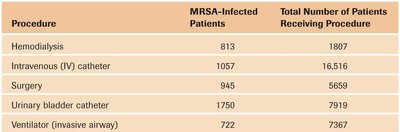
Procedure | MRSA-Infected Patients | Total Number of Patients Receiving Procedure |
|---|---|---|
Hemodialysis | 813 | 1807 |
IV catheter | 1057 | 16516 |
Surgery | 945 | 5659 |
Urinary bladder catheter | 1750 | 7919 |
Ventilator (invasive airway) | 722 | 7367 |
Epidemiology
Epidemiology is the science of disease incidence, distribution, and control in populations. It uses descriptive, analytical, and experimental studies to investigate disease patterns and causes.
Descriptive: Data collection and analysis (often retrospective).
Analytical: Case-control and cohort studies to determine causes.
Experimental: Controlled experiments to test hypotheses.
Case reporting: Chain of infection established through reporting.
Notifiable diseases: Must be reported to health authorities.

Centers for Disease Control and Prevention (CDC)
The CDC is the central source of epidemiological information in the United States, publishing the Morbidity and Mortality Weekly Report (MMWR).
Morbidity: Number of people affected by a disease relative to the population.
Mortality: Number of deaths from a disease relative to the population.
Emerging Infectious Diseases
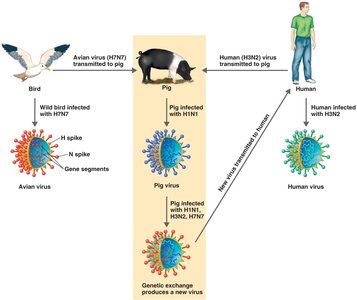
Emerging infectious diseases are those whose incidence has increased in recent years or threatens to increase in the near future. They may result from genetic changes, environmental factors, or human behavior.
Recap
Defined key terms: pathology, etiology, infection, disease, sign, symptom, syndrome, bacteremia, septicemia.
Explained normal flora and host relationships.
Described Koch’s postulates and their limitations.
Classified infectious diseases and described their occurrence.
Outlined types of infections, spread, and development of disease.
Defined epidemiology, morbidity, and mortality.
