 Back
BackPrinciples of Disease and Epidemiology: Study Notes
Study Guide - Smart Notes
 Tailored notes based on your materials, expanded with key definitions, examples, and context.
Principles of Disease and Epidemiology
Terminology and Basic Concepts
The study of disease and its spread is fundamental to microbiology and public health. Understanding key terms helps clarify the processes involved in infection and disease development.
Pathology: The study of disease, including its causes and effects.
Etiology: The study of the cause of a disease.
Pathogenesis: The process by which disease develops.
Pathogens: Disease-causing organisms.
Infection: Colonization of the body by pathogens.
Disease: An abnormal state in which the body is not functioning normally.
Normal Microbiota and the Host
Normal microbiota are microorganisms that reside permanently in the host and generally do not cause disease. They play a crucial role in maintaining health and preventing pathogenic colonization.
Transient microbiota: Present for a limited time, then disappear.
Normal microbiota: Permanently colonize the host and are found in multiple locations, such as the skin and large intestine.
Symbiosis: The relationship between normal microbiota and the host, where at least one party benefits.
Examples: Normal microbiota are found on the skin, in the nose and throat, eyes, mouth, large intestine, and urinary/reproductive systems.
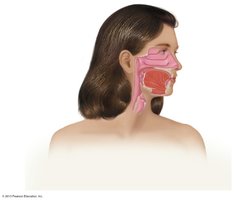
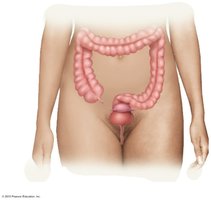
Microbial Antagonism and Probiotics
Microbial antagonism is the competition between microbes, which helps protect the host from pathogens. Probiotics are live microbes that are ingested or applied to exert beneficial effects.
Microbial antagonism: Normal microbiota protect the host by occupying niches, producing acids, and bacteriocins.
Probiotics: Live microbes intended to benefit the host.
Types of Symbiosis
Symbiosis describes the interaction between normal flora and the host. There are four main types:
Amensalism: One species is harmed, and the benefit to the other is unclear. Example: Staphylococcus aureus and Penicillium mold.
Commensalism: One organism benefits, the other is unaffected. Example: Streptococcus viridans in the mouth.
Mutualism: Both species benefit. Example: Bacteria in rabbit intestines breaking down cellulose.
Parasitism: The parasite benefits, the host is harmed. Example: Measles virus.
The Etiology of Infectious Diseases
Koch’s Postulates
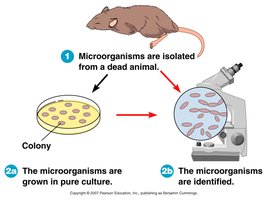
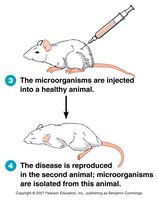
Koch’s postulates are a series of steps used to determine the causative agent of a disease. They are foundational in microbiology for linking specific pathogens to diseases.
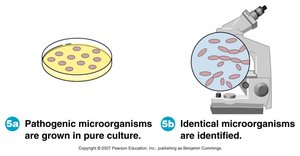
The same pathogen must be present in every case of the disease.
The pathogen must be isolated and grown in pure culture.
The cultured pathogen must cause disease in a healthy, susceptible animal.
The pathogen must be re-isolated from the inoculated animal and shown to be the original organism.
Exceptions exist, such as pathogens that cannot be cultured or diseases only found in humans. Modern techniques like cell culture and immunology are used in these cases.
Classifying Infectious Diseases
Symptoms, Signs, and Syndromes
Diseases are classified based on evidence:
Symptom: A change in body function felt by the patient.
Sign: A measurable or observable change in the body.
Syndrome: A specific group of signs and symptoms that accompany a disease.
Types of Diseases
Communicable disease: Spread from one host to another.
Contagious disease: Easily spread from one host to another.
Noncommunicable disease: Not transmitted between hosts.
Occurrence of Disease
Incidence: Fraction of a population contracting a disease during a specific time (new cases).
Prevalence: Fraction of a population with a specific disease at a given time (total cases).
Sporadic disease: Occurs occasionally in a population.
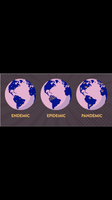
Endemic disease: Constantly present in a population.
Epidemic disease: Acquired by many hosts in a short time.
Pandemic disease: Worldwide epidemic.
Herd immunity: Immunity in most of a population, often due to vaccination.
Severity or Duration of Disease
Acute disease: Rapid onset of symptoms (e.g., common cold).
Chronic disease: Slow development (e.g., leprosy).
Subacute disease: Symptoms between acute and chronic.
Latent disease: Periods of no symptoms; causative agent inactive (e.g., shingles).
Spread of Infection
Reservoirs of Infection
Reservoirs are continual sources of infectious agents and can be living or nonliving.
Human: AIDS, gonorrhea; carriers may have inapparent or latent infections.
Animal: Rabies, Lyme disease; zoonoses can be transmitted to humans.
Nonliving: Botulism, tetanus; soil and water.
Extent of Host Involvement
Local infection: Pathogens limited to a small area.
Systemic infection: Infection throughout the body.
Focal infection: Systemic infection that began as a local infection.
Sepsis: Toxic inflammatory condition from spread of microbes or toxins.
Bacteremia: Bacteria in the blood.
Septicemia: Growth of bacteria in the blood.
Toxemia: Toxins in the blood.
Viremia: Viruses in the blood.
Primary infection: Initial acute infection.
Secondary infection: Opportunistic infection after primary infection.
Subclinical disease: No noticeable signs or symptoms.
Patterns of Disease Development
The development of disease follows a definite pattern:
Reservoir needed
Carried to host
Invades and injures host
Predisposing Factors
Factors that make the body more susceptible to disease include:
Shorter urethra in females
Inherited traits (e.g., sickle cell gene)
Climate and weather
Fatigue
Age
Lifestyle
Chemotherapy
Stages of Disease
The progression of disease includes several stages:
Incubation period: Time between initial infection and first symptoms; no signs or symptoms.
Prodromal period: Mild symptoms appear.
Period of illness: Disease is most severe; if not overcome, death may occur.
Period of decline: Signs and symptoms subside; vulnerability to secondary infections.
Period of convalescence: Recovery; body returns to normal state.
Transmission of Disease
Contact Transmission
Contact transmission can be direct, indirect, or via droplets.
Direct: Close association between infected and susceptible host.
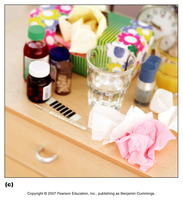
Indirect: Spread by fomites (objects).
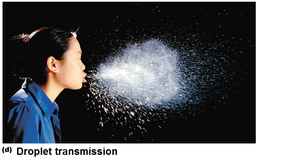
Droplet: Transmission via airborne droplets.

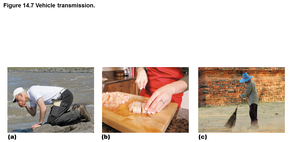
Vehicle Transmission
Transmission by an inanimate reservoir such as food, water, or air.
Vector Transmission
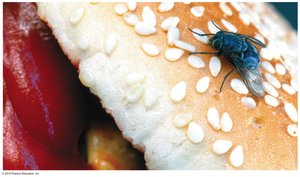
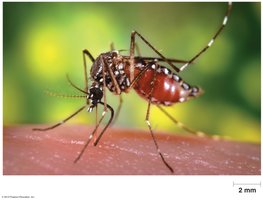
Vectors, especially arthropods like fleas, ticks, and mosquitoes, transmit disease by:
Mechanical transmission: Pathogen carried on feet.
Biological transmission: Pathogen reproduces in vector.
Epidemiology
Definition and Scope
Epidemiology is the study of where and when diseases occur and the factors influencing host-parasite relations. The Centers for Disease Control and Prevention (CDC) is a key institution in the United States for collecting and analyzing epidemiological data.
Case reporting: Health care workers report specified diseases to authorities.
Nationally notifiable diseases: Physicians are required to report occurrence.
Monitoring Disease
Morbidity: Number of people infected in a given time period.
Mortality: Number of deaths in a population in a given time period.
Morbidity rate: Number of people affected relative to total population.
Mortality rate: Number of deaths relative to population.
Nosocomial (Hospital-Acquired) Infections
Definition and Impact
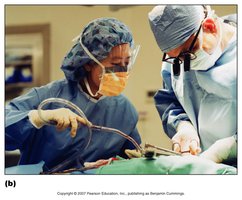
Nosocomial infections are acquired during a hospital stay. Patients on antimicrobial therapy or immunosuppressants are most susceptible. These infections affect 5–15% of hospital patients and are a major cause of morbidity and mortality.
Most commonly caused by Clostridium difficile.
Opportunistic infections are common.

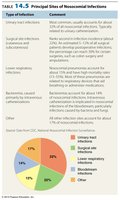
Principal Sites of Nosocomial Infections
Type of Infection | Common Causes |
|---|---|
Urinary tract infections | Most common; usually accounts for about 32% of nosocomial infections. Typically related to urinary catheters. |
Surgical site infections | About 22%; often related to surgical procedures and wound care. |
Lower respiratory infections | About 15%; often associated with ventilators and respiratory equipment. |
Bacteremia | About 14%; often related to intravenous catheters. |
Other | About 17%; includes skin, gastrointestinal, and other sites. |
Factors Leading to Nosocomial Infections
Presence of microorganisms in the hospital environment
Compromised host
Chain of transmission
Emerging Infectious Diseases
Definition and Contributing Factors
Emerging infectious diseases are new, increasing in incidence, or have the potential to increase. Several factors contribute to their emergence:
Genetic recombination (e.g., E. coli O157, avian influenza H5N1)
Evolution of new strains (e.g., V. cholerae O139)
Inappropriate use of antibiotics and pesticides (antibiotic-resistant strains)
Changes in weather patterns (e.g., hantavirus)
Modern transportation (e.g., West Nile virus)
Ecological disaster, war, expanding human settlement (e.g., coccidioidomycosis)
Animal control measures (e.g., Lyme disease)
Public health failure (e.g., diphtheria)
Summary Table: Key Terms in Disease and Epidemiology
Term | Definition |
|---|---|
Pathology | Study of disease |
Etiology | Study of the cause of disease |
Pathogenesis | Development of disease |
Incidence | New cases in a population during a specific time |
Prevalence | Total cases in a population at a given time |
Nosocomial infection | Hospital-acquired infection |
Emerging infectious disease | New or increasing disease |
