 Back
BackPrinciples of Disease and Epidemiology – Study Notes
Study Guide - Smart Notes
 Tailored notes based on your materials, expanded with key definitions, examples, and context.
Principles of Disease and Epidemiology
Introduction
This chapter explores the foundational concepts of disease, infection, and epidemiology, focusing on the human microbiome, mechanisms of disease transmission, classification of infectious diseases, and the study of disease patterns in populations.
Pathology, Infection, and Disease
Key Definitions
Pathology: The scientific study of disease, including its causes, development, and effects on the body.
Etiology: The cause or origin of a disease.
Pathogenesis: The process by which a disease develops in the body.
Infection: The invasion or colonization of the body by pathogenic microorganisms.
Infectious Disease: A disease in which an infection leads to a change in health status.
It is important to note that infection does not always result in disease, and disease can occur when microorganisms are present in abnormal locations within the body.
The Human Microbiome
Establishment and Importance
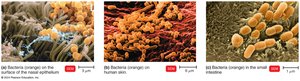
The human microbiome begins to establish in utero, with the placental microbiome containing Enterobacteriaceae and Propionibacterium.
During vaginal birth, Lactobacilli colonize the neonate's intestine; cesarean births result in a microbiome resembling human skin, with Staphylococcus aureus being prevalent.
Microorganisms are acquired from food, people, and pets, and persist throughout life, influencing health and disease.
The Human Microbiome Project investigates the relationship between microbial communities and human health.
Normal microbiota (normal flora) are permanent residents that do not cause disease under normal conditions, while transient microbiota are temporary.
Factors Influencing the Microbiome
Nutrients, physical and chemical factors, mechanical factors, and the body's defenses shape the microbiota.
Other influences include age, diet, geography, hygiene, living conditions, occupation, and lifestyle.
Normal microbiota are crucial for immune system development.
Microbiome and Birth
Vaginal birth: Dominated by Lactobacillus and Bacteroides.
Cesarean birth: Microbiome resembles skin flora, with Staphylococcus aureus common.
Relationships Between Normal Microbiota and the Host
Microbial Antagonism and Symbiosis
Microbial antagonism (competitive exclusion): Normal microbiota compete with pathogens for nutrients, produce harmful substances, and alter pH and oxygen levels.
Clostridium difficile can cause severe infections if normal microbiota are disrupted, often after antibiotic use. Fecal Microbial Transfer (FMT) can restore healthy microbiota.
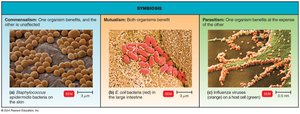
Types of Symbiosis
Commensalism: One organism benefits, the other is unaffected.
Mutualism: Both organisms benefit.
Parasitism: One organism benefits at the expense of the other; many pathogens are parasites.
Some normal microbiota are opportunistic pathogens, causing disease under certain conditions.
Koch’s Postulates
Establishing Disease Causation
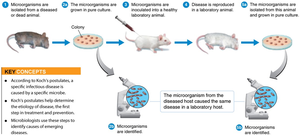
The same pathogen must be present in every case of the disease.
The pathogen must be isolated and grown in pure culture.
The cultured pathogen must cause disease in a healthy host.
The pathogen must be re-isolated from the experimentally infected host and identified as the original organism.
Exceptions include pathogens that cannot be cultured, cause multiple diseases, or have human-only hosts.
Classifying Infectious Diseases
Symptoms, Signs, and Syndromes
Symptoms: Subjective changes felt by the patient (e.g., pain, fatigue).
Signs: Objective changes observable or measurable (e.g., fever, rash).
Syndrome: A specific group of signs and symptoms that characterize a disease.
Communicability
Communicable disease: Spread from one host to another (e.g., influenza, tuberculosis).
Contagious disease: Easily and rapidly spread (e.g., measles).
Noncommunicable disease: Not spread between hosts (e.g., tetanus).
Occurrence of Disease
Incidence and Prevalence
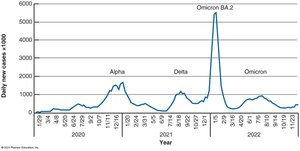
Incidence: Number of new cases during a specific time period.
Prevalence: Total number of cases (old and new) at a specific time.
Patterns of Disease Occurrence
Sporadic: Occurs occasionally.
Endemic: Constantly present in a population.
Epidemic: Many cases in a short time in a given area.
Pandemic: Worldwide epidemic.
Severity and Duration of Disease
Types of Disease
Acute: Rapid onset, short duration.
Chronic: Develops slowly, lasts long.
Subacute: Intermediate between acute and chronic.
Latent: Pathogen inactive for a time, then activates.
Herd immunity refers to immunity in most of a population, reducing disease spread.
Severity Examples (COVID-19)
Asymptomatic, mild, moderate, severe, critical, and sepsis (extreme inflammatory response).
Fatality Ratios
Infection Fatality Ratio (IFR):
Case Fatality Ratio (CFR):
Extent of Host Involvement
Types of Infections
Local infection: Confined to a small area.
Systemic infection: Spread throughout the body via blood or lymph.
Focal infection: Local infection that spreads to other parts.
Blood Involvement
Sepsis: Toxic inflammatory response to infection spreading in the body.
Bacteremia: Bacteria in the blood.
Septicemia: Proliferation of bacteria in the blood.
Toxemia: Toxins in the blood.
Viremia: Viruses in the blood.
Other Infection Types
Primary infection: Initial acute infection.
Secondary infection: Opportunistic infection after a primary infection.
Subclinical infection: No noticeable symptoms.
Predisposing Factors
Factors that increase susceptibility to disease or alter its course include nutrition, sex, genetics, climate, environment, vaccination status, age, lifestyle, and immune status.
Development of Disease
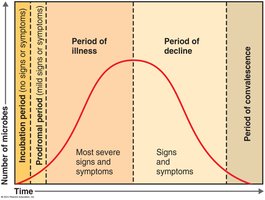
Stages of Disease
Incubation period: Time between infection and first symptoms.
Prodromal period: Early, mild symptoms.
Period of illness: Most severe symptoms.
Period of decline: Symptoms subside.
Period of convalescence: Recovery and return to health.
Reservoirs of Infection
Types of Reservoirs
Human reservoirs: People with symptoms or carriers (asymptomatic, incubating, convalescent, chronic, passive).
Animal reservoirs: Zoonoses are diseases transmitted from animals to humans.
Nonliving reservoirs: Soil, water, and food.
Transmission of Disease
Contact Transmission
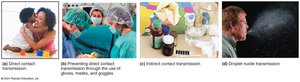
Direct contact: Physical contact between infected and susceptible individuals.
Congenital transmission: From mother to fetus or newborn.
Indirect contact: Via fomites (nonliving objects).
Droplet transmission: Airborne droplets less than 1 meter.
Vehicle Transmission
Transmission by inanimate reservoirs: air, water, food.
Cross-contamination can occur between foods.

Vector Transmission
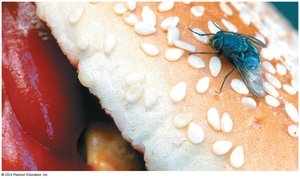
Vectors: Arthropods (fleas, ticks, mosquitoes) transmit disease.
Mechanical transmission: Pathogen carried on vector's body.
Biological transmission: Pathogen reproduces in vector and is transmitted via bites or feces.
Healthcare-Associated Infections (HAIs)
Overview
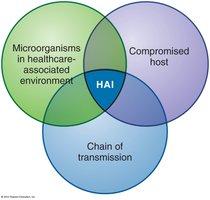
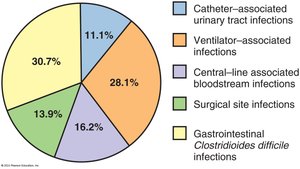
Acquired during treatment in healthcare facilities; also called nosocomial infections.
Result from microorganisms in the hospital, compromised hosts, and chains of transmission.
Common pathogens include Clostridium difficile.
Control of HAIs
Universal and standard precautions: hand hygiene, PPE, respiratory etiquette, disinfection, safe practices.
Transmission-based precautions: contact, droplet, and airborne precautions for highly transmissible pathogens.
Reducing pathogen numbers and improving patient resistance are key strategies.
Infection control committees monitor and oversee practices.
Emerging Infectious Diseases
Definition and Contributing Factors
Diseases that are new, changing, or increasing in incidence.
Most are zoonotic, viral, and vector-borne.
Contributing factors: genetic recombination, evolution, antibiotic use, climate change, transportation, ecological changes, animal control, public health failures, and bioterrorism.
Epidemiology
Definition and Roles
The study of where, when, and how diseases occur and are transmitted in populations.
Roles include determining etiology, identifying patterns, assembling data, predicting spread, and exploring control methods.
Types of Epidemiology
Descriptive: Data collection and analysis (e.g., John Snow and cholera).
Analytical: Determines probable cause or risk factors (e.g., Florence Nightingale).
Experimental: Hypothesis testing with controlled experiments (e.g., Semmelweis).
Case Reporting and Notifiable Diseases
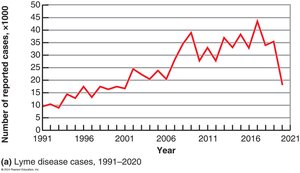
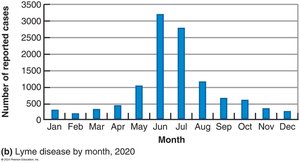
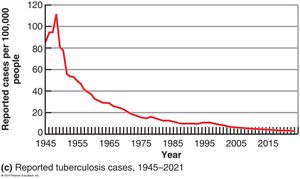
Case reporting helps establish transmission chains and provides early outbreak warnings.
Notifiable diseases must be reported to health authorities (e.g., CDC).
CDC and Disease Surveillance
The CDC collects and analyzes epidemiological data, publishing the Morbidity and Mortality Weekly Report (MMWR).
Morbidity: Incidence of a specific notifiable disease.
Mortality: Deaths from notifiable diseases.
Morbidity rate:
Mortality rate:
