 Back
BackPrinciples of Infectious Disease and Epidemiology – Study Notes
Study Guide - Smart Notes
 Tailored notes based on your materials, expanded with key definitions, examples, and context.
Principles of Infectious Disease and Epidemiology
Introduction
This chapter explores the foundational concepts of infectious diseases and epidemiology, focusing on the causes, transmission, and public health implications of infectious diseases. Understanding these principles is essential for controlling disease spread and improving population health.
Infectious Diseases: Causes and Terminology
Categories of Pathogens
Pathogen: A microbe that causes disease in a host organism.
Types of Pathogens:
True pathogens: Cause disease in healthy individuals (e.g., Vibrio cholerae, Mycobacterium tuberculosis).
Opportunistic pathogens: Cause disease when the host's defenses are compromised (e.g., Candida albicans, Pseudomonas aeruginosa).
Emerging pathogens: Newly identified or previously rare pathogens now causing more cases (e.g., SARS-CoV-2).
Re-emerging pathogens: Previously controlled pathogens that are resurging (e.g., tuberculosis, measles).
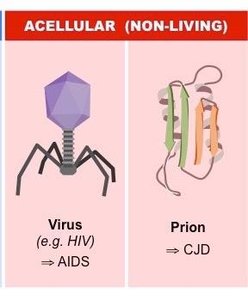
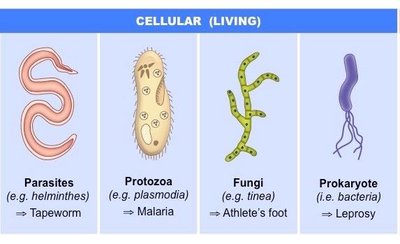
Key Definitions
Disease: An abnormal state affecting normal body function.
Etiology: The cause of a disease.
Pathology: The scientific study of disease.
Pathogenesis: The process by which disease develops.
Infection: Invasion and colonization of the host by pathogens, which may or may not result in disease.
Emerging and Re-emerging Diseases
Emerging diseases: Newly identified or previously rare diseases (e.g., COVID-19, Zika, Ebola).
Re-emerging diseases: Diseases that were under control but are increasing in incidence (e.g., measles, pertussis).
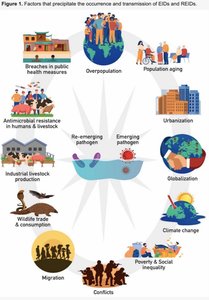
Risk factors: Urbanization, antibiotic misuse, breakdown of public health measures, environmental changes, and microbial evolution.
Modes of Disease Acquisition
Communicable diseases: Transmitted from one host to another (e.g., influenza, gonorrhea).
Contagious diseases: Easily and rapidly transmitted (e.g., measles, SARS-CoV-2).
Noncommunicable diseases: Not transmitted between hosts (e.g., tetanus, botulism).
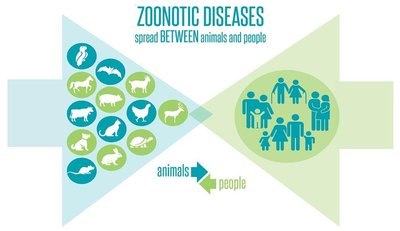
Zoonotic diseases: Spread from animals to humans (e.g., rabies, Lyme disease).
Incidence Terminology
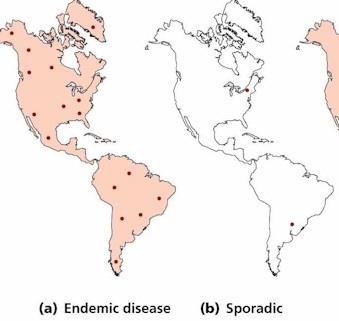
Endemic: Disease constantly present in a population or region (e.g., common cold).
Sporadic: Disease occurs infrequently and irregularly (e.g., typhoid fever).
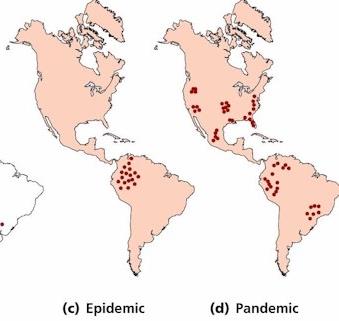
Epidemic: Sudden increase in cases in a region (e.g., influenza outbreak).
Pandemic: Epidemic that spreads across countries or continents (e.g., COVID-19).
Characterization of Infections
Active infection: Host shows signs and/or symptoms.
Latent infection: Pathogen is present but host is asymptomatic; can still be contagious.
Acute infection: Rapid onset, short duration.
Chronic infection: Slow onset, long duration, may recur.
Signs vs. Symptoms
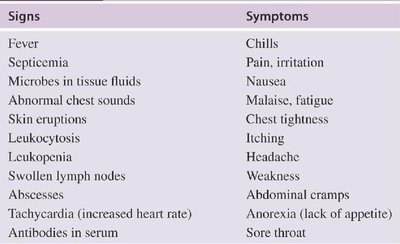
Signs (Objective) | Symptoms (Subjective) |
|---|---|
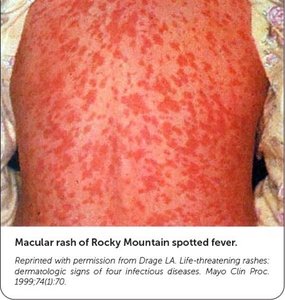
Fever, rash, swollen lymph nodes | Pain, fatigue, nausea |
Abnormal chest sounds, abscesses | Headache, malaise, weakness |
Examples of Acute vs. Chronic Infections
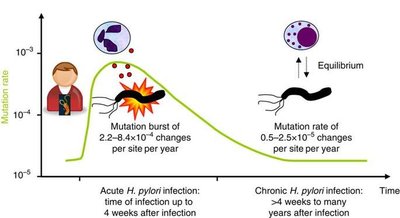
Acute: Helicobacter pylori infection causing gastritis or ulcers.
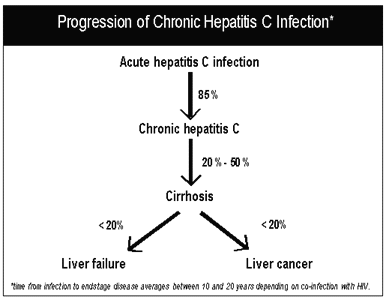
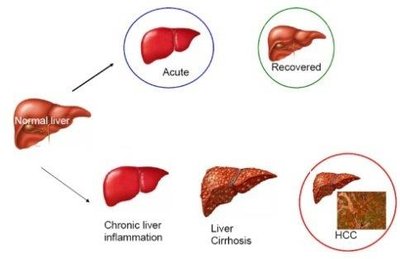
Chronic: H. pylori infection leading to chronic gastritis or stomach cancer; Hepatitis C virus leading to cirrhosis or liver cancer.
Infectious Disease Transmission and Stages
Reservoirs and Sources
Reservoir: Natural habitat where the pathogen is maintained (can be animate or inanimate).
Source: The origin from which a host acquires the pathogen (may be the same as the reservoir).
Exogenous source: Pathogen comes from outside the host (e.g., contaminated water).
Endogenous source: Pathogen comes from the host's own microbiota (e.g., skin bacteria entering a wound).
Modes of Transmission
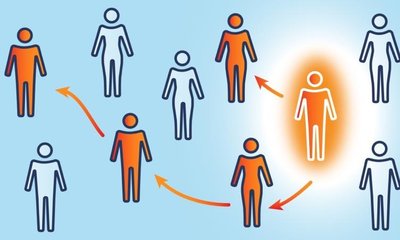
Direct transmission: Physical contact between source and host.
Person-to-person (e.g., kissing, touching)
Animal-to-person (e.g., bites, scratches)
Environment-to-person (e.g., swimming in contaminated water)
Vertical (mother to child during pregnancy, delivery, or breastfeeding)
Indirect transmission: No direct contact; pathogen is transmitted via:
Airborne (respiratory aerosols)
Vehicle (fomites, contaminated food/water)
Vector (living organisms, mainly arthropods)
Biological vector: Pathogen completes part of its life cycle in the vector (e.g., mosquitoes for malaria).
Mechanical vector: Pathogen is passively carried (e.g., flies on food).
Stages of Infectious Disease
Incubation period: Time between infection and appearance of symptoms.
Prodromal phase: Early, nonspecific symptoms.
Acute phase: Peak of disease with specific symptoms.
Period of decline: Symptoms subside as immune response controls infection.
Convalescent phase: Recovery and return to health; some may become chronic carriers.
Sequelae: Permanent damage or complications following infection (e.g., paralysis after polio).
Epidemiology and Public Health Essentials
Definition and Goals of Epidemiology
Epidemiology: The science of when, where, and how diseases occur and are transmitted in populations.
Goals:
Describe the nature, cause, and extent of diseases.
Determine interventions to prevent and control diseases.
The Epidemiological Triangle
Links disease outcome to the interplay between:
Agent: The infectious microbe or pathogen.
Host: The organism harboring the disease.
Environment: External factors affecting disease transmission (e.g., climate, sanitation).
Breaking any side of the triangle can prevent disease.
Public Health Strategies
Education: Informing the public about prevention.
Quarantine: Isolating individuals to prevent disease spread; effective for diseases with short incubation periods.
Vector control: Reducing populations of disease-carrying organisms.
Measuring Disease Occurrence
Morbidity: Illness rate in a population.
Prevalence: Total number of existing cases in a population at a given time.
Incidence: Number of new cases in a population during a specific period.
Mortality: Death rate from a disease in a population.
Surveillance and Eradication in Epidemiology
Public Health Surveillance
CDC: Oversees surveillance networks and recommends notifiable diseases for monitoring.
National Notifiable Diseases Surveillance System (NNDSS): Collects and shares data on reportable diseases.
Reportable diseases: Legally required to be reported to health authorities for monitoring and control.
Eradication
Eradication: Complete elimination of a disease worldwide (e.g., smallpox).
Best candidates: Easily identifiable, human-specific, preventable by vaccination, and not causing latent infections.
Epidemiology in Clinical Settings – Health Care Associated Infections (HAIs)
Healthcare-Associated Infections (HAIs)
Definition: Infections acquired during medical care (e.g., in hospitals, clinics, long-term care facilities).
Common types:
Urinary tract infections (UTIs) – often catheter-associated
Surgical site infections (SSIs)
Pneumonia – often ventilator-associated
Bloodstream infections (BSIs) – often device-related
Gastrointestinal infections – e.g., Clostridioides difficile
Sources: Contaminated medical devices, healthcare workers' hands.
Prevention: Hand hygiene, equipment sterilization, aseptic technique, antibiotic stewardship, patient isolation.
Antibiotic Resistance and Stewardship
Superbugs: Drug-resistant pathogens often originate in healthcare settings due to extensive antibiotic use.
Stewardship: Monitoring and controlling antibiotic use to limit resistance.
Summary Table: Key Infectious Disease Terms
Term | Definition |
|---|---|
Pathogen | Microbe that causes disease |
Reservoir | Natural habitat of pathogen |
Incidence | New cases in a population over time |
Prevalence | Total cases in a population at a given time |
HAI | Healthcare-associated infection |
Vector | Organism transmitting pathogen between hosts |
Additional info: These notes are based on the core concepts of infectious disease epidemiology, including definitions, transmission, public health strategies, and clinical implications. They are suitable for exam preparation and foundational understanding in a college microbiology course.
