 Back
Principles of Infectious Disease and Epidemiology: Core Concepts and Applications
Study Guide - Smart Notes
 Tailored notes based on your materials, expanded with key definitions, examples, and context.
Principles of Infectious Disease and Epidemiology
Microbes, Pathogens, and Disease
Understanding the distinction between microbes and pathogens is foundational in microbiology. Not all microbes cause disease; many are harmless or beneficial, but some can become pathogenic under certain conditions.
Microbe (Microorganism): Microscopic organisms, including bacteria, viruses, fungi, and protozoa. Some may be visible at certain life stages.
Pathogen: A microbe capable of causing disease in a host.
Most microbes encountered by humans do not cause disease and may even benefit the host.
Some microbes can become harmful if the host's defenses are compromised or if they enter normally sterile body sites.
Infection vs. Disease
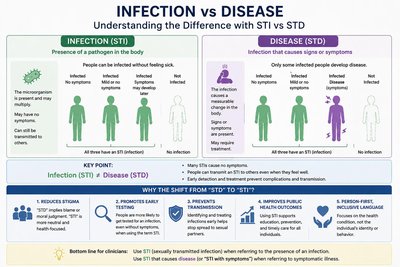
It is important to distinguish between infection and disease, as not all infections result in disease.
Infection: Entry and multiplication of a microorganism in or on a host.
Disease: A condition in which normal body functions are disrupted due to infection.
Infection does not always lead to disease; individuals may remain asymptomatic but still transmit the microorganism.
Etiology: The Cause of Disease
Etiology refers to the specific cause or origin of a disease, often identifying the responsible microorganism.
Examples:
Tuberculosis: Mycobacterium tuberculosis
Strep throat: Streptococcus pyogenes
COVID-19: SARS-CoV-2 virus
Identifying the etiological agent is crucial for diagnosis, treatment, prevention, and infection control.
Koch’s Postulates and the Proof of Causation
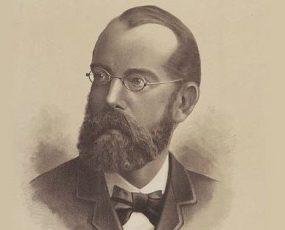
Robert Koch and the Foundations of Medical Microbiology
Robert Koch was a pioneering microbiologist who developed methods to link specific microbes to specific diseases, revolutionizing infectious disease research.
Koch’s Postulates
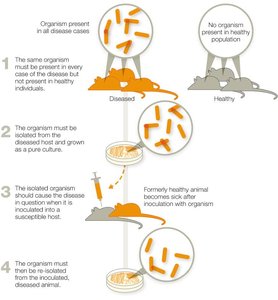
Koch’s postulates are a set of criteria used to establish a causative relationship between a microbe and a disease.
The same organism must be present in every case of the disease but not in healthy individuals.
The organism must be isolated from the diseased host and grown as a pure culture.
The isolated organism should cause the disease when introduced into a susceptible host.
The organism must be re-isolated from the experimentally infected host.
Limitations of Koch’s Postulates
Some pathogens cannot be grown in pure culture.
Some diseases are caused by multiple microorganisms.
Some pathogens only cause disease in specific hosts or conditions.
Some infected hosts show no symptoms.
Ethical concerns may prevent experimental infection of healthy humans.
Signs vs. Symptoms
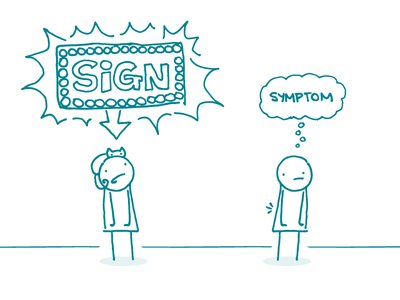
Understanding the difference between signs and symptoms is essential for clinical diagnosis.
Signs: Objective evidence of disease, measurable by healthcare providers (e.g., fever, rash).
Symptoms: Subjective evidence reported by the patient (e.g., pain, fatigue).
Case Study: Legionnaires’ Disease
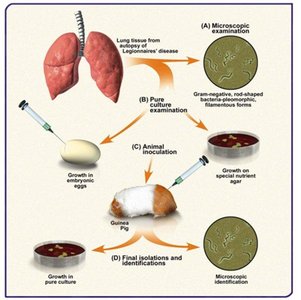
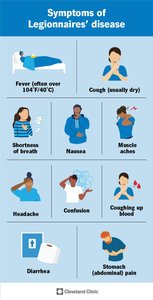
The 1976 outbreak of Legionnaires’ disease in Philadelphia is a modern example of using Koch’s postulates to identify a new pathogen, Legionella pneumophila.
The bacterium was consistently found in affected patients, isolated, and shown to cause disease in experimental models.
Molecular and epidemiological studies confirmed the association.
Koch’s Postulates in the 21st Century
Modern outbreaks, such as COVID-19, demonstrate that multiple lines of evidence (genetic, immunological, epidemiological) are used to establish causation, even if all of Koch’s original postulates are not fulfilled.
Stages of Infectious Disease
The Five General Stages of Infection
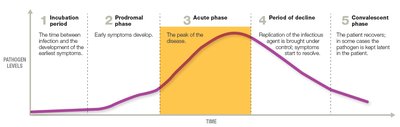
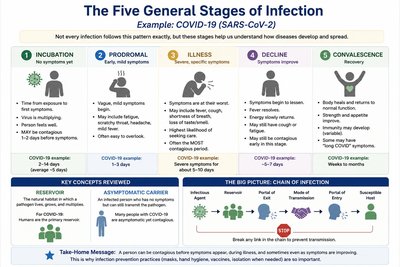
Infectious diseases typically progress through five stages, though not all infections follow this pattern exactly.
Incubation period: Time between infection and appearance of symptoms.
Prodromal period: Early, mild symptoms develop.
Period of illness: Peak of disease; most severe symptoms.
Period of decline: Symptoms subside as the immune response controls the pathogen.
Period of convalescence: Recovery and return to normal health.
Epidemiological Triangle and Disease Spread
The Epidemiological Triangle
The development and spread of infectious disease depend on the interaction among three factors: the agent, the host, and the environment.
Agent: The microorganism (bacteria, virus, fungus, parasite).
Host: The individual’s health, immunity, age, and other factors.
Environment: External factors such as climate, crowding, and sanitation.
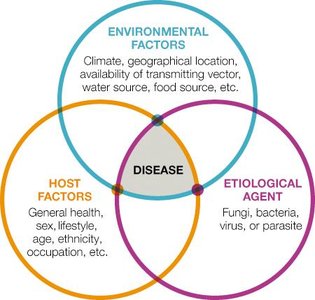
Application: Influenza Outbreak in a Nursing Home
Changes in any corner of the triangle (agent, host, environment) can alter the course of an outbreak. For example, vaccination (host), improved ventilation (environment), or a less virulent strain (agent) can reduce disease spread.
Sources and Modes of Transmission
Sources and Reservoirs
Source: The immediate origin from which a pathogen is transmitted to a host (endogenous or exogenous).
Reservoir: The natural habitat where a microbe is normally found (animals, humans, water, inanimate objects).
Transmission Terminology
Communicable diseases: Transmit from human to human.
Contagious diseases: Easily transmitted between hosts.
Non-communicable diseases: Not spread person-to-person (e.g., tetanus from soil).
Zoonotic diseases: Spread from animals to humans.
Healthcare-acquired infections (HAIs): Develop during healthcare delivery.
Direct vs. Indirect Transmission
Direct transmission: Pathogen passes directly from reservoir to host (e.g., skin contact, droplets, sexual contact).
Indirect transmission: Pathogen passes via an intermediate (e.g., food, water, fomites, vectors).
Modes of Transmission
Contact (direct/indirect)
Bloodborne
Sexual
Droplet (<6 feet)
Airborne (>6 feet)
Oral-fecal
Vehicle (fomites)
Vector-borne (insects/arthropods)
Interrupting Disease Transmission
Standard and Transmission-Based Precautions
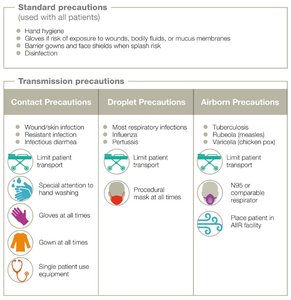
Healthcare workers use standard precautions for all patients and add transmission-based precautions for specific infections.
Standard precautions: Hand hygiene, PPE, respiratory hygiene, safe injection, proper handling of equipment.
Transmission-based precautions: Additional measures for contact, droplet, or airborne transmission.
Epidemiology: Tracking and Controlling Disease
Definition and Goals
Epidemiology is the scientific study of disease occurrence, distribution, and determinants in populations. Its goals are to describe and track disease and to develop interventions to protect public health.
Key Epidemiological Terms
Endemic: Routinely detected in a population or region (e.g., common cold).
Epidemic: Widespread outbreak in a region/timeframe.
Pandemic: Epidemic that spreads across countries/continents.
Emerging pathogen: Newly identified or previously rare.
Reemerging pathogen: Previously controlled but now resurging.
Disease Surveillance and Reporting
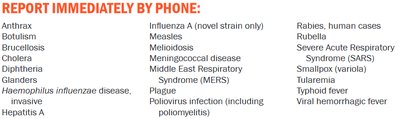
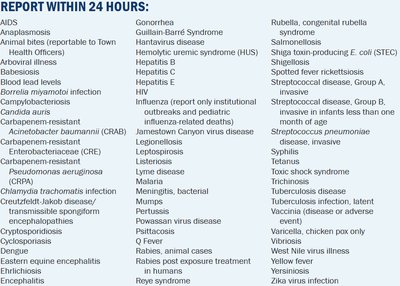
Notifiable diseases: Must be reported to health authorities (CDC, WHO).
Reportable diseases: State/local lists for mandatory reporting.
Morbidity and Mortality
Morbidity rate: Number of cases in a population over a time period.
Mortality rate: Number of deaths from a disease in a population over a time period.
Public Health Strategies
Public education
Vaccination (herd immunity)
Vector control
Quarantine
Additional info:
Formulas:
Morbidity rate:
Mortality rate:
Comparisons:
True pathogen: Causes disease in healthy hosts.
Opportunistic pathogen: Causes disease only in compromised hosts.
Acute disease: Rapid onset, short duration.
Chronic disease: Slow onset, long duration.
Endemic vs. Sporadic: Endemic is regularly found; sporadic occurs occasionally.
Pandemic vs. Epidemic: Pandemic is global; epidemic is regional.
Endogenous vs. Exogenous transmission: Endogenous originates from the host’s own microbiota; exogenous from external sources.
