Back
Principles of Infectious Disease and Epidemiology: Structured Study Notes
Study Guide - Smart Notes
 Tailored notes based on your materials, expanded with key definitions, examples, and context.
Principles of Infectious Disease and Epidemiology
Disease Terminology
This section introduces foundational terms used in infectious disease and epidemiology, essential for understanding disease dynamics and public health.
Infectious disease: Illness caused by a pathogen (e.g., bacteria, viruses, fungi, protozoans, helminths, prions).
Epidemiology: The science of monitoring and controlling disease occurrence to promote public health.
Opportunistic pathogens: Cause disease only in weakened hosts (e.g., immunocompromised individuals).
True pathogens: Can cause disease in healthy hosts.
Sporadic cases: Isolated infections in a population (e.g., Ebola).
Endemic infections: Routinely detected in a population or region (e.g., common cold).
Epidemic: Widespread outbreak in a region during a specific time frame.
Pandemic: Epidemic that spreads to multiple countries.
Emerging pathogens: Newly identified or geographically expanding agents (e.g., SARS-CoV-2).
Reemerging pathogens: Previously controlled agents now resurfacing (e.g., antibiotic-resistant bacteria).
Zoonotic diseases: Spread from animals to humans; many are noncommunicable.
Communicable diseases: Transmit from human to human.
Contagious diseases: Easily transmitted between hosts.
Signs: Objective indicators measurable by clinicians (e.g., fever, rash).
Symptoms: Subjective experiences reported by patients (e.g., pain, fatigue).
Latent infection: Asymptomatic phase; pathogen may persist in host.
Acute disease: Rapid onset and progression.
Chronic disease: Slower onset and progression.
Koch’s Postulates and Their Limitations
Koch’s postulates are criteria used to identify the causative agent of infectious diseases, but they have notable limitations.
Four postulates:
The same organism must be present in every case of the disease.
The organism must be isolated and grown in pure culture.
The isolated organism should cause disease when inoculated into a susceptible host.
The organism must be re-isolated from the inoculated, diseased host.
Limitations: Not applicable to noninfectious diseases, obligate intracellular pathogens, latent diseases, or pathogens that do not infect nonhuman hosts.
Infectious Disease Transmission and Stages
Understanding how pathogens are transmitted and the stages of disease progression is crucial for epidemiology and infection control.
Reservoir: Natural habitat (animate or inanimate) where a pathogen is found.
Source: Entity that disseminates the pathogen from the reservoir to new hosts.
Endogenous source: Pathogen originates from the host’s own body.
Exogenous source: Pathogen is external to the host.
Modes of Transmission
Direct contact: Physical contact with the source (e.g., touching, kissing, animal bites).
Vertical transmission: Mother to child during pregnancy, delivery, or breastfeeding.
Indirect contact: No direct contact; includes airborne, vehicle (fomites, food, water), and vector transmission.
Biological vector: Vector is integral to pathogen’s life cycle (e.g., mosquitoes, ticks).
Mechanical vector: Vector transports pathogen without being part of its life cycle (e.g., flies, cockroaches).
Stages of Infectious Disease
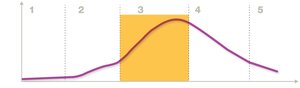
Most infectious diseases progress through five stages, which vary by pathogen and host.
Incubation period: Time between infection and symptom onset.
Prodromal phase: Early, mild symptoms develop.
Acute phase: Peak of disease; full-blown symptoms.
Period of decline: Pathogen replication decreases; symptoms resolve.
Convalescent phase: Recovery; pathogen eliminated or becomes latent.
Epidemiology Essentials
Epidemiology is the study of disease in populations, aiming to describe and intervene to improve public health.
Goals:
Describe the nature, cause, and extent of diseases.
Intervene to protect and improve health.
The Epidemiological Triangle
The triangle links host, etiological agent, and environment, illustrating factors influencing disease spread.
Host factors: General health, age, sex, lifestyle, occupation.
Etiological agent: Pathogen type (bacteria, virus, fungi, parasite, prion).
Environmental factors: Climate, geography, vector availability, water/food sources.

Breaking the Triangle
Public health strategies: Education, quarantine, vector control.
Personal habits: Hand washing, avoiding IV drug use, drinking clean water.
Public Health Strategies
Public health aims to prevent disease through education, quarantine, and vector control.
Education: Vaccination campaigns, prenatal care, STD awareness.
Quarantine: Confinement to limit disease spread; effective for diseases with short incubation periods.
Vector control: Reducing populations of disease-spreading arthropods (e.g., mosquitoes, ticks).
Epidemiological Measures
Numerical measures help track disease occurrence and risk factors in populations.
Rate: Occurrence of an event over time.
Ratio: Comparison between groups.
Proportion: Percentage of a whole.
Prevalence: Morbidity in a population during a specified time.
Incidence: Number of new cases in a defined population during a defined time frame.
Measures of Association
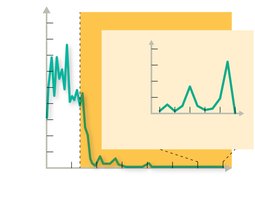
Reveal risk factors for disease (e.g., age, ethnicity, geography).
Mortality rate: Number of deaths during a specific period.
Epidemiological Study Types
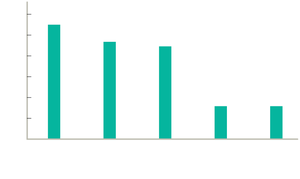
Studies are categorized as descriptive or analytical, each with distinct purposes and methods.
Descriptive epidemiology: Characterizes health problems, identifies at-risk populations, allocates resources. Includes correlation studies, case reports, cross-sectional studies.
Analytical epidemiology: Tests hypotheses, determines cause and distribution. Includes observational (no intervention) and experimental (intervention, e.g., clinical trials) studies.
Healthcare Epidemiology and Healthcare-Acquired Infections (HAIs)
Hospital epidemiology focuses on preventing and controlling HAIs, which are infections acquired during healthcare interventions.
Common sources: Contaminated medical devices, healthcare workers’ hands.
Common HAIs: Clostridioides difficile GI infections, catheter-associated UTIs, surgical wound infections, MRSA bacteremia, ventilator-associated pneumonia.
Most common pathogens: Staphylococcus aureus, Escherichia coli, Clostridioides difficile, Pseudomonas aeruginosa.
Many HAIs are preventable through surveillance, hand washing, PPE, sanitization, equipment sterilization, and patient isolation.

Surveillance and Disease Reporting
Surveillance programs monitor, control, and prevent disease. Notifiable and reportable diseases are tracked by local, state, and national authorities.
National Notifiable Diseases Surveillance System (NNDSS): Network for monitoring and reporting certain diseases.
CDC: Central source for epidemiological information; publishes Morbidity and Mortality Weekly Report (MMWR).
Emerging and Reemerging Diseases
Emerging diseases are new or newly identified; reemerging diseases were previously controlled but are increasing in incidence.
Factors: Population crowding, poverty, tropical climates, wildlife diversity, deforestation, urbanization.
Examples: Ebola, HIV, H1N1, Zika, COVID-19, antibiotic-resistant bacteria.
Eradication and Ethical Issues in Epidemiology
Eradication is the complete elimination of a disease globally. Ethical issues arise in research and public health interventions.
Eradication: Achieved only for smallpox (1977); polio and guinea worm are close.
Ethical issues: Informed consent, balancing individual rights and public good, genetic information privacy.
Vaccination: Herd immunity protects vulnerable populations; ethical debates about mandatory vaccination.
Visual Summary
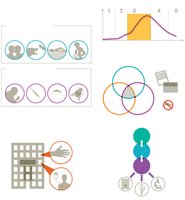
This summary visually integrates key concepts: transmission modes, disease stages, epidemiological triangle, healthcare epidemiology, and disease reporting.