 Back
Backlec 17
Study Guide - Smart Notes
 Tailored notes based on your materials, expanded with key definitions, examples, and context.
Protozoan Parasites
Overview and Classification
Protozoan parasites are single-celled eukaryotic organisms that cause a variety of diseases in humans and animals. They are classified based on their mode of locomotion and life cycle characteristics. Major groups include amoebas, flagellates, and apicomplexans.
Amoebas: Move via pseudopods; often free-living but some are pathogenic.
Flagellates: Move using flagella; include both noninvasive and invasive species.
Apicomplexans: Characterized by complex organelles at their apical tips; have intricate life cycles often involving multiple hosts.
Life Stages of Protozoan Parasites
Protozoan parasites typically alternate between two main life stages:
Trophozoite: The feeding and reproducing stage within the host.
Cyst: The dormant, stable, and infectious stage outside the host, often resistant to environmental stress.
Example: Giardia intestinalis alternates between a motile trophozoite and a resistant cyst.
Motility and Cell Structure
Protozoans exhibit diverse mechanisms of motility, which are key to their classification and pathogenicity.
Cilia: Short, hair-like structures for movement (e.g., Paramecium).
Pseudopods: Temporary projections of cytoplasm for movement (e.g., Amoeba).
Flagella: Long, whip-like structures for propulsion (e.g., Euglena, Giardia).
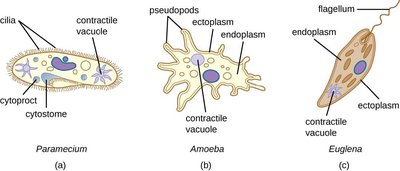 Example: Euglena species display flagellar diversity, aiding in their movement and environmental adaptation.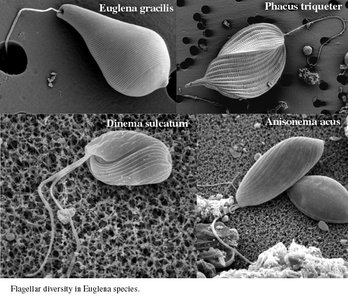
Amoebas
Pathogenic Amoebas
Amoebas are soft-bodied protozoans that move by changing shape and forming pseudopods. Most are free-living, but some cause disease.
Entamoeba histolytica: Causes amoebic dysentery, ulcerative colitis, and abscesses in liver, lungs, and brain.
Acanthamoeba species: Cause eye infections.
Naegleria fowleri: Known as the "brain-eating amoeba," causes fatal encephalitis.
Flagellates
Noninvasive Flagellates
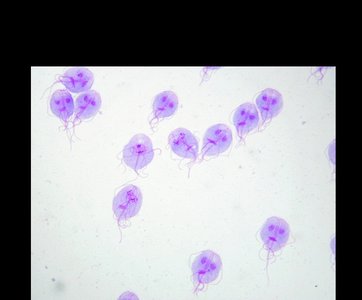
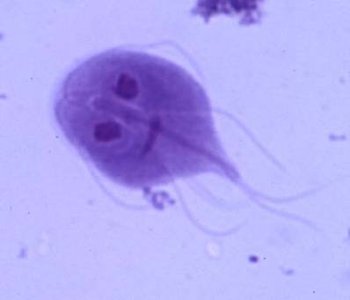
Noninvasive flagellates are characterized by two nuclei, four pairs of flagella, and lack mitochondria and Golgi apparatus.
Giardia intestinalis: Causes localized diarrhea; life cycle includes trophozoite and cyst forms.
Trichomonas vaginalis: Causes vaginitis; lacks a cyst form and is transmitted sexually.
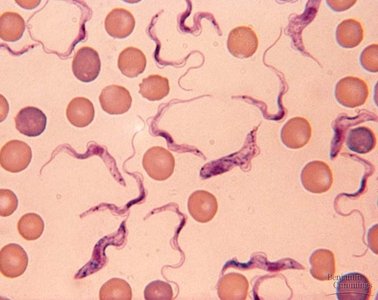
Invasive Flagellates
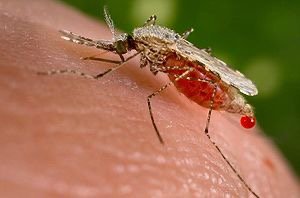
Invasive flagellates are transmitted by insect vectors and replicate via fission.
Trypanosoma brucei: Transmitted by tsetse fly; causes African sleeping sickness.
Trypanosoma cruzi: Transmitted by triatomine bug; causes Chaga’s disease.
Leishmania species: Transmitted by sandflies; cause cutaneous and visceral leishmaniasis.
Apicomplexans
Characteristics and Life Cycle
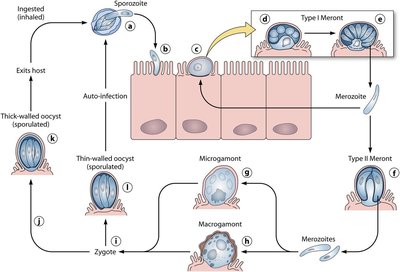
Apicomplexans possess a complex of organelles at their apical tips for host cell penetration. Their life cycles include both asexual and sexual phases, often in different hosts.
Cryptosporidium parvum: Causes diarrhea; completes its life cycle within a single host, producing infective oocysts.
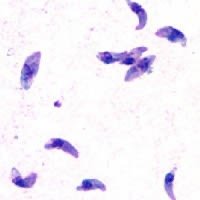
Toxoplasma gondii: Causes toxoplasmosis; sexual cycle occurs in cats, transmitted via oocysts in feces.
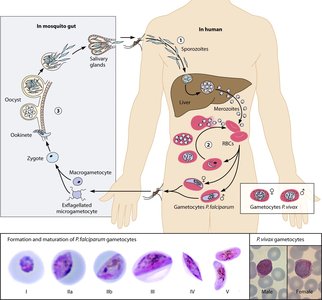
Plasmodium species: Cause malaria; sexual cycle occurs in mosquitoes, asexual cycle in humans.
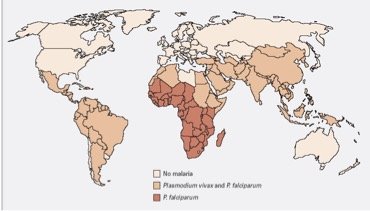
Malaria and Global Impact
Plasmodium falciparum: Most severe form of malaria; cycling fever every 48-72 hours due to red blood cell lysis.
Global prevalence: 300-500 million cases worldwide; high mortality in children under 5 years.
Summary Table: Protozoan Parasite Groups
Group | Motility | Key Pathogens | Transmission | Diseases |
|---|---|---|---|---|
Amoebas | Pseudopods | Entamoeba histolytica, Naegleria fowleri | Fecal-oral, water | Dysentery, encephalitis |
Flagellates | Flagella | Giardia intestinalis, Trichomonas vaginalis, Trypanosoma spp., Leishmania spp. | Water, sexual, insect vectors | Diarrhea, vaginitis, sleeping sickness, leishmaniasis |
Apicomplexans | None (except gametes) | Cryptosporidium parvum, Toxoplasma gondii, Plasmodium spp. | Fecal-oral, ingestion, insect vectors | Diarrhea, toxoplasmosis, malaria |
Key Terms and Concepts
Trophozoite: Active, feeding stage within host.
Cyst: Dormant, resistant stage outside host.
Vector: An organism (often an insect) that transmits a pathogen.
Apical complex: Specialized organelles for host cell invasion in apicomplexans.
Important Equations and Life Cycle Stages
Malaria Life Cycle (Plasmodium spp.)
Sporozoite: Infective stage injected by mosquito.
Merozoite: Stage that infects red blood cells.
Gametocyte: Sexual stage taken up by mosquito.
Equation for Red Blood Cell Lysis Cycle: Additional info: The notes cover selected sections of Chapter 23 (Parasitic Protozoa, Helminths, and Arthropod Vectors) and Chapter 12 (Characterizing and Classifying Eukaryotes), directly relevant to the microbiology course.
