 Back
BackRecombinant DNA Technology and DNA-Based Techniques in Microbiology
Study Guide - Smart Notes
 Tailored notes based on your materials, expanded with key definitions, examples, and context.
Ch. 8 - Recombinant DNA Technology
Introduction to DNA-Based Technology
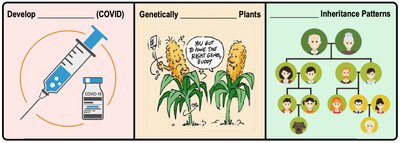
DNA-based technology encompasses a set of techniques used to manipulate DNA and study gene expression. These methods are foundational in modern microbiology, enabling the development of vaccines, genetically modified organisms, and the study of inheritance patterns.
Definition: DNA-based technology refers to laboratory methods for analyzing and modifying genetic material.
Applications: Vaccine development (e.g., COVID-19 vaccines), genetic modification of plants, and tracking inheritance patterns in populations.
Example: Using DNA technology to produce genetically modified crops or to trace genetic diseases in families.
Overview of DNA-Based Technologies
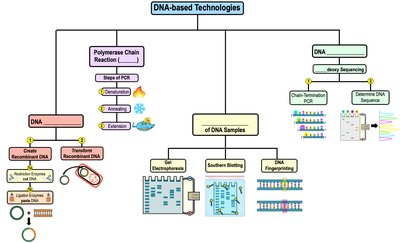
DNA-based technologies can be grouped into several major categories, each with specific applications in research and medicine.
Recombinant DNA Technology: Creating and cloning recombinant DNA molecules.
Polymerase Chain Reaction (PCR): Amplifying specific DNA sequences.
Analysis of DNA Samples: Gel electrophoresis, Southern blotting, DNA fingerprinting, and DNA sequencing.
Recombinant DNA and DNA Cloning
Introduction to DNA Cloning
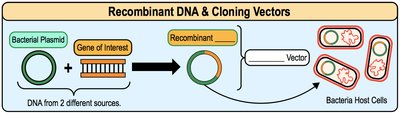
DNA cloning is the process of creating many identical copies of a DNA fragment, such as a gene, within a host cell. This is achieved through a series of biochemical reactions that produce DNA with a specific sequence of interest.
Cloning: The process of making identical copies of DNA.
Recombinant DNA: DNA molecules formed by combining DNA from two different sources, often from different species.
Cloning Vectors: Plasmids or other DNA molecules used to carry foreign DNA into a host cell for replication.
Steps in DNA Cloning
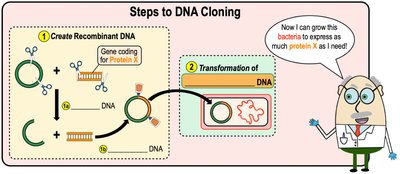
The process of DNA cloning involves two main steps: creating recombinant DNA and transforming it into a host organism.
Step 1: Create Recombinant DNA
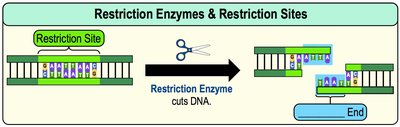
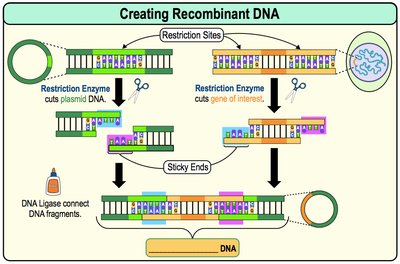
Restriction enzymes cut DNA at specific sequences (restriction sites), producing sticky ends.
DNA ligase joins the sticky ends, forming recombinant DNA.
Step 2: Transform Recombinant DNA
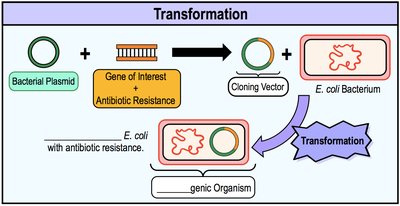
The recombinant DNA is introduced into a host cell (often bacteria) by transformation.
Transformed cells are selected using phenotypic markers, such as antibiotic resistance.
Restriction Enzymes and Ligation
Restriction enzymes recognize and cut DNA at specific sequences, generating fragments with sticky or blunt ends. DNA ligase is then used to join these fragments, creating recombinant DNA molecules.
Restriction Enzymes: Enzymes that cleave DNA at specific nucleotide sequences (restriction sites).
Sticky Ends: Single-stranded overhangs produced by restriction enzyme digestion, facilitating the joining of DNA fragments.
DNA Ligase: Enzyme that covalently joins DNA fragments by forming phosphodiester bonds.
Transformation and Selection
Transformation is the process by which cells take up foreign DNA from their environment. In recombinant DNA technology, this allows the introduction of engineered plasmids into bacterial cells, which can then express the gene of interest.
Transformation: Uptake of foreign DNA by a cell.
Transgenic Organism: An organism that contains and expresses foreign DNA.
Selection Markers: Genes (e.g., antibiotic resistance) used to identify cells that have successfully taken up recombinant DNA.
Application: Cloning the Human Insulin Gene
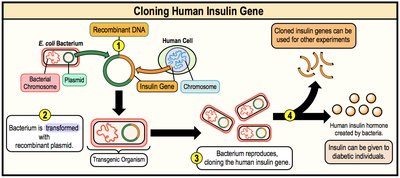
Recombinant DNA technology is widely used in medicine, such as the production of human insulin by genetically engineered bacteria.
Process: The human insulin gene is inserted into a bacterial plasmid, transformed into E. coli, and the bacteria produce insulin protein for medical use.
Significance: Enables mass production of human proteins for therapeutic purposes.
Polymerase Chain Reaction (PCR)
Introduction to PCR
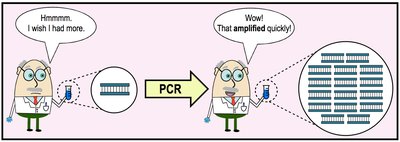
The polymerase chain reaction (PCR) is a technique used to rapidly amplify specific DNA sequences in vitro, generating millions of copies from a small initial sample.
Amplification: Making many copies of a DNA segment.
In Vitro: PCR occurs in a test tube, not in living cells.
Efficiency: PCR is faster but may introduce more errors compared to cellular DNA cloning.
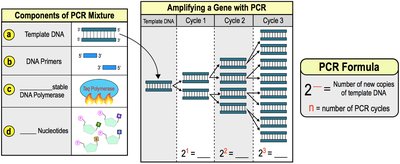
Components of PCR
A typical PCR reaction requires several key components:
Template DNA: The DNA sequence to be amplified.
Primers: Short DNA sequences that are complementary to the target region and provide a starting point for DNA synthesis.
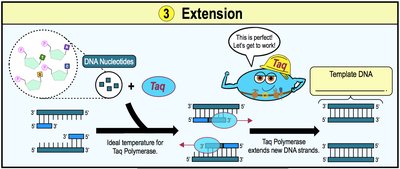
Thermo-stable DNA Polymerase: An enzyme (e.g., Taq polymerase) that synthesizes new DNA strands and can withstand high temperatures.
Deoxyribonucleotides (dNTPs): The building blocks for new DNA synthesis.
Steps of PCR
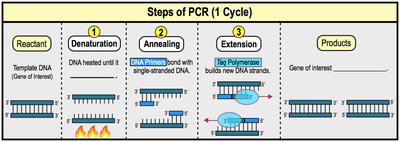
PCR consists of repeated cycles, each with three main steps:
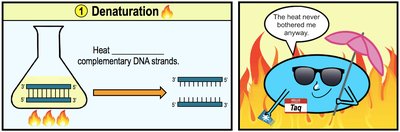
Denaturation: Heating the reaction to ~95°C to separate double-stranded DNA into single strands.
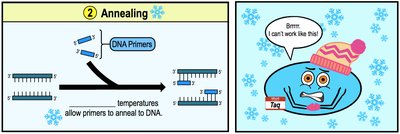
Annealing: Cooling to ~55°C to allow primers to bind (anneal) to their complementary sequences on the single-stranded DNA.
Extension: Raising the temperature to ~72°C for the DNA polymerase to synthesize new DNA strands from the primers.
Analysis of DNA Samples
Gel Electrophoresis
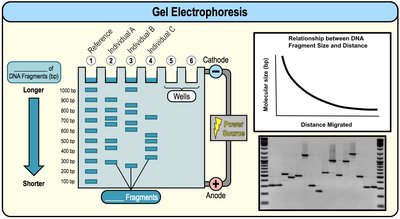
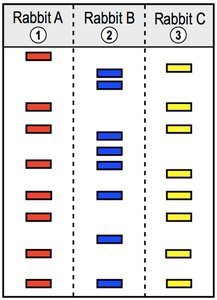
Gel electrophoresis is a technique used to separate and visualize DNA fragments based on size. DNA samples are loaded into a gel matrix and subjected to an electric current, causing negatively charged DNA to migrate toward the positive electrode.
Principle: Smaller DNA fragments migrate faster and farther through the gel than larger fragments.
Applications: Comparing DNA samples, analyzing PCR products, and DNA fingerprinting.
Southern Blotting
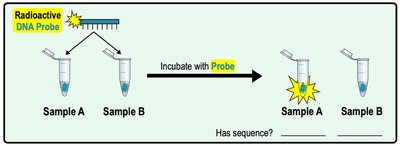
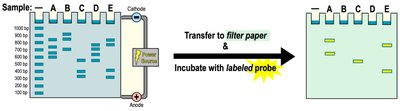
Southern blotting is a method for detecting specific DNA sequences within a complex mixture. It involves transferring DNA fragments from a gel to a membrane, then probing with a labeled DNA probe complementary to the sequence of interest.
Steps:
Separate DNA fragments by gel electrophoresis.
Denature DNA to single strands.
Transfer (blot) DNA onto a membrane.
Hybridize with a labeled probe.
Detect probe binding to identify the presence of the target sequence.
Applications: Gene detection, genetic diagnostics, and research.
DNA Fingerprinting
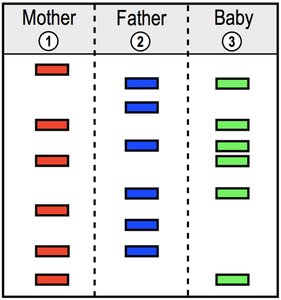
DNA fingerprinting uses genetic markers, such as short tandem repeats (STRs), to identify individuals based on their unique DNA profiles. This technique is widely used in forensic science and paternity testing.
Genetic Markers: DNA sequences with known locations that vary between individuals.
STRs: Short, repeated DNA sequences that are highly variable among individuals.
Application: Matching DNA from crime scenes to suspects, verifying biological relationships.
DNA Sequencing
Introduction to DNA Sequencing
DNA sequencing is the process of determining the exact order of nucleotides in a DNA molecule. This can be done for small fragments or entire genomes.
Dideoxy Sequencing (Sanger Sequencing): Uses dideoxynucleotides (ddNTPs) to terminate DNA synthesis at specific bases, allowing the sequence to be determined.
Components: Template DNA, DNA polymerase, primers, deoxynucleotides, and labeled dideoxynucleotides.
Chain Termination: Incorporation of a ddNTP prevents further elongation of the DNA strand.
Dideoxy Sequencing Process
Dideoxy sequencing involves setting up four separate reactions, each with a different ddNTP. The resulting DNA fragments are separated by gel electrophoresis, and the sequence is read from the pattern of terminated fragments.
Steps:
Set up four reactions, each with a different ddNTP.
DNA synthesis produces fragments ending at each occurrence of the base corresponding to the ddNTP.
Fragments are separated by size using gel electrophoresis.
The sequence is determined by reading the gel from bottom to top.
