 Back
BackRecombinant DNA Technology and DNA-Based Technologies: Study Notes
Study Guide - Smart Notes
 Tailored notes based on your materials, expanded with key definitions, examples, and context.
Ch. 8 - Recombinant DNA Technology
Introduction to DNA-Based Technology
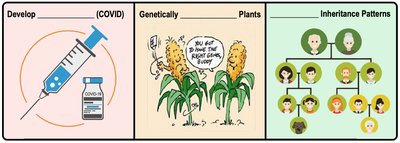
DNA-based technology encompasses a variety of techniques used to manipulate DNA and study gene expression. These methods are foundational in modern microbiology, biotechnology, and genetics, enabling applications such as vaccine development, genetically modified organisms, and the study of inheritance patterns.
Key Point 1: DNA-based technologies allow for the manipulation and analysis of genetic material for research and practical applications.
Key Point 2: Common uses include developing vaccines (e.g., COVID-19), genetically modifying plants, and tracking inheritance patterns in populations.
Example: Researchers use DNA-based technologies to produce recombinant vaccines, engineer crops with desirable traits, and analyze family pedigrees for genetic disorders.
Overview of DNA-Based Technologies
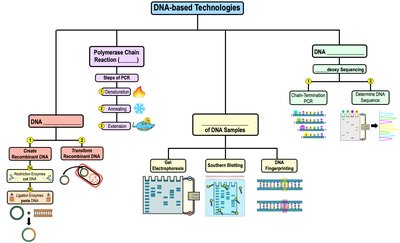
DNA-based technologies can be organized into several major categories, including recombinant DNA creation, polymerase chain reaction (PCR), gel electrophoresis, Southern blotting, DNA fingerprinting, and DNA sequencing. Each technique serves a specific purpose in the manipulation, amplification, or analysis of DNA.
Key Point 1: Recombinant DNA technology involves creating and cloning DNA molecules from different sources.
Key Point 2: PCR is used to amplify specific DNA sequences rapidly in vitro.
Key Point 3: Gel electrophoresis separates DNA fragments by size for analysis.
Key Point 4: Southern blotting detects specific DNA sequences within a complex mixture.
Key Point 5: DNA fingerprinting identifies individuals based on unique genetic markers.
Key Point 6: DNA sequencing determines the precise order of nucleotides in DNA.
Recombinant DNA and DNA Cloning
Introduction to DNA Cloning
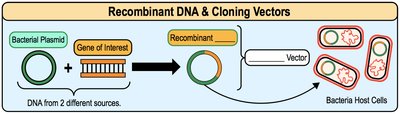
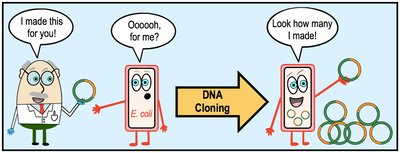
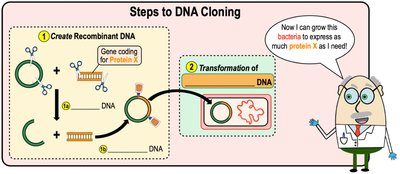
DNA cloning is the process of creating many identical copies of a DNA fragment, such as a gene, within a host cell. This is achieved through a series of biochemical reactions that produce recombinant DNA, which is then introduced into a host organism for replication.
Key Point 1: Recombinant DNA is a molecule composed of DNA from two different sources, often from different species.
Key Point 2: Bacterial plasmids are commonly used as cloning vectors to carry foreign DNA into host cells.
Example: Creating recombinant DNA plasmids to be used as cloning vectors in E. coli.
Steps to DNA Cloning
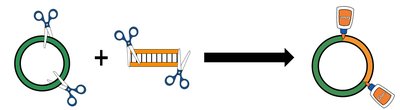
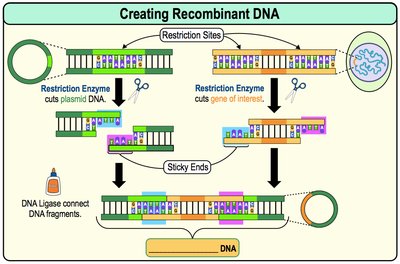
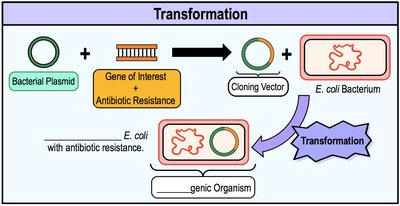
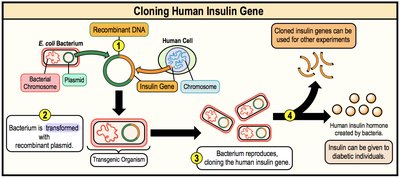
The process of DNA cloning involves two main steps: creating recombinant DNA and transforming it into a host cell. Restriction enzymes are used to cut DNA at specific sites, and DNA ligase is used to join the fragments, forming recombinant DNA. The recombinant DNA is then introduced into a host cell, which replicates the DNA.
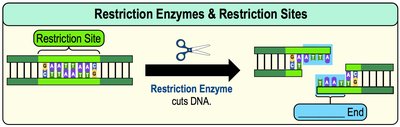
Key Point 1: Restriction enzymes cleave DNA at specific sequences, producing sticky ends.
Key Point 2: DNA ligase joins the sticky ends, forming a stable recombinant DNA molecule.
Key Point 3: Transformation is the process by which host cells take up recombinant DNA.
Key Point 4: Transgenic organisms are those that have incorporated foreign DNA and express new traits, such as antibiotic resistance.
Example: Production of human insulin in E. coli using recombinant DNA technology.
Polymerase Chain Reaction (PCR)
Introduction to PCR
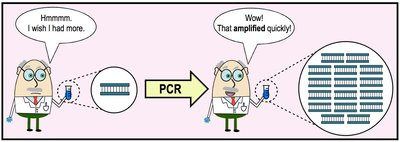
The polymerase chain reaction (PCR) is a technique used to rapidly amplify a specific DNA sequence in vitro. Unlike DNA cloning, which occurs in living cells, PCR is performed in a test tube and can generate millions of copies of a target DNA sequence in a short time.
Key Point 1: PCR is highly efficient and can amplify DNA from minimal starting material, such as forensic samples.
Key Point 2: Each cycle of PCR doubles the amount of target DNA, resulting in exponential amplification.
Example: PCR is used to amplify DNA from a crime scene for forensic analysis.
Components and Steps of PCR
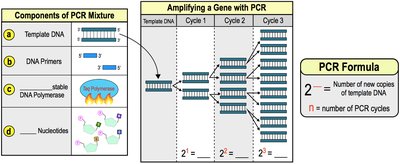
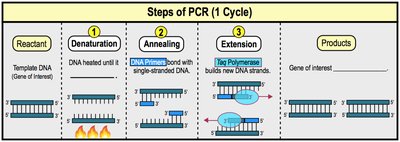
PCR requires template DNA, two primers, a thermostable DNA polymerase (such as Taq polymerase), and deoxyribonucleotides. The process consists of repeated cycles of denaturation, annealing, and extension.
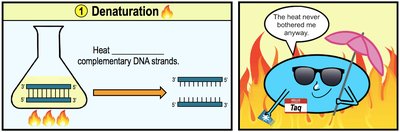
Key Point 1: Denaturation (95°C): Double-stranded DNA is separated into single strands by heat.
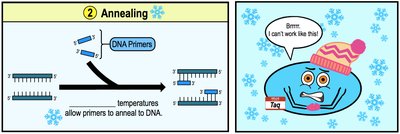
Key Point 2: Annealing (~55°C): Primers bind to complementary sequences on the single-stranded DNA.
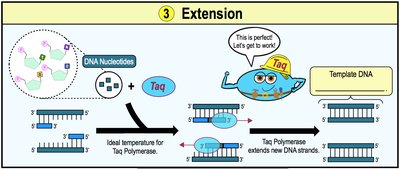
Key Point 3: Extension (72°C): Taq polymerase synthesizes new DNA strands by adding nucleotides to the primers.
Formula: The number of DNA molecules after n cycles is $2^n$.
Gel Electrophoresis
Principles of Gel Electrophoresis
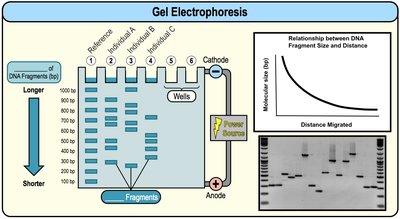
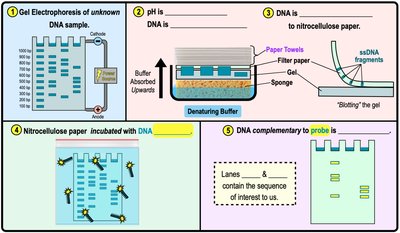
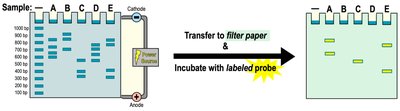
Gel electrophoresis is a technique used to separate and visualize DNA fragments based on size. DNA samples are loaded into wells in an agarose gel and subjected to an electric current. Because DNA is negatively charged, fragments migrate toward the positive anode, with smaller fragments moving faster and farther than larger ones.
Key Point 1: DNA fragments are separated by size, allowing for analysis of genetic material.
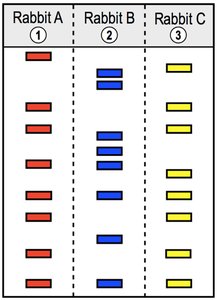
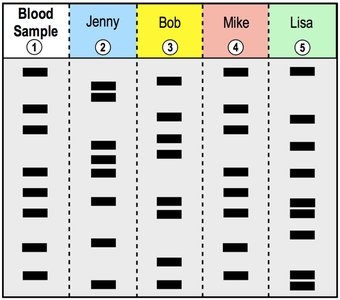
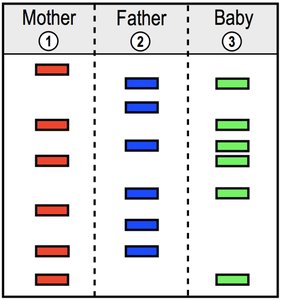
Key Point 2: The pattern of bands can be used to compare genetic similarity or identify individuals.
Example: Gel electrophoresis can be used to determine relatedness among species or match DNA from a crime scene to suspects.
Southern Blotting
Principles and Steps of Southern Blotting
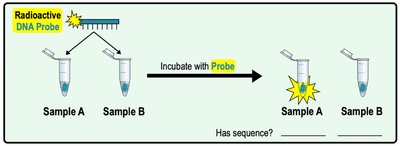
Southern blotting is a method used to detect specific DNA sequences within a complex mixture. After DNA fragments are separated by gel electrophoresis, they are transferred to a nitrocellulose filter and hybridized with a labeled DNA probe that is complementary to the sequence of interest.
Key Point 1: DNA probes are single-stranded and labeled (often radioactively) for detection.
Key Point 2: Only DNA fragments complementary to the probe will be visualized, allowing for identification of specific genes.
Key Point 3: Southern blotting is distinct from Northern (RNA detection) and Western (protein detection) blotting.
Example: Southern blotting can confirm the presence of a disease gene in a patient's DNA sample.
DNA Fingerprinting
Principles of DNA Fingerprinting
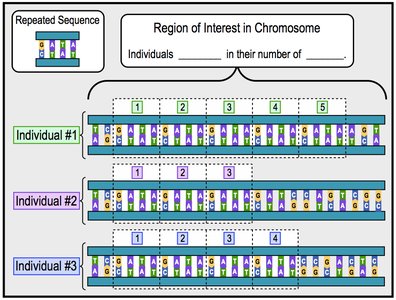
DNA fingerprinting is a technique that uses genetic markers, such as short tandem repeats (STRs), to identify individuals. STRs are short, repeated sequences of DNA that vary in number among individuals, making them highly polymorphic and useful for forensic and paternity testing.
Key Point 1: STR analysis allows for the unique identification of individuals based on their DNA profiles.
Key Point 2: DNA fingerprinting is widely used in criminal investigations, paternity testing, and population genetics.
Example: Matching DNA from a crime scene to a suspect using STR patterns.
DNA Sequencing
Introduction to DNA Sequencing
DNA sequencing is the process of determining the exact order of nucleotides in a DNA molecule. The Sanger (dideoxy) sequencing method uses dideoxynucleotides (ddNTPs) to terminate DNA synthesis at specific bases, allowing the sequence to be read from the resulting fragments.
Key Point 1: Dideoxynucleotides lack a 3' OH group, preventing further elongation of the DNA strand.
Key Point 2: The sequence is determined by separating the fragments by size using gel electrophoresis and reading the order of termination events.
Example: Sanger sequencing is used to determine the sequence of a gene or an entire genome.
