 Back
BackRecombinant DNA Technology and Its Applications in Microbiology
Study Guide - Smart Notes
 Tailored notes based on your materials, expanded with key definitions, examples, and context.
Recombinant DNA Technology in Biotechnology
Introduction to Recombinant DNA Technology
Recombinant DNA technology is a cornerstone of modern biotechnology, involving the intentional modification of the genetic material of organisms for practical purposes. This field enables scientists to manipulate genes to eliminate undesirable traits, combine beneficial characteristics, and produce valuable biological products.
Biotechnology: The use of microorganisms or biological systems to develop products or processes for specific use.
Recombinant DNA Technology: Techniques used to artificially modify the genome of an organism.
Main Goals:
Eliminate undesirable phenotypic traits
Combine beneficial traits from different organisms
Create organisms that synthesize products needed by humans (e.g., vaccines, hormones)
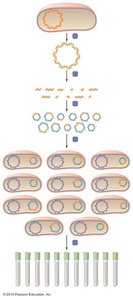
Tools of Recombinant DNA Technology
Mutagens
Mutagens are physical or chemical agents that induce mutations in DNA. Scientists use mutagens to create genetic diversity, select for beneficial traits, and isolate mutated genes for further study.
Physical Mutagens: Radiation (e.g., UV, X-rays)
Chemical Mutagens: Chemicals that alter DNA structure
Applications: Used to increase mutation rates for research or industrial strain improvement
Mutation Rate Calculation: The rate can be calculated by comparing the number of mutations to the total number of cells or generations.
Reverse Transcriptase
Reverse transcriptase is an enzyme that synthesizes complementary DNA (cDNA) from an RNA template. This process is essential for cloning eukaryotic genes in prokaryotes, as cDNA lacks introns present in eukaryotic genes.
Source: Isolated from retroviruses
Importance: Allows for the production of eukaryotic proteins in prokaryotic cells
cDNA: DNA copy of mRNA, free of introns
Restriction Enzymes (Restriction Endonucleases)
Restriction enzymes are bacterial enzymes that cut DNA at specific nucleotide sequences known as restriction sites. They are essential for gene cloning and DNA manipulation.
Types of Cuts:
Sticky Ends: Staggered cuts that leave overhanging single-stranded DNA
Blunt Ends: Straight cuts with no overhangs
Palindromic Sequences: Restriction sites are often palindromic (read the same 5' to 3' on both strands)
DNA Ligase: Enzyme used to join DNA fragments with compatible ends

Vectors
Vectors are DNA molecules used to deliver foreign genes into host cells. Common vectors include plasmids, viral genomes, and transposons.
Key Properties:
Small size for easy manipulation
Ability to survive inside host cells
Contain selectable markers (e.g., antibiotic resistance genes)
Ensure expression of the inserted gene
Gene Libraries
Gene libraries are collections of DNA fragments cloned into vectors and maintained in host cells. They can represent the entire genome or the expressed genes (cDNA library) of an organism.
Genomic Library: Contains all genes from an organism's genome
cDNA Library: Contains DNA copies of mRNA (expressed genes)
Polymerase Chain Reaction (PCR)
Principle and Steps of PCR
PCR is a technique used to amplify specific DNA sequences in vitro, generating millions of copies from a small initial sample. It is widely used in research, diagnostics, and forensic science.
Applications: Pathogen detection, genetic fingerprinting, cloning
Steps:
Denaturation: Heating to separate DNA strands (usually 94°C)
Priming: Cooling to allow primers to bind to target sequences (usually 50–65°C)
Extension: DNA polymerase synthesizes new DNA strands (usually 72°C)
Thermocycler: Automated machine that cycles through the required temperatures


Inserting DNA into Cells
Natural and Artificial Methods
Introducing recombinant DNA into host cells is a critical step in genetic engineering. Both natural and artificial methods are used depending on the organism and application.
Natural Methods:
Transformation: Uptake of naked DNA from the environment
Transduction: Transfer of DNA by bacteriophages (viruses)
Conjugation: Direct transfer of DNA between bacterial cells via pili
Artificial Methods:
Electroporation: Electric shock creates pores in cell membranes
Protoplast Fusion: Fusion of cells without cell walls
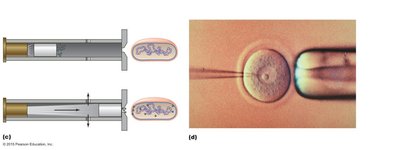
Gene Gun: DNA-coated particles are shot into cells
Microinjection: Direct injection of DNA into the nucleus using a micropipette
Genetic Mapping and Sequencing
Locating and Sequencing Genes
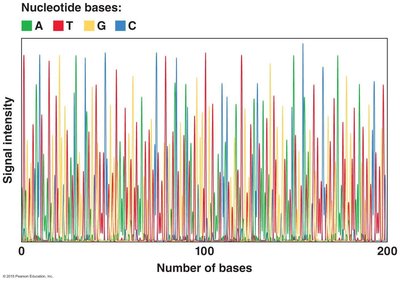
Genetic mapping involves determining the location of genes on a DNA molecule. Sequencing reveals the order of nucleotide bases, providing insights into gene function, metabolism, and evolutionary relationships.
Genomics: The study of entire genomes, including sequencing and analysis
Applications: Pathogen identification, understanding metabolic pathways, evolutionary studies
Applications of Recombinant DNA Technology
Environmental Studies
Recombinant DNA technology allows scientists to study microorganisms that cannot be cultured in the laboratory by analyzing their DNA directly from environmental samples.
DNA Fingerprinting: Identifies species and strains based on unique DNA patterns
Applications: Microbial diversity studies, environmental monitoring, agriculture
Pharmaceutical and Therapeutic Applications
Recombinant DNA technology has revolutionized medicine by enabling the production of proteins, vaccines, and gene therapies.
Protein Synthesis: Bacteria and yeast can be engineered to produce human proteins (e.g., insulin, growth hormone)
Vaccines: Safer subunit vaccines and new strategies for immunization
Genetic Screening: DNA microarrays detect mutations and inherited diseases
Gene Therapy: Replacement of defective genes with normal copies to treat genetic disorders
Medical Diagnosis: Detection of pathogen DNA in patient samples
Gene Therapy for Cancer
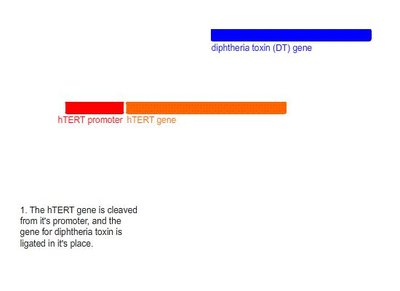
Gene therapy can target cancer cells by exploiting genes that are abnormally active in tumors. For example, the hTERT promoter, which drives expression of telomerase in cancer cells, can be used to direct toxins specifically to tumor cells.
hTERT Gene: Encodes telomerase, active in rapidly dividing and cancer cells
Therapeutic Strategy: Replace hTERT gene with a toxin gene under the control of the hTERT promoter, selectively killing cancer cells
Summary Table: Key Tools and Applications of Recombinant DNA Technology
Tool/Technique | Function | Application Example |
|---|---|---|
Mutagens | Induce mutations in DNA | Strain improvement, genetic studies |
Reverse Transcriptase | Creates cDNA from RNA | Cloning eukaryotic genes in bacteria |
Restriction Enzymes | Cut DNA at specific sites | Gene cloning, DNA mapping |
Vectors | Deliver genes into host cells | Plasmid-mediated transformation |
PCR | Amplify DNA sequences | Pathogen detection, forensic analysis |
Gene Libraries | Store cloned DNA fragments | Genome studies, gene discovery |
Gene Therapy | Replace defective genes | Treatment of genetic diseases, cancer |
