 Back
BackRecombinant DNA Technology: Tools, Techniques, and Applications
Study Guide - Smart Notes
 Tailored notes based on your materials, expanded with key definitions, examples, and context.
Recombinant DNA Technology
Introduction to Recombinant DNA Technology
Recombinant DNA technology involves the intentional modification of the genetic material of organisms to achieve practical outcomes. This field is foundational to modern biotechnology, enabling the creation of organisms with new or enhanced traits and the production of valuable biological products.
Biotechnology: The use of microorganisms or biological systems to develop products or processes for specific uses.
Goals of Recombinant DNA Technology:
Eliminate undesirable phenotypic traits
Combine beneficial traits from multiple organisms
Create organisms that synthesize products needed by humans
Tools of Recombinant DNA Technology
Mutagens
Mutagens are physical or chemical agents that induce mutations in DNA. Scientists use mutagens to create genetic diversity, select for beneficial traits, and isolate mutated genes for further study.
Physical mutagens: Radiation (e.g., UV light, X-rays)
Chemical mutagens: Chemicals that alter DNA structure
Applications: Generating microbial strains with desirable characteristics
Reverse Transcriptase
Reverse transcriptase is an enzyme isolated from retroviruses that synthesizes complementary DNA (cDNA) from an RNA template. This process is essential for cloning eukaryotic genes in prokaryotes, as cDNA lacks introns present in eukaryotic genes.
cDNA: DNA synthesized from an mRNA template; contains only exons
Application: Allows expression of eukaryotic genes in bacteria
Synthetic Nucleic Acids
Synthetic nucleic acids are artificially created DNA or RNA molecules produced in vitro. They are used for a variety of purposes in genetic engineering and molecular biology.
Elucidating the genetic code
Creating genes for specific proteins
Synthesizing probes and primers for PCR
Producing antisense molecules to regulate gene expression
Restriction Enzymes
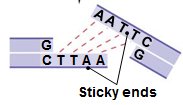
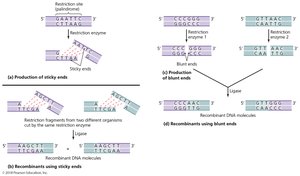
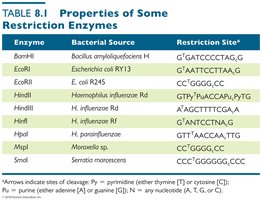
Restriction enzymes are bacterial enzymes that cut DNA at specific nucleotide sequences known as restriction sites, which are often palindromic. They are categorized based on the type of cut they produce: sticky ends or blunt ends.
Sticky ends: Overhanging single-stranded DNA fragments that can easily pair with complementary sequences
Blunt ends: Straight cuts with no overhangs
Enzyme | Bacterial Source | Restriction Site |
|---|---|---|
BamHI | Bacillus amyloliquefaciens H | G\'GATCC |
EcoRI | Escherichia coli RY13 | G\'AATTC |
HindIII | Haemophilus influenzae Rd | A\'AGCTT |
HpaI | H. parainfluenzae | GTT\'AAC |
MspI | Moraxella sp. | C\'CGG |
SmaI | Serratia marcescens | CCC\'GGG |
Vectors
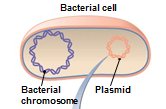
Vectors are nucleic acid molecules used to deliver foreign genes into host cells. They are essential for gene cloning and expression in recombinant DNA technology.
Small and easy to manipulate
Capable of autonomous replication in host cells
Contain selectable markers (e.g., antibiotic resistance genes)
Common vectors: plasmids, viral genomes, transposons
Gene Libraries
A gene library is a collection of cloned DNA fragments that together represent the entire genome or a subset (such as all expressed genes) of an organism. Each clone typically contains a single gene or DNA fragment.
Used for gene isolation, sequencing, and functional studies
Can be constructed from genomic DNA or cDNA
Techniques of Recombinant DNA Technology
Polymerase Chain Reaction (PCR)
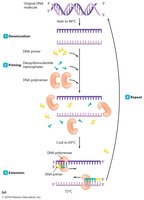
PCR is a technique used to amplify specific DNA sequences in vitro, generating millions of copies from a small initial sample. It is critical for diagnostics, research, and forensic applications.
Steps: Denaturation, Priming, Extension
Automated using a thermocycler
Applications: Disease diagnosis (e.g., SARS-CoV-2), genetic fingerprinting
Gel Electrophoresis
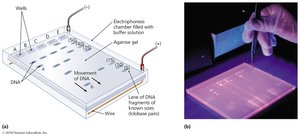
Gel electrophoresis separates DNA fragments based on size and charge by applying an electric field to a gel matrix. Smaller fragments migrate faster, allowing for analysis and purification of DNA.
Uses agarose gel as a molecular sieve
DNA moves toward the positive electrode
Fragment size determined by comparison to standards
Southern Blot
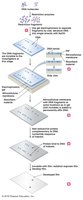
The Southern blot technique transfers DNA fragments from a gel to a membrane, where they are probed with labeled DNA to detect specific sequences. It is used for genetic fingerprinting, disease diagnosis, and detection of unculturable organisms.
DNA is separated by gel electrophoresis, then transferred to a nitrocellulose membrane
Probes hybridize to target sequences
Northern blot: Similar technique for RNA detection
Insertion of DNA into Cells
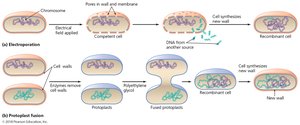
Introducing recombinant DNA into host cells is a key step in genetic engineering. Methods include both natural and artificial techniques.
Natural methods: Transformation, transduction, conjugation
Artificial methods: Electroporation, protoplast fusion, microinjection
Applications of Recombinant DNA Technology
Microbial Community Studies
Recombinant DNA technology enables the study of microbial communities by analyzing DNA directly from environmental samples, revealing the diversity of unculturable microorganisms.
Identification of hundreds of bacterial species in human microbiomes
Next-generation sequencing for comprehensive microbiome analysis
Pharmaceutical Applications
Genetic engineering allows for the production of proteins, vaccines, and other therapeutics in microbial hosts.
Protein synthesis in bacteria and yeast
Safer vaccines (e.g., subunit vaccines, edible vaccines)
Gene-based therapies and diagnostics
Agricultural Applications
Recombinant DNA technology is used to create genetically modified organisms (GMOs) with improved traits such as pest resistance, herbicide tolerance, and enhanced nutritional value.
Transgenic plants and animals
Herbicide tolerance (e.g., glyphosate resistance)
Pest resistance (e.g., Bt toxin in crops)
Salt and freeze tolerance
Improved nutritional content (e.g., Golden Rice with β-carotene)

Ethics and Safety of Recombinant DNA Technology
Ethical and Safety Considerations
The use of recombinant DNA technology raises important ethical and safety questions. While studies have not shown significant risks to human health or the environment, concerns remain about gene transfer, allergies, and the creation of biological weapons.
Potential for gene transfer to non-target organisms
Allergenicity and pathogenicity concerns
Regulation and oversight of genetic engineering labs
Ethical issues: genetic privacy, mandatory screening, profit sharing, and correction of genetic abnormalities
