 Back
BackRecombinant DNA Technology: Tools, Techniques, and Applications
Study Guide - Smart Notes
 Tailored notes based on your materials, expanded with key definitions, examples, and context.
Recombinant DNA Technology
Introduction to Recombinant DNA Technology
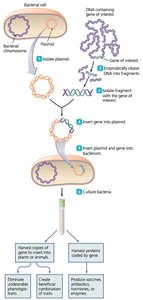
Recombinant DNA technology is a cornerstone of modern biotechnology, involving the intentional modification of the genetic material of organisms for practical purposes. This field enables scientists to manipulate genes to eliminate undesirable traits, combine beneficial characteristics, and create organisms capable of producing valuable products for humans.
Biotechnology: The use of microorganisms or biological systems to develop products or processes for specific use.
Goals of Recombinant DNA Technology:
Eliminate undesirable phenotypic traits
Combine beneficial traits from multiple organisms
Create organisms that synthesize products needed by humans (e.g., insulin, vaccines)
The Tools of Recombinant DNA Technology
Mutagens
Mutagens are physical or chemical agents that induce mutations in DNA. Scientists use mutagens to create genetic diversity, select for beneficial traits, and isolate mutated genes for further study.
Physical mutagens: Radiation (e.g., UV light, X-rays)
Chemical mutagens: Chemicals that alter DNA structure
Applications: Generating new microbial strains with desirable properties
Synthetic Nucleic Acids
Synthetic nucleic acids are artificially created DNA or RNA molecules produced in vitro. They are essential for elucidating genetic codes, creating genes for specific proteins, and designing probes or primers for molecular biology techniques.
Used to synthesize genes, probes, antisense molecules, and PCR primers
Enable the study and manipulation of genetic sequences
Restriction Enzymes
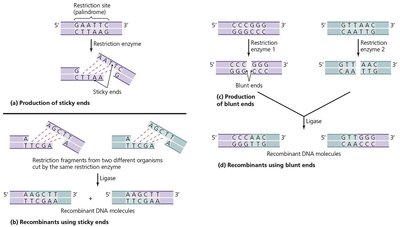
Restriction enzymes are bacterial proteins that cut DNA at specific nucleotide sequences known as restriction sites, which are often palindromic. They are categorized based on the type of cut they produce:
Sticky ends: Overhanging single-stranded ends that can easily pair with complementary sequences
Blunt ends: Straight cuts with no overhangs
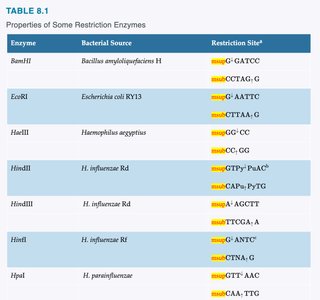
Enzyme | Bacterial Source | Restriction Site |
|---|---|---|
BamHI | Bacillus amyloliquefaciens H | G^GATCC |
EcoRI | Escherichia coli RY13 | G^AATTC |
HaeIII | Haemophilus aegyptius | GG^CC |
HindIII | H. influenzae Rd | A^AGCTT |
HpaI | H. parainfluenzae | GTT^AAC |
Vectors
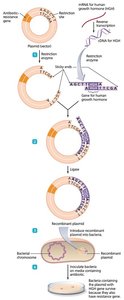
Vectors are nucleic acid molecules used to deliver foreign genes into host cells. They must be small, able to survive inside cells, contain recognizable genetic markers, and ensure expression of the inserted gene. Common vectors include plasmids, viral genomes, and transposons.
Essential for gene cloning and expression in host organisms
Allow for selection and identification of transformed cells
Techniques of Recombinant DNA Technology
Polymerase Chain Reaction (PCR)
PCR is a technique used to amplify specific DNA sequences in vitro, producing millions of copies from a small initial sample. It is critical for diagnostics, research, and forensic applications.
Steps of PCR:
Denaturation: Heating to separate DNA strands
Priming: Cooling to allow primers to bind to target sequences
Extension: DNA polymerase synthesizes new DNA strands
Automated using a thermocycler
Requires thermostable DNA polymerase (e.g., Taq polymerase from hyperthermophilic bacteria)
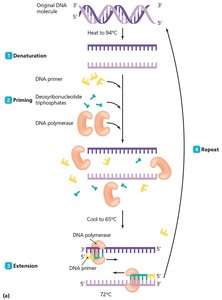
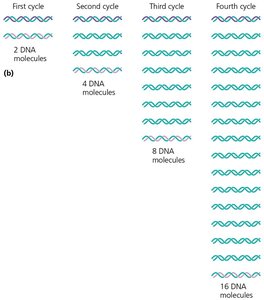
Example: PCR was used to distinguish between two separate Ebola outbreaks in Africa in 2014.
Gel Electrophoresis
Gel electrophoresis separates DNA fragments based on size, charge, and shape. DNA samples are loaded into an agarose gel and subjected to an electric field; smaller fragments migrate faster and farther than larger ones. This technique allows for the isolation and analysis of DNA fragments of interest.
Used to estimate fragment size by comparison to standards
Essential for DNA fingerprinting, cloning, and sequencing
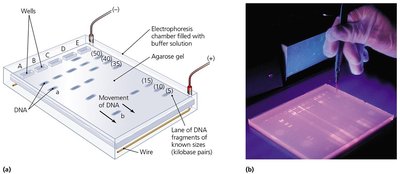
Inserting DNA into Cells
The ultimate goal of recombinant DNA technology is to introduce foreign DNA into host cells. This can be achieved by natural or artificial methods:
Natural methods: Transformation, transduction, conjugation
Artificial methods:
Electroporation: Uses electrical pulses to create pores in cell membranes
Protoplast fusion: Fuses cells lacking cell walls
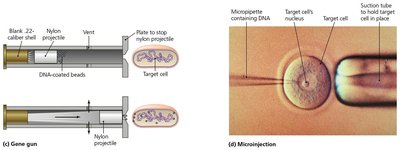
Gene gun: Shoots DNA-coated particles into cells
Microinjection: Directly injects DNA into cells using a fine needle
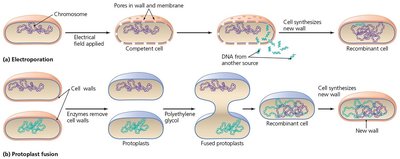
Applications of Recombinant DNA Technology
Genetic Mapping and Genomics
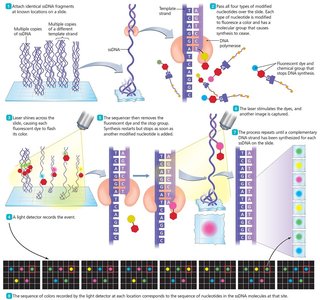
Genetic mapping locates genes on nucleic acid molecules, providing insights into metabolism, growth, and evolutionary relationships. Genomics involves sequencing and analyzing entire genomes, which is crucial for understanding pathogens and relating DNA sequences to protein functions. Next-generation sequencing (NGS) technologies have revolutionized genomics by enabling rapid, high-throughput sequencing.
Used to identify genes, study genetic diseases, and develop targeted therapies
NGS allows for comprehensive analysis of microbial communities and pathogen genomes
Summary Table: Tools and Techniques of Recombinant DNA Technology
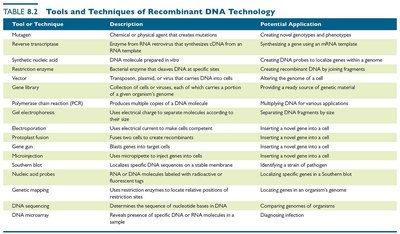
The following table summarizes key tools and techniques used in recombinant DNA technology, their descriptions, and potential applications.
Tool or Technique | Description | Potential Application |
|---|---|---|
Mutagen | Chemical or physical agent that creates mutations | Creating novel genotypes and phenotypes |
Reverse transcriptase | Enzyme that synthesizes DNA from an RNA template | Synthesizing cDNA for gene cloning |
Synthetic nucleic acid | DNA molecule prepared in vitro | Creating DNA probes, genes, and primers |
Vector | Plasmid, virus, or other DNA that carries DNA into cells | Cloning and expressing genes |
Gene library | Collection of DNA fragments cloned into vectors | Storing and retrieving genes of interest |
PCR | Amplifies multiple copies of a DNA molecule | Multiplying DNA for various applications |
Electroporation | Uses electric current to make cells competent | Inserting novel genes into cells |
Protoplast fusion | Fuses cells by removing cell walls | Combining genetic material from different cells |
Microinjection | Injects DNA directly into cells | Inserting genes into animal cells |
Gel electrophoresis | Separates DNA fragments by size | Analyzing and purifying DNA fragments |
Southern blot | Uses DNA probes to locate genes in DNA | Locating specific genes |
DNA sequencing | Determines the sequence of nucleotides in DNA | Comparing genomes of organisms |
DNA microarray | Measures presence of specific DNA or RNA in a sample | Diagnosing infections, gene expression analysis |
Additional info: Recombinant DNA technology is foundational for genetic engineering, gene therapy, and the development of genetically modified organisms (GMOs). Its applications extend to medicine, agriculture, environmental science, and basic research.
