Back
Recombinant DNA Technology: Tools, Techniques, and Applications
Study Guide - Smart Notes
 Tailored notes based on your materials, expanded with key definitions, examples, and context.
Recombinant DNA Technology
Introduction to Recombinant DNA Technology
Recombinant DNA technology, also known as genetic engineering, involves the intentional modification of an organism's genome for practical purposes. This field is a cornerstone of modern biotechnology, enabling scientists to manipulate genetic material to eliminate undesirable traits, combine beneficial traits, and create organisms capable of synthesizing products needed by humans.
Biotechnology: The use of microorganisms to produce useful products, such as bread, cheese, and pharmaceuticals.
Recombinant DNA technology: A collection of tools and techniques for modifying genomes, including gene isolation, manipulation, and insertion into other organisms.
Main goals: Eliminate undesirable traits, combine beneficial traits, and synthesize needed products.
Tools of Recombinant DNA Technology
Mutagens
Mutagens are physical or chemical agents that induce mutations in DNA. Scientists use mutagens to create genetic diversity and select for beneficial traits in microorganisms.
Example: Exposing Penicillium to mutagens to select strains that produce more penicillin.
Mutated genes can be isolated and studied independently of the organism.
Reverse Transcriptase
Reverse transcriptase is an enzyme that synthesizes complementary DNA (cDNA) from an RNA template. This is especially useful for expressing eukaryotic genes in prokaryotic cells, as cDNA lacks introns.
Allows prokaryotes to produce eukaryotic proteins.
cDNA is generated from mRNA, which is easier to isolate than DNA for specific proteins.
Synthetic Nucleic Acids
Synthetic nucleic acids are artificially created DNA or RNA molecules. Machines can rapidly synthesize sequences over 100 nucleotides long, enabling the creation of genes, probes, and antisense molecules for research and diagnostics.
Used to elucidate the genetic code, create specific genes, and synthesize labeled probes for detecting nucleotide sequences.
Restriction Enzymes
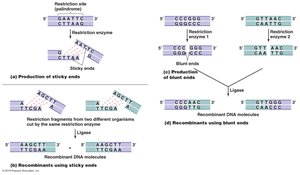
Restriction enzymes are bacterial proteins that cut DNA at specific sequences called restriction sites, which are often palindromic. They are categorized by the type of cut they produce:
Sticky ends: Overhanging sequences that can easily pair with complementary sequences from other DNA fragments.
Blunt ends: Straight cuts that can join any two blunt-ended fragments, though less efficiently.
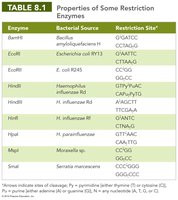
Enzyme | Bacterial Source | Restriction Site |
|---|---|---|
BamHI | Bacillus amyloliquefaciens H | G\GATCC |
EcoRI | Escherichia coli RY13 | G\AATTC |
HindIII | Haemophilus influenzae Rd | A\AGCTT |
SmaI | Serratia marcescens | CCC\GGG |
Additional info: See image_3 for more enzymes and sites. |
Vectors
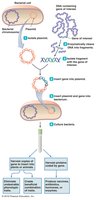
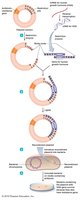
Vectors are nucleic acid molecules used to deliver genes into host cells. They must be small, able to survive inside cells, contain recognizable markers, and ensure gene expression. Common vectors include plasmids, viral genomes, and transposons.
Vectors are engineered to carry foreign DNA into recipient cells for cloning or expression.
Gene Libraries
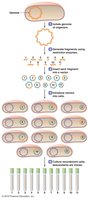
A gene library is a collection of bacterial or phage clones, each containing a fragment of an organism's genome. Libraries can represent all genes from a chromosome or a set of cDNA sequences.
Created by fragmenting DNA, inserting fragments into vectors, and culturing recombinant clones.
Techniques of Recombinant DNA Technology
Polymerase Chain Reaction (PCR)
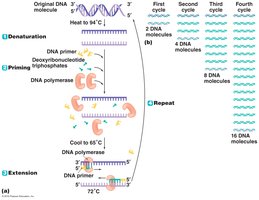
PCR is a technique used to amplify specific DNA sequences in vitro, producing millions of copies from a small initial sample. It is essential for diagnostics, forensics, and research.
Steps: Denaturation (heating to separate strands), Priming (binding of primers), Extension (DNA synthesis by polymerase).
Automated by a thermocycler.
Gel Electrophoresis
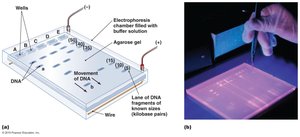
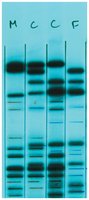
Gel electrophoresis separates DNA fragments by size and charge through an agarose gel matrix. Smaller fragments migrate faster toward the positive electrode. This technique is used to analyze DNA, isolate fragments, and prepare samples for further study.
Southern and Northern Blotting
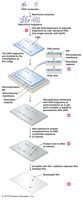
Southern blotting transfers DNA from a gel to a membrane, where labeled probes can detect specific sequences. Northern blotting is similar but used for RNA detection. These techniques are vital for genetic fingerprinting, disease diagnosis, and identifying unculturable organisms.
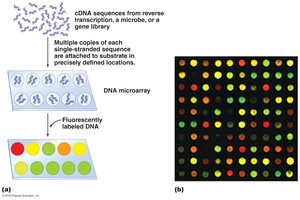
DNA Microarrays
DNA microarrays consist of thousands of immobilized single-stranded DNA sequences. Fluorescently labeled DNA samples hybridize to complementary sequences, allowing for the monitoring of gene expression, infection diagnosis, and organism identification.
DNA Insertion Methods
Introducing recombinant DNA into cells can be achieved by natural or artificial methods:
Natural methods: Transformation, transduction, conjugation (horizontal gene transfer).
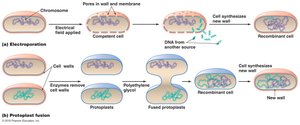
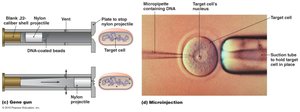
Artificial methods: Electroporation (electric current), protoplast fusion (fusion of cell wall-less cells), and injection (gene gun, microinjection).
Applications of Recombinant DNA Technology
Genetic Mapping and Genomics
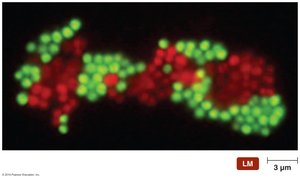
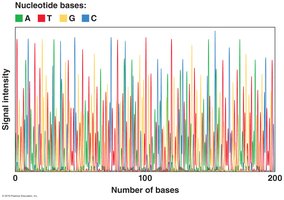
Genetic mapping locates genes on nucleic acid molecules, providing insights into metabolism, growth, and evolutionary relationships. Genomics involves sequencing and analyzing entire genomes, which has revolutionized our understanding of pathogens and biotechnology.
Restriction fragmentation and fluorescent in situ hybridization (FISH) are key techniques.
Medical and Pharmaceutical Applications
Recombinant DNA technology enables the production of pharmaceuticals (e.g., insulin, interferon), vaccines, and diagnostic tools. It is also used for genetic screening, DNA fingerprinting, gene therapy, and xenotransplantation.
Subunit vaccines and genetic screening are safer and more precise due to recombinant methods.
Agricultural Applications
Transgenic plants and animals are engineered for improved resistance to herbicides, pests, and environmental stresses, as well as enhanced nutritional value and yield.
Examples include herbicide-tolerant crops, salt-tolerant tomatoes, freeze-resistant plants, and pest-resistant varieties (e.g., Bt toxin in crops).

Ethics and Safety of Recombinant DNA Technology
The long-term effects of recombinant DNA technology are not fully known. Concerns include gene transfer to non-target organisms, allergenicity, creation of new pathogens, and use in biological warfare. Regulatory standards and international treaties aim to mitigate risks, but ethical questions remain regarding privacy, access, and the commercialization of genetically modified organisms.
Ongoing debates focus on genetic privacy, mandatory screening, and the potential for forced correction of genetic abnormalities.
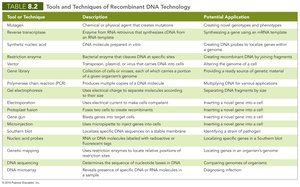
Summary Table: Tools and Techniques of Recombinant DNA Technology
Tool or Technique | Description | Potential Application |
|---|---|---|
Mutagen | Agent that causes mutations | Creating novel genotypes and phenotypes |
Reverse transcriptase | Enzyme that synthesizes cDNA from RNA | Synthesizing a gene using an mRNA template |
Synthetic nucleic acid | Artificially synthesized DNA/RNA | Creating genes, probes, and antisense molecules |
Restriction enzyme | Enzyme that cleaves DNA at specific sites | Producing recombinant DNA by joining fragments |
Vector | DNA molecule for gene delivery | Inserting genes into cells |
Polymerase chain reaction (PCR) | Amplifies DNA sequences | Multiplying DNA for analysis |
Gel electrophoresis | Separates DNA fragments by size | Isolating DNA fragments |
Southern blot | Transfers DNA to a membrane for probing | Locating genes of interest |
Gene library | Collection of clones with DNA fragments | Providing a ready source of genetic material |
DNA microarray | Array of DNA sequences for hybridization | Diagnosing infections, monitoring gene expression |