 Back
BackRickettsias, Chlamydias, Spirochetes, and Vibrios: Pathogenic Gram-Negative Bacteria
Study Guide - Smart Notes
 Tailored notes based on your materials, expanded with key definitions, examples, and context.
Rickettsias
Overview and Classification
Rickettsias are a group of Gram-negative, obligate intracellular bacteria with minimal peptidoglycan, making them appear almost wall-less. They are classified within the phylum Proteobacteria, class Alphaproteobacteria, and include several genera of medical importance.
Key Genera: Rickettsia, Orientia, Ehrlichia, Anaplasma
Obligate Intracellular Parasites: Require host cells for survival and replication.
Vector and Reservoirs
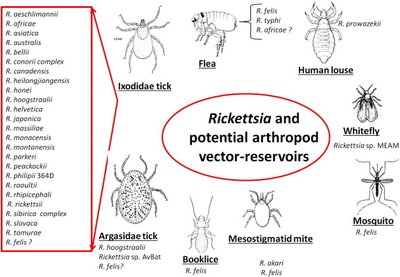
Rickettsias are primarily transmitted by arthropod vectors such as ticks, fleas, and lice, with mammals serving as reservoirs.
Vectors: Ticks (Ixodidae, Argasidae), fleas, lice, mites
Reservoirs: Rodents, dogs, and other mammals
Pathogenesis and Life Cycle
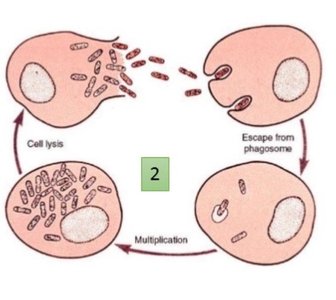
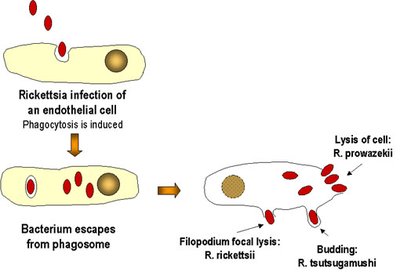
Rickettsias invade host endothelial cells, escape from the phagosome, multiply in the cytosol, and eventually cause cell lysis, releasing new bacteria to infect other cells.
Virulence Factors: Endotoxin (Lipid A), enzymes that lyse endocytic vesicles
Pathogenesis: Infection leads to inflammation of small blood vessels (vasculitis)
Medically Important Species and Diseases
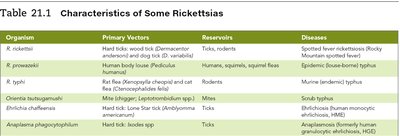
Rickettsia rickettsii: Rocky Mountain spotted fever
Rickettsia prowazekii: Epidemic typhus
Rickettsia typhi: Murine (endemic) typhus
Rocky Mountain Spotted Fever (RMSF)
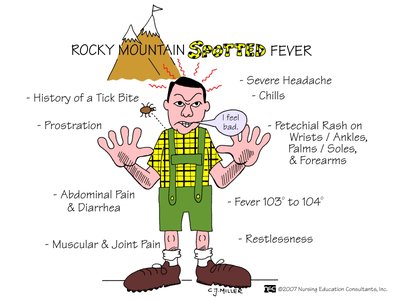
RMSF is caused by Rickettsia rickettsii and is transmitted by tick bites, especially in the continental U.S.
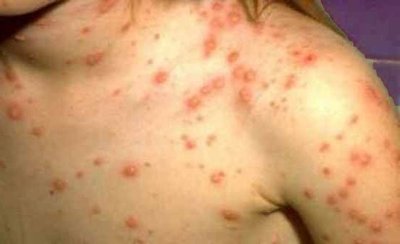
Clinical Presentation: Non-itchy petechial rash (often on palms and soles, spreading to trunk), fever, headache, muscle pain, nausea, vomiting
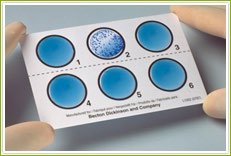
Diagnosis: History of tick bite, clinical symptoms, Weil-Felix serology test
Treatment: Doxycycline (chloramphenicol for pregnant women)
Prevention: Early tick detection, vector control
Spirochetes
Overview and Morphology
Spirochetes are Gram-negative, helically coiled bacteria with unique motility due to axial filaments (endoflagella) located in the periplasmic space.
Phylum: Spirochaetes
Motility: Corkscrew motion enables tissue penetration
Key Genera: Treponema, Borrelia, Leptospira
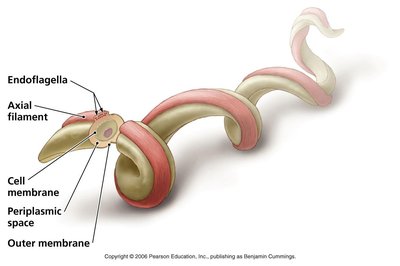
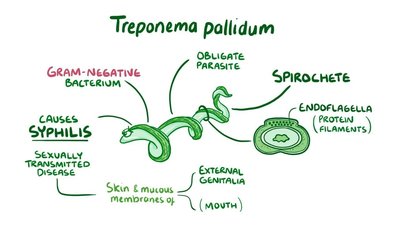
Treponema pallidum and Syphilis
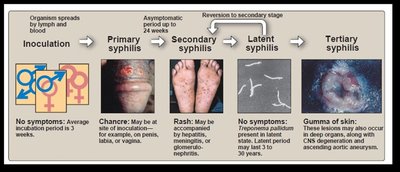
Treponema pallidum is the causative agent of syphilis, a sexually transmitted infection with multiple clinical stages.
Transmission: Sexual contact, vertical (congenital) transmission
Virulence Factors: Adhesin proteins, endoflagella, hyaluronidases, glycocalyx
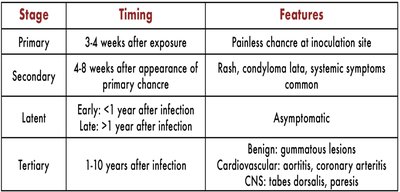
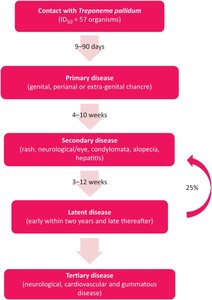
Stages of Syphilis
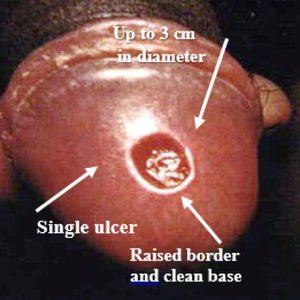
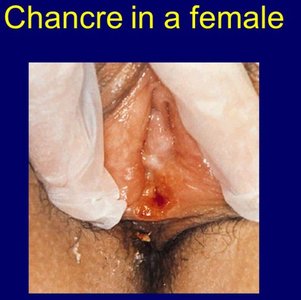
Primary Syphilis: Painless chancre at inoculation site (heals spontaneously)
Secondary Syphilis: Rash (palms/soles), condylomata lata, systemic symptoms (fever, malaise, lymphadenopathy)
Latent Syphilis: Asymptomatic but serologically positive
Tertiary Syphilis: Chronic inflammation, gummas, cardiovascular and CNS involvement
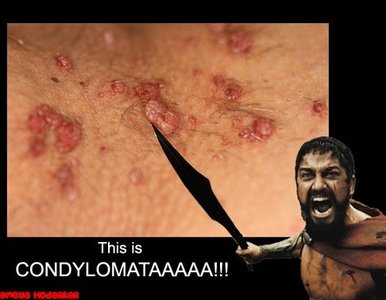
Clinical Manifestations
Chancre: Painless ulcer at site of inoculation (primary stage)
Condylomata lata: Wart-like lesions (secondary stage)
Gummas: Rubbery, swollen lesions (tertiary stage)
Congenital Syphilis: Deafness, dental anomalies, bone deformities, stillbirth
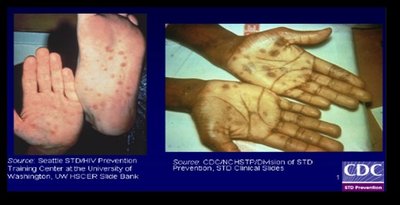
Diagnosis and Treatment
Microscopy: Dark-field examination
Nontreponemal Tests: VDRL, RPR (detect reagin antibodies)
Treponemal Tests: FTA-ABS (detect anti-treponemal antibodies)
Treatment: Penicillin
Prevention: Safe sex practices, screening
Borrelia and Lyme Disease
Borrelia burgdorferi causes Lyme disease, transmitted by Ixodes ticks.
Reservoirs: Rodents, birds
Vector: Ixodes tick
Virulence: Endoflagella, surface proteins, manganese-dependent metabolism
Stages of Lyme Disease
Stage 1: Erythema chronicum migrans (bull’s eye rash), flu-like symptoms
Stage 2: Neurological symptoms, joint and cardiac involvement
Stage 3: Chronic arthritis, CNS involvement, skin atrophy
Diagnosis and Treatment
Diagnosis: Clinical presentation (bull’s eye rash), dark-field microscopy, serology
Treatment: Doxycycline or amoxicillin (early), ceftriaxone (late)
Prevention: Avoid tick exposure, prompt removal
Pathogenic Gram-Negative Vibrios
Overview and Classification
Vibrios are Gram-negative, comma-shaped, flagellated bacilli found in aquatic environments.
Key Genera: Vibrio (e.g., V. cholerae), Campylobacter, Helicobacter
Vibrio cholerae and Cholera
Morphology: Gram-negative, curved rods, polar flagellum, oxidase positive
Reservoir: Brackish or estuarine waters
Transmission: Fecal-oral route, contaminated water/food
Virulence Factor: Cholera enterotoxin (AB toxin)
Pathogenesis
Bacteria produce mucinase to penetrate intestinal mucosa
Toxin B subunit binds to intestinal cells; A1 subunit activates adenylate cyclase via Gs protein, increasing cAMP
cAMP causes secretion of electrolytes and water into the intestinal lumen, resulting in watery diarrhea
Clinical Presentation and Management
Symptoms: Profuse watery "rice water" diarrhea, dehydration, muscle cramps, kidney failure, coma
Diagnosis: Clinical presentation, stool analysis
Treatment: Oral rehydration therapy, doxycycline
Prevention: Water sanitation, oral vaccine, antibiotic prophylaxis
Summary Table: Human Infections by Spirochetes
Bacteria | Diseases |
|---|---|
Treponema pallidum subsp. pallidum | Syphilis |
Treponema pallidum subsp. endemicum | Bejel and endemic syphilis |
Treponema pallidum subsp. pertenue | Yaws |
Treponema carateum | Pinta |
Borrelia recurrentis | Epidemic relapsing fever |
Many Borrelia species | Endemic relapsing fever |
Borrelia burgdorferi | Lyme disease |
Leptospira interrogans | Leptospirosis |
References
Bauman, R. (2014). Microbiology with Diseases by Taxonomy. 5th edition. Pearson.
Black, G. (2011). Microbiology: Principles and Explorations. 8th ed. Wiley.
Tortora, G.J. (2014). Microbiology: An Introduction. 12th ed. Pearson.
