 Back
BackRNA Viruses: Structure, Classification, and Human Diseases
Study Guide - Smart Notes
 Tailored notes based on your materials, expanded with key definitions, examples, and context.
RNA Viruses
Overview of RNA Viruses
RNA viruses are unique infective agents that store their genetic information in RNA molecules. They are classified based on their genomic structure, the presence or absence of an envelope, and the size and shape of their capsid. There are four main types of RNA viruses:
Positive single-stranded RNA (+ssRNA)
Retroviruses (+ssRNA viruses that convert their genome to DNA)
Negative single-stranded RNA (-ssRNA)
Double-stranded RNA (dsRNA)
Positive-sense RNA acts directly as mRNA and can be translated by host ribosomes, while negative-sense RNA must first be transcribed into mRNA before translation can occur.
Naked, Positive ssRNA Viruses
Picornaviridae and Related Families
Picornaviridae are the smallest animal viruses and include several genera that cause human disease, such as Rhinovirus, Enterovirus, and Hepatovirus. Other families like Caliciviridae, Astroviridae, and Hepeviridae are larger and primarily cause gastrointestinal diseases.
Common Colds Caused by Rhinoviruses
Rhinoviruses are the most common cause of the common cold, with infections typically limited to the upper respiratory tract. Transmission occurs via aerosols, fomites, or direct contact, with person-to-person contact being the most common route. Immunity can develop against specific serotypes, and the frequency of infection decreases with age. Handwashing is the most effective preventive measure.
Diseases of the Enteroviruses
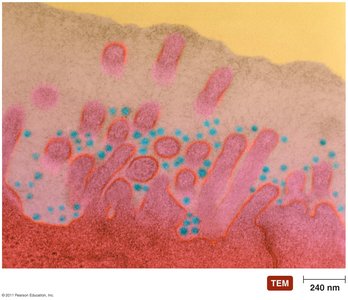
Enteroviruses are transmitted via the fecal-oral route, often through contaminated food, water, or fomites. They initially infect the pharynx and intestine, then spread via the bloodstream to various organs. The main enteroviruses are polioviruses, coxsackieviruses, and echoviruses.
Poliomyelitis
Caused by one of three serotypes of poliovirus
Four clinical forms: asymptomatic, minor polio, nonparalytic polio, and paralytic polio (which can include bulbar poliomyelitis)
Postpolio syndrome involves long-term muscle deterioration
Polio has been nearly eliminated due to vaccines: Inactivated Polio Vaccine (IPV) and Oral Polio Vaccine (OPV)



Other Enterovirus Diseases
Coxsackie A viruses: Cause lesions, fever, herpangina, and hand-foot-and-mouth disease
Coxsackie B viruses: Associated with myocarditis, pericardial infections, and can cross the placenta
Echoviruses: Cause meningitis and colds, acquired intestinally

Diagnosis, Treatment, and Prevention
Most enterovirus infections are mild and not diagnosed unless severe
No effective antiviral therapy
Prevention relies on good hygiene and sanitation
Vaccines are available for hepatitis A and polio
Hepatitis A
Hepatitis A virus is resistant to common disinfectants and is transmitted via the fecal-oral route. Symptoms are due to the immune response, and chronic liver disease does not occur. Most patients recover completely.
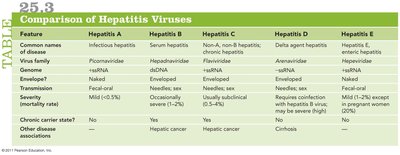
Comparison of Hepatitis Viruses
The following table compares the main features of hepatitis viruses A-E:
Feature | Hepatitis A | Hepatitis B | Hepatitis C | Hepatitis D | Hepatitis E |
|---|---|---|---|---|---|
Common names of disease | Infectious hepatitis | Serum hepatitis | Non-A, non-B hepatitis | Delta agent hepatitis | Hepatitis E, enteric hepatitis |
Virus family | Picornaviridae | Hepadnaviridae | Flaviviridae | Arenaviridae | Hepeviridae |
Genome | +ssRNA | dsDNA | +ssRNA | -ssRNA | +ssRNA |
Envelope | Naked | Enveloped | Enveloped | Naked | Naked |
Transmission | Fecal-oral | Needles, sex | Needles, sex | Needles, sex | Fecal-oral |
Severity/risk | Mild (<0.5% fatal) | Occasionally severe (1–2% fatal) | Usually subclinical (<1% fatal) | Requires coinfection with hepatitis B; may be severe (high) | 20% fatal in pregnant women |
Chronic carrier state? | No | Yes | Yes | — | No |
Other diseases associated | — | Hepatic cancer | Cirrhosis | — | — |
Acute Gastroenteritis
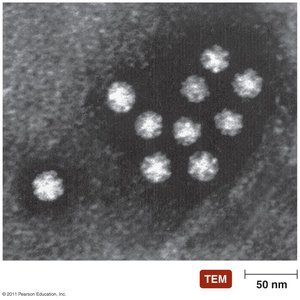
Caliciviruses and astroviruses cause acute gastroenteritis, often resulting in outbreaks in group settings. Caliciviruses cause diarrhea, nausea, and vomiting, while astroviruses cause diarrhea without vomiting. Treatment is supportive, focusing on fluid and electrolyte replacement.
Hepatitis E
Hepatitis E virus, formerly classified as a calicivirus, causes enteric hepatitis. It is particularly fatal in pregnant women (up to 20%). There is no specific treatment, and prevention relies on interrupting fecal-oral transmission.
