 Back
BackStructural Features of Prokaryotic and Eukaryotic Microorganisms
Study Guide - Smart Notes
 Tailored notes based on your materials, expanded with key definitions, examples, and context.
Prokaryotic and Eukaryotic Microbes
Overview of Cell Types
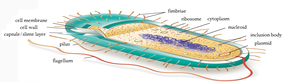
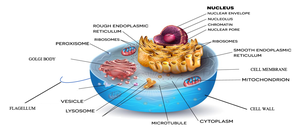
Microorganisms are classified as either prokaryotic or eukaryotic based on their cellular structure. Prokaryotes include Bacteria and Archaea, while eukaryotes include fungi, algae, protozoa, and some multicellular organisms. The distinction is fundamental to microbiology and underlies differences in genetics, metabolism, and cellular organization.
Prokaryotic cells: Typically 1–10 µm in size, lack a true nucleus and membrane-bound organelles.
Eukaryotic cells: Typically 10–200 µm in size, possess a nucleus and various membrane-bound organelles.
Features Shared by Prokaryotic and Eukaryotic Microbes
DNA
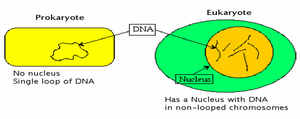
Both prokaryotic and eukaryotic microbes contain DNA, which serves as the genetic blueprint for cellular function and inheritance. However, the organization and packaging of DNA differ significantly between the two cell types.
Prokaryotic DNA: Usually a single, circular chromosome located in the nucleoid region; may also contain plasmids.
Eukaryotic DNA: Multiple, linear chromosomes contained within a membrane-bound nucleus; associated with histone proteins for compaction.
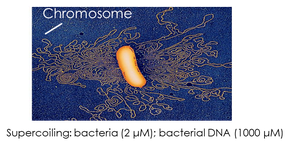
Chromosomes and Supercoiling
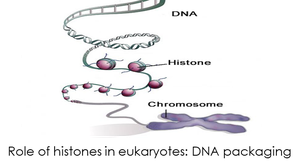
Microbial chromosomes are much longer than the cell itself and require compaction. In prokaryotes, this is achieved by supercoiling, while eukaryotes use histones and higher-order folding.
Supercoiling: A process that twists DNA to reduce its volume, common in prokaryotes.
Histones: Proteins in eukaryotes that DNA wraps around to form nucleosomes, aiding in compaction.
Ribosomes
Ribosomes are the molecular machines responsible for protein synthesis in all cells. Their size and structure differ between prokaryotes and eukaryotes, which is important for antibiotic targeting.
Prokaryotic ribosomes: 70S (composed of 50S and 30S subunits)
Eukaryotic ribosomes: 80S (composed of 60S and 40S subunits)
Location: Prokaryotic ribosomes are free in the cytoplasm; eukaryotic ribosomes can be free or bound to the endoplasmic reticulum.
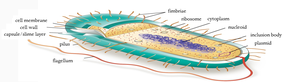
Cytoplasm
The cytoplasm is a gelatinous fluid that fills the cell, housing internal structures and providing shape and support. It is the site of many metabolic reactions.
Contains water, enzymes, nutrients, wastes, and cell structures.
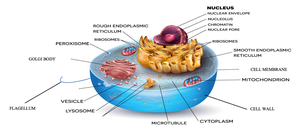
In eukaryotes, organelles are suspended within the cytoplasm.
Cell Membrane (Cytoplasmic/Plasma Membrane)
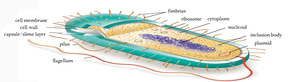
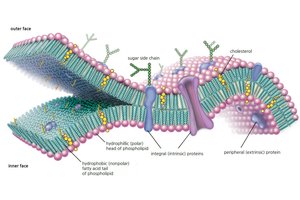
The cell membrane is a phospholipid bilayer that encloses the cell, controlling the movement of substances in and out and maintaining energy gradients.
Phospholipid linkage: Ester linkages in Bacteria and Eukaryotes; ether linkages in Archaea.
Membrane fluidity: Maintained by hopanoids in bacteria and cholesterol in eukaryotes.
Transport Across Cell Membranes
Microbes use various mechanisms to transport nutrients and waste across their cell membranes. These include passive and active transport processes.
Passive transport: Includes diffusion and facilitated diffusion; does not require energy.
Active transport: Requires energy (usually ATP) to move substances against their concentration gradient.
Endocytosis and exocytosis: Occur only in eukaryotes for bulk transport of materials.
Cell Walls
The cell wall provides structural support and protection from osmotic forces. Its composition varies among different groups of microbes.
Bacterial cell walls: Contain peptidoglycan (murein).
Archaeal cell walls: Contain pseudopeptidoglycan (pseudomurein).
Fungal cell walls: Contain chitin.
Algal cell walls: Contain pectins, agar, or cellulose.
Flagella
Flagella are whip-like structures used for motility. Their structure and mechanism of movement differ between prokaryotes and eukaryotes.
Prokaryotic flagella: Composed of flagellin, rotate like a propeller, powered by Na+/H+ gradients.
Eukaryotic flagella: Composed of microtubules, move in a wave-like motion, powered by ATP.
Unique Features in Prokaryotic Microbes
Attachment Structures
Prokaryotes possess unique structures for attachment, including fimbriae, pili, capsules, and slime layers. These structures are critical for colonization and biofilm formation.
Fimbriae and pili: Hair-like appendages for attachment to surfaces and genetic exchange (conjugation).
Capsules and slime layers: Polysaccharide coatings that protect against desiccation and immune responses.
Biofilm Formation
Biofilms are communities of microorganisms attached to surfaces and embedded in a self-produced matrix. Biofilm formation is mediated by attachment structures and quorum sensing.
Biofilms provide protection from predators, antibiotics, and disinfectants.
Commonly found on rocks, metal, plastic, and teeth.
Responsible for industrial and medical problems, such as pipeline corrosion and chronic infections (e.g., Pseudomonas aeruginosa in cystic fibrosis patients).
Plasmids
Plasmids are small, circular DNA molecules found in prokaryotes that carry extra genes, often conferring advantages such as antibiotic resistance.
Inclusion Bodies
Inclusion bodies are storage granules for nutrients, energy reserves, or other materials. Some bacteria use magnetosomes (a type of inclusion body) to orient themselves along Earth's magnetic field.
Endospores
Endospores are highly resistant, dormant structures formed by some bacteria to survive extreme conditions such as heat, starvation, and chemical exposure.
Unique Features in Eukaryotic Microbes
Membrane-Bound Organelles
Eukaryotic cells contain a variety of membrane-bound organelles that compartmentalize cellular functions, including the nucleus, mitochondria, endoplasmic reticulum, Golgi apparatus, lysosomes, and peroxisomes.
Chloroplasts
Chloroplasts are organelles found in algae and plants that capture light energy for photosynthesis, producing organic molecules and ATP.
Microtubules and Cytoskeleton
Microtubules are part of the eukaryotic cytoskeleton, providing structural support, enabling intracellular transport, and forming the basis of cilia and flagella.
