 Back
BackStructural Stains in Microbiology: Endospores, Capsules, and Flagella
Study Guide - Smart Notes
 Tailored notes based on your materials, expanded with key definitions, examples, and context.
Structural Stains in Microbiology
Introduction to Structural Stains
Structural stains are specialized microbiological techniques used to visualize and study specific bacterial structures such as endospores, capsules, and flagella. These structures are often too small or lack sufficient contrast to be seen with standard light microscopy, so special dyes and reagents are employed to highlight them. Understanding these stains is crucial for bacterial identification, classification, and understanding pathogenic mechanisms.
Endospores
Definition and Biological Role
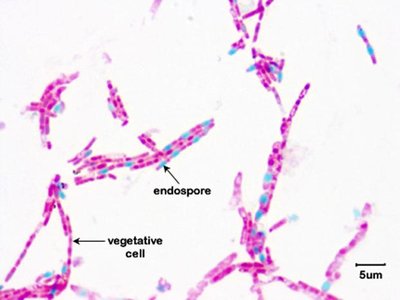
Endospores are highly resistant, dormant structures formed by certain bacteria, primarily in the orders Bacillales and Clostridiales.
They are not reproductive structures but serve as survival forms, allowing bacteria to withstand extreme conditions such as heat, desiccation, radiation, and chemicals.
Endospores can remain viable for thousands or even millions of years, reactivating when environmental conditions become favorable.
Structure of Endospores
Exosporium: Thin outer covering for protection.
Coats: Protein shields that provide chemical and enzymatic resistance.
Cortex: Thick peptidoglycan layer that keeps the core dry, contributing to heat resistance.
Core Wall: The future cell wall of the vegetative cell.
Core: Contains DNA, ribosomes, and essential enzymes.
Sporulation and Germination
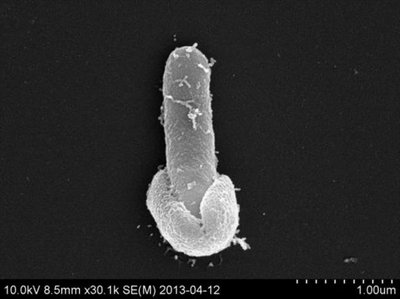
Sporulation is the process by which certain Gram-positive bacteria form endospores under unfavorable conditions, while germination is the process by which dormant spores return to active growth.
Sporulation Steps:
Vegetative growth by binary fission under nutrient-rich conditions.
Asymmetric cell division under stress, forming a mother cell and forespore.
Engulfment of the forespore by the mother cell.
Formation of protective layers (cortex, spore coat).
Accumulation of dipicolinic acid and calcium for DNA stabilization.
Mother cell lysis releases the mature spore.
Germination Steps:
Activation by environmental signals (nutrients, water).
Breakdown of the spore cortex and uptake of water.
Resumption of metabolism and degradation of protective layers.
Outgrowth into a vegetative cell, resuming binary fission.
Clinical Relevance
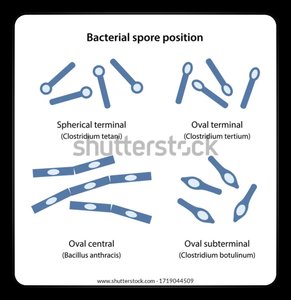
Endospores contribute to the persistence and resistance of pathogens such as Clostridium difficile, Clostridium tetani, and Bacillus anthracis.
They are significant in infection control and sterilization due to their resistance to disinfectants and harsh environments.
Endospore Staining
Principle and Procedure
Endospores are impermeable to most stains, so heat is used to drive the primary stain into the spore. The Schaeffer-Fulton method is commonly used.
Primary Stain: Malachite green (driven into the spore by heat).
Decolorization: Water (removes stain from vegetative cells but not spores).
Counterstain: Safranin (stains vegetative cells red/pink).
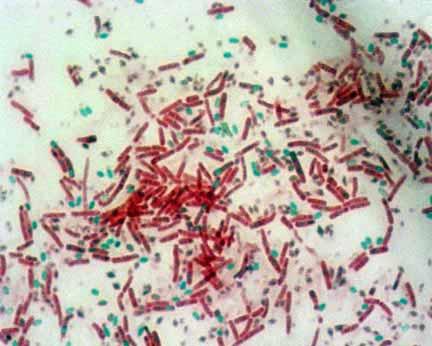
Results: Endospores appear green; vegetative cells appear red/pink.
Examples and Applications
Endospore staining is used to identify spore-forming bacteria in clinical and environmental samples.
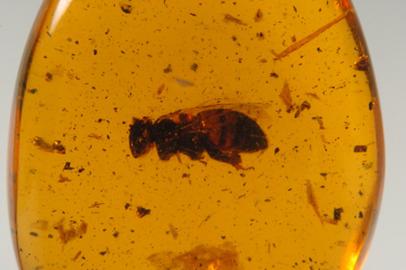
Viable endospores have been isolated from ancient sources, such as amber and salt crystals, demonstrating their longevity.
Flagella
Structure and Function
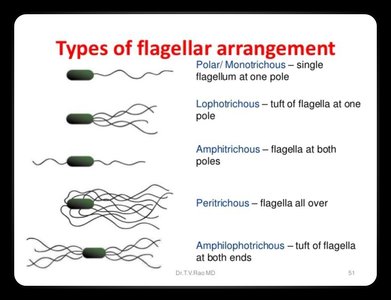
Flagella are thin, proteinaceous appendages that provide motility to many bacteria. They originate in the cytoplasm and extend through the cell wall. Flagella arrangements are important for bacterial identification.
Types of Flagellar Arrangements:
Monotrichous: Single flagellum at one pole.
Lophotrichous: Tuft of flagella at one pole.
Amphitrichous: Flagella at both poles.
Peritrichous: Flagella distributed all over the cell.
Amphilophotrichous: Tuft of flagella at both ends.
Some bacteria, such as myxobacteria, move by gliding motility and lack flagella, while spirochetes use axial filaments for movement.
Flagella Staining
Flagella are too thin to be seen with a light microscope without special staining.
A mordant (e.g., tannic acid or potassium alum) is used to coat and thicken the flagella, followed by a basic dye (carbolfuchsin or crystal violet).
This process allows visualization of the number and arrangement of flagella, aiding in bacterial identification.
Examples: Escherichia coli (peritrichous), Pseudomonas aeruginosa (monotrichous), Proteus spp. (peritrichous).
Capsule Stain
Principle and Procedure
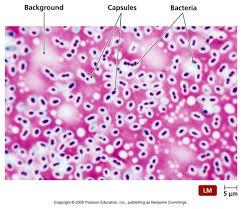
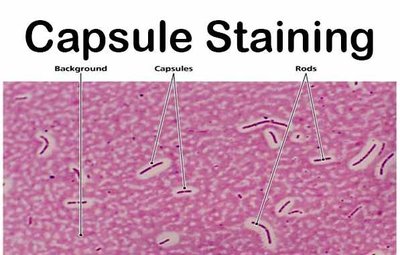
The capsule stain is a special technique used to detect bacterial capsules, which are protective outer layers composed of polysaccharides or polypeptides. Capsules do not take up most dyes, so negative staining is used to create contrast.
Negative Staining: Acidic dyes (e.g., India ink, nigrosin) stain the background, not the capsule.
Counterstain: Basic dyes (e.g., crystal violet or safranin) stain the bacterial cell.
Result: Capsules appear as clear halos around colored cells against a dark background.
Clinical Relevance
Capsules are important virulence factors, protecting bacteria from host immune defenses and aiding in adherence and biofilm formation.
Pathogens such as Streptococcus pneumoniae and Klebsiella pneumoniae are identified by their capsules.
Comparison of Structural Stains
Feature | Endospore Stain | Capsule Stain | Flagella Stain |
|---|---|---|---|
Purpose | To detect bacterial endospores (highly resistant dormant structures). | To visualize capsules (protective outer layers). | To visualize flagella (motility structures). |
Principle | Uses heat + malachite green to force dye into tough spore coat; counterstain (safranin) colors vegetative cells. | Capsules don’t take up dye → use negative staining (India ink/nigrosin for background) + basic stain for cells → capsule = clear halo. | Flagella are too thin to see → use mordant (tannic acid or potassium alum) to coat & thicken, then stain with carbolfuchsin/crystal violet. |
Procedure (simplified) | 1. Apply malachite green + heat. 2. Rinse with water. 3. Counterstain with safranin. | 1. Add India ink to slide. 2. Mix with bacteria. 3. Counterstain with crystal violet or safranin. | 1. Apply mordant to coat flagella. 2. Add basic dye (carbolfuchsin/crystal violet). 3. Observe under oil immersion. |
Result | Spores = green, vegetative cells = red/pink. | Capsule = clear halo around colored cell, dark background. | Flagella visible as stained filaments; arrangement observed. |
Examples of Organisms | Bacillus anthracis, Clostridium tetani, Clostridium difficile. | Klebsiella pneumoniae, Streptococcus pneumoniae | Escherichia coli (peritrichous), Pseudomonas aeruginosa (monotrichous), Proteus spp. (peritrichous). |
Clinical Relevance | Endospores cause persistence & resistance → important in sterilization and infection control. | Capsules are virulence factors → prevent phagocytosis, key in meningitis & pneumonia. | Flagella contribute to motility & virulence, help in UTI spread (Proteus), and assist in species identification. |
