 Back
BackStudy Guide: Controlling Microbial Growth in the Environment
Study Guide - Smart Notes
 Tailored notes based on your materials, expanded with key definitions, examples, and context.
Controlling Microbial Growth in the Environment
Overview of Physical and Chemical Methods
This section summarizes key methods used to control microbial growth in the environment, focusing on both physical and chemical approaches. Understanding these methods is essential for preventing infection, maintaining sterile conditions, and ensuring public health.
Physical Methods of Microbial Control
Heat:
Moist Heat: Includes boiling, autoclaving, and pasteurization. Moist heat denatures proteins and destroys cell membranes. Autoclaving uses pressurized steam to achieve sterilization.
Dry Heat: Includes incineration and hot-air ovens. Dry heat oxidizes cell components and denatures proteins.
Example: Autoclaving surgical instruments to ensure sterility.
Filtration:
Physically removes microbes from air or liquids using filters with defined pore sizes.
Example: HEPA filters in hospital ventilation systems.
Radiation:
Ionizing Radiation: (e.g., gamma rays) damages DNA and is used for sterilizing medical equipment.
Non-ionizing Radiation: (e.g., UV light) causes thymine dimers in DNA, used for disinfecting surfaces.
Cold:
Slows microbial growth but does not kill most microbes.
Example: Refrigeration of food to prevent spoilage.
Desiccation:
Removes water to inhibit microbial growth.
Example: Dried foods like jerky or dried fruit.
Osmotic Pressure:
High concentrations of salt or sugar draw water out of cells, inhibiting growth.
Example: Preserving jams and salted meats.
Chemical Methods of Microbial Control
Disinfectants:
Used on inanimate objects to destroy most microbes (not necessarily spores).
Example: Bleach (sodium hypochlorite) for cleaning surfaces.
Antiseptics:
Used on living tissue to reduce microbial load.
Example: Alcohol-based hand sanitizers.
Degerming:
Mechanical removal of microbes from a surface.
Example: Hand washing with soap.
Sanitization:
Reduction of microbial population to safe levels as determined by public health standards.
Example: Cleaning restaurant utensils.
Germicides:
Agents that kill microbes; can be bactericides, fungicides, virucides, etc.
Comparison Table: Physical vs. Chemical Methods
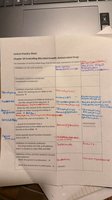
The following table compares key properties and applications of physical and chemical methods for controlling microbial growth.
Method | Mechanism | Application | Effectiveness |
|---|---|---|---|
Moist Heat (Autoclave) | Denatures proteins, destroys membranes | Sterilization of medical tools | Highly effective, kills spores |
Dry Heat | Oxidizes cell components | Incineration, glassware sterilization | Effective, slower than moist heat |
Filtration | Physical removal | Air, liquid sterilization | Effective for heat-sensitive materials |
Radiation | DNA damage | Medical equipment, surfaces | Effective, varies by type |
Disinfectants | Chemical destruction | Surfaces, instruments | Effective, not for spores |
Antiseptics | Chemical reduction | Skin, wounds | Moderate effectiveness |
Key Terms and Definitions
Sterilization: Complete destruction of all forms of microbial life, including spores.
Disinfection: Destruction of most microbes on inanimate objects.
Antisepsis: Reduction of microbial load on living tissue.
Sanitization: Reduction of microbial population to safe levels.
Degerming: Mechanical removal of microbes.
Example Applications
Autoclaving: Used in hospitals to sterilize surgical instruments.
Alcohol-based antiseptics: Used for hand hygiene in clinical settings.
Filtration: Used for sterilizing heat-sensitive solutions in laboratories.
Relevant Image
The following image visually reinforces the comparison of physical and chemical methods for controlling microbial growth, as outlined in the table above.
Additional info: Some content was inferred and expanded for completeness and clarity based on standard microbiology textbook material.
