 Back
BackStudy Guide: Medically Important Parasites and Protozoa
Study Guide - Smart Notes
 Tailored notes based on your materials, expanded with key definitions, examples, and context.
Parasites: General Concepts
Definition and Importance
Parasites are organisms that live in close association with a host, relying on the host for survival and often causing harm. The degree of harm varies, with some parasites causing minimal effects and others leading to severe damage or disease. Parasitic infections are a significant global health concern, responsible for millions of deaths annually and contributing to chronic illness and economic hardship.
Key Point: Humans can host over 100 different parasites, leading to symptoms such as allergies, gastrointestinal issues, fatigue, and immune suppression.
Key Point: Parasites are transmitted through contaminated food, water, and contact with infected animals or people.
Example: The 1993 Milwaukee outbreak of Cryptosporidium in drinking water caused widespread illness.
Economic and Health Impact
Parasites can render land unsuitable for agriculture and debilitate populations, worsening malnutrition and poverty.
Infected livestock and wild animals increase the risk of human infection and reduce agricultural productivity.
Parasite-Host Relationships
Types of Parasites and Hosts
Ectoparasites: Live on the host's surface (e.g., ticks, lice).
Endoparasites: Live inside the host (e.g., protozoa, worms).
Definitive Host: Where the parasite undergoes sexual reproduction (e.g., Plasmodium in mosquitoes).
Intermediate Host: Harbors the parasite during other developmental stages (e.g., humans for malaria).
Adaptations of Parasites
Loss of digestive and sensory functions due to reliance on host environment.
Development of attachment structures (hooks, suckers) for remaining in the host.
Increased reproductive capacity to ensure transmission to new hosts.
Formation of cysts or protective eggs to survive harsh conditions.
Complex life cycles involving multiple hosts and transmission strategies.
Mechanisms for Evading Host Defenses
Encystment
Many parasites form a thick outer covering (cyst) to protect against environmental stress and immune responses. Cysts facilitate transmission and survival outside the host.
Antigenic Variation
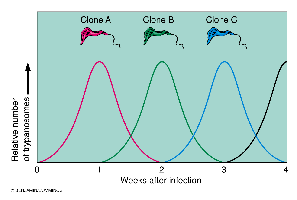
Some parasites, such as trypanosomes, frequently change their surface antigens, evading the host's immune system and prolonging infection.
Intracellular Invasion
Parasites may hide within host cells, making them less accessible to immune defenses.
Damage Caused by Parasites
Loss of Nutrients: Parasites may deprive the host of essential nutrients, leading to malnutrition.
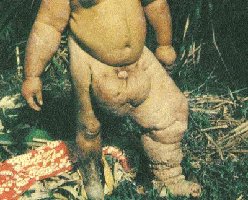
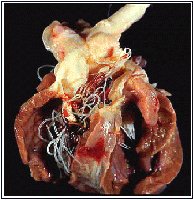
Cell and Tissue Damage: Some cause open sores, tissue destruction, or blockages in vessels.
Immunological Reactions: Host immune responses to parasites can cause inflammation and tissue damage, sometimes more severe than the parasite itself.
Medically Important Protozoa
General Features
Protozoa are unicellular eukaryotes, often motile, and classified by their means of locomotion. They reproduce asexually by fission, budding, or schizogony.
Rhizopodia (Amoebas)
Move by pseudopodia ("false feet").
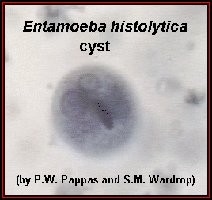
Form trophozoites (active, feeding stage) and cysts (dormant, infective stage).
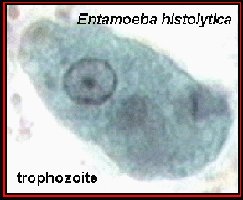
Entamoeba histolytica
Causes amoebic dysentery, colitis, and liver abscesses. Infection occurs via ingestion of cysts, which develop into trophozoites in the intestine.
Pathology: Flask-shaped ulcers in the intestine, possible spread to liver, lungs, or other tissues.
Acanthamoeba
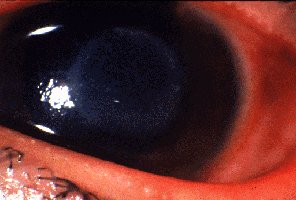
Found in water and soil, can cause keratitis (eye infection) and, rarely, brain infections. Associated with poor contact lens hygiene.
Ciliophora (Ciliates)
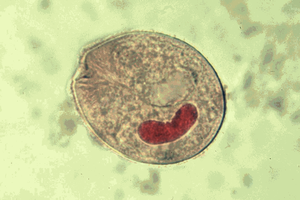
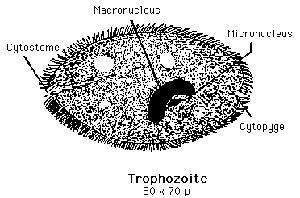
Move using cilia. The only human pathogen is Balantidium coli, which causes dysentery. Reservoirs include pigs and monkeys.
Structure: Trophozoite covered in cilia, has a cytostome (mouth), macronucleus, micronucleus, and contractile vacuoles.
Archaezoa
Giardia lamblia
Causes giardiasis, a diarrheal disease. Transmitted by ingestion of cysts in contaminated water or food. Cysts are resistant to chlorine and require filtration for removal.
Symptoms: Frothy diarrhea, bowel inflammation, occasional rash or arthritis.
Trichomonas vaginalis
Causes vaginitis and urinary tract infections. Exists only as a trophozoite and is transmitted sexually or by fomites.
Symptoms in females: Vaginitis, discharge, painful urination.
Symptoms in males: Usually asymptomatic.
Apicomplexa
Obligate intracellular parasites with complex life cycles involving sexual and asexual stages. Notable genera include Cryptosporidium, Plasmodium (malaria), and Toxoplasma gondii.
Cryptosporidium
Causes cryptosporidiosis, a waterborne diarrheal disease. Oocysts are resistant to standard water treatment methods.
Malaria (Plasmodium spp.)
Transmitted by female Anopheles mosquitoes.
Four species infect humans: P. vivax, P. ovale, P. malariae, P. falciparum.
Life cycle includes liver and erythrocytic stages in humans, and sexual reproduction in mosquitoes.
Symptoms: Cyclic fever, anemia, organ enlargement, and possible renal failure.
Toxoplasma gondii
Causes toxoplasmosis, usually asymptomatic but dangerous for immunocompromised individuals and fetuses. Transmitted by oocysts in cat feces or tissue cysts in undercooked meat.
Euglenozoa: Hemoflagellates
Trypanosomes
Blood parasites transmitted by insect vectors. Cause African sleeping sickness (by tsetse fly) and Chagas disease (by reduviid bug).
Antigenic Variation: Trypanosomes evade immunity by changing surface antigens.
Symptoms: Fever, CNS involvement, coma, and death if untreated.
Helminths (Parasitic Worms)
Platyhelminthes (Flatworms)
Trematodes (Flukes): Leaf-shaped, incomplete digestive tract, feed on host fluids.
Cestodes (Tapeworms): Ribbon-like, segmented, absorb nutrients through body wall.
Nematodes (Roundworms)
Cylindrical, complete digestive tract, separate sexes.
Common examples: Trichinella spiralis (trichinosis), Enterobius vermicularis (pinworm), Ascaris lumbricoides (ascariasis).
Summary Table: Major Human Parasites
Group | Example | Transmission | Key Disease |
|---|---|---|---|
Rhizopodia | Entamoeba histolytica | Fecal-oral (cysts) | Amoebic dysentery |
Ciliophora | Balantidium coli | Fecal-oral (cysts) | Balantidiasis |
Archaezoa | Giardia lamblia | Fecal-oral (cysts) | Giardiasis |
Apicomplexa | Plasmodium spp. | Mosquito bite | Malaria |
Euglenozoa | Trypanosoma spp. | Insect vector | Sleeping sickness, Chagas disease |
Platyhelminthes | Schistosoma spp. | Water (cercariae) | Schistosomiasis |
Nematodes | Ascaris lumbricoides | Fecal-oral (eggs) | Ascariasis |
Additional info: This guide covers the medically important parasites and protozoa relevant to microbiology, including their life cycles, adaptations, and impact on human health.
