 Back
BackStudy Guide: Pathogenic Gram-Positive and Gram-Negative Bacteria
Study Guide - Smart Notes
 Tailored notes based on your materials, expanded with key definitions, examples, and context.
Gram-Positive Bacteria
Staphylococcus
Staphylococcus species are Gram-positive, spherical bacteria that form clusters resembling grapes. They are normal members of the human microbiota but can become opportunistic pathogens, causing a range of diseases from minor skin infections to life-threatening systemic illnesses.
Structure and Physiology: Gram-positive, anaerobic, salt-tolerant, and resistant to radiation, heat, and desiccation.
Pathogenicity: Depends on evasion of phagocytosis, production of enzymes, and toxins.
Structural Defenses: Protein A inhibits opsonization and complement cascade; coagulase forms blood clots to hide bacteria; capsules inhibit chemotaxis.
Enzymes: Coagulase (S. aureus only), hyaluronidase, staphylokinase, lipase, penicillinase.
Toxins: Cytolytic toxins (alpha, beta, gamma, delta, leukocidin), exfoliative toxins, toxic shock syndrome toxin, enterotoxins (heat stable).
Epidemiology: S. epidermidis is ubiquitous on skin; S. aureus is more common in skin folds. Transmission via direct contact and fomites.
Diseases: Food poisoning, cutaneous diseases (scalded skin syndrome, impetigo, folliculitis), systemic diseases (toxic shock syndrome, bacteremia, endocarditis, pneumonia, osteomyelitis).
Diagnosis: Coagulase test differentiates S. aureus (positive) from S. epidermidis (negative).
Treatment: Vancomycin for MRSA; removal of pus and bacteria; long-term therapy for systemic infections.
Prevention: Frequent handwashing; staph cannot be eliminated due to its presence on skin.
Streptococcus
Streptococcus species are Gram-positive cocci arranged in pairs or chains. They are classified by Lancefield antigens, hemolysis type, and other properties.
Group A (S. pyogenes): Possess M proteins, hyaluronic acid capsule, C5A peptidase, hyaluronidase, and secrete pyrogenic toxins and streptolysins.
Epidemiology: Infects larynx and skin; spread via respiratory droplets; sensitive to penicillins.
Diseases: Pharyngitis, scarlet fever, rheumatic fever, pyoderma, erysipelas, cellulitis, toxic shock syndrome, necrotizing fasciitis, glomerulonephritis.
Diagnosis: Rapid strep tests; penicillin effective; surgical removal for necrotizing fasciitis.
Group B (S. agalactiae): Pathogenic in newborns; causes neonatal bacteremia, meningitis, pneumonia.
Other Beta Hemolytic: S. equisimilis and S. anginosus cause pharyngitis.
Alpha Hemolytic (Viridians Group): Cause dental caries, meningitis, endocarditis.
S. pneumoniae: Causes pneumonia, sinusitis, otitis media, bacteremia, endocarditis, meningitis; diagnosed by Quellung reaction and bile solubility.
Enterococcus: Lancefield group D; cause HAIs, bacteremia, endocarditis, wound infections; resistant to many antibiotics.
Bacillus
Bacillus species are rod-shaped, endospore-forming bacteria found in soil. Pathogenic strains cause anthrax via toxins that disrupt cellular metabolism.
Disease: Anthrax (cutaneous, GI, inhalation).
Treatment: Antimicrobial drugs do not neutralize accumulated toxin.
Clostridium
Clostridium are anaerobic, endospore-forming bacilli. They produce potent exotoxins and cause diseases such as pseudomembranous colitis.
Toxins: Toxin A (diarrhea), Toxin B (cytotoxic).
Treatment: Discontinue causative antibiotics; metronidazole or vancomycin.
Listeria
Listeria is tolerant of cold and can grow on refrigerated foods. Causes listeriosis, especially in immunocompromised patients.
Corynebacterium
High G+C, non-endospore forming bacteria. Causes diphtheria via toxin that inhibits protein synthesis.
Treatment: Antitoxin, penicillin, erythromycin; immunization (DTaP vaccine).
Propionibacterium
Small anaerobic rods; cause acne by growing in oil glands. Treatment includes clindamycin, erythromycin, retinoids.
Nocardia and Actinomyces
Filamentous bacteria resembling fungal hyphae. Nocardia is difficult to stain; Actinomyces stains purple. Treatment involves prolonged antibiotics and surgical removal.
Gram-Negative Bacteria
Intro to Gram-Negative Bacteria
Gram-negative bacteria are diverse and include many human pathogens. Their cell wall contains Lipid A, a component of endotoxin responsible for fever, vasodilation, shock, and disseminated intravascular coagulation (DIC).
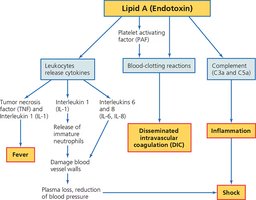
Classification: Grouped by DNA similarities, shape, oxygen requirements, and biochemical characteristics.
Clinical Organization: Gram-negative cocci, facultatively anaerobic bacilli, aerobic bacilli, strictly anaerobic bacilli.
Neisseria
The only genus of Gram-negative cocci that commonly causes human disease. Includes N. gonorrhoeae (gonorrhea) and N. meningitidis (meningitis).
Structure: Gram-negative diplococci, coffee bean shape, nonmotile, aerobic, oxidase positive.
Virulence: Fimbriae, polysaccharide capsule, lipooligosaccharide (LOS) with Lipid A.
Lab Characteristics: Fastidious; require chocolate or Thayer Martin agar; sensitive to drying and temperature.
N. gonorrhoeae: Causes gonorrhea, pelvic inflammatory disease, neonatal eye infection (ophthalmia neonatorum).
Diagnosis: Microscopy, genetic probe, culture.
Treatment: Ceftriaxone plus azithromycin or doxycycline; resistance is common.
N. meningitidis: Causes meningitis and septicemia; diagnosed by spinal tap and maltose fermentation.
Treatment: Immediate cephalosporin; prevention via antibiotics and vaccination.
Facultatively Anaerobic Bacilli
Includes Enterobacteriaceae (oxidase negative) and Pasteurellaceae (oxidase positive). Major pathogens cause HAIs and are distinguished by biochemical tests.
Enterobacteriaceae: LPS with Lipid A, capsules, fimbriae, adhesins, exotoxins, siderophores, hemolysins, type III secretion system, drug resistance.
Diagnosis: Selective and differential media (EMB, MacConkey).
Treatment: Hydration for diarrhea; antibiotics for internal infections; resistance is common.
Prevention: Hygiene, sewage control, prophylaxis.
Coliform Opportunists
Gram-negative rods that ferment lactose; normal microbiota and opportunists. Includes Escherichia, Klebsiella, Serratia, Enterobacter, Hafnia, Citrobacter.
E. coli: Causes gastroenteritis, UTIs, septicemia, neonatal meningitis, pneumonia. EHEC produces shiga-like toxin.
Klebsiella: Nonmotile, large capsule, causes pneumonia, UTIs, meningitis.
Serratia: Motile, red pigment, opportunistic HAIs.
NonColiform Opportunists
Do not ferment lactose; include Proteus, Morganella, Providencia, Edwardsiella. Major cause of UTIs and infection stones.
True Pathogens
Almost always pathogenic; include Salmonella, Shigella, Yersinia. Use type III secretion systems to disrupt host defenses.
Salmonella: Causes salmonellosis and typhoid fever.
Shigella: Causes shigellosis; S. dysenteriae produces shiga toxin.
Yersinia: Causes enteric illness and plague (bubonic, pneumonic).
Pasteurellaceae
Oxidase positive, small, nonmotile, require heme/cytochromes. Includes Pasteurella and Haemophilus.
Pasteurella: Infection via animal bites; causes local inflammation and bacteremia.
Haemophilus influenzae type b (Hib): Causes meningitis, cellulitis, arthritis, epiglottitis; Hib vaccine has reduced disease.
Pathogenic Gram-Negative Anaerobic Bacilli
Dominant microbiota in GI, urinary, reproductive, and lower respiratory tracts. Opportunistic when moved to new sites via trauma or surgery.
Bacteroides: Bile tolerant; main species is B. fragilis; causes GI disease, wound infections, bacteremia.
Prevotella: Bile sensitive; mainly in urinary, genital, and respiratory tracts; causes ear, periodontal, gynecological, brain, and abdominal infections.
Summary Table: Gram-Negative Pathogenic Bacteria
Group | Main Genera | Key Features | Diseases |
|---|---|---|---|
Gram-Negative Cocci | Neisseria | Fimbriae, capsule, LOS | Gonorrhea, meningitis |
Facultative Anaerobic Bacilli | Enterobacteriaceae, Pasteurellaceae | LPS, capsules, exotoxins | UTIs, gastroenteritis, pneumonia, meningitis |
Aerobic Bacilli | Pseudomonas, Bartonella, Brucella, Bordetella | Various toxins | HAIs, trench fever, brucellosis, whooping cough |
Anaerobic Bacilli | Bacteroides, Prevotella | Bile tolerance, capsule | GI, wound, gynecological infections |
Additional info: The included image illustrates the effects of Lipid A endotoxin, showing its role in triggering fever, inflammation, DIC, and shock via cytokine release, complement activation, and blood-clotting reactions.
