 Back
BackStudy Guide: The Prokaryotes – Domains Bacteria and Archaea (Microbiology Chapter 11)
Study Guide - Smart Notes
 Tailored notes based on your materials, expanded with key definitions, examples, and context.
The Prokaryotes: Domains Bacteria and Archaea
Overview of Prokaryotic Diversity
Prokaryotes are classified into two domains: Bacteria and Archaea. These organisms exhibit remarkable diversity in morphology, metabolism, and ecological roles. Understanding their classification is fundamental to microbiology.
Bacteria: Includes both Gram-negative and Gram-positive groups, with numerous phyla.
Archaea: Characterized by extremophilic adaptations and unique cell wall structures.
Classification of Selected Prokaryotes
Prokaryotes are classified based on cell wall structure, metabolic capabilities, and genetic characteristics. The following table summarizes major groups:
Domain | Phyla | Selected Classes | Notes |
|---|---|---|---|
Bacteria (Gram-Negative) | Proteobacteria | Alpha, Beta, Gamma, Delta, Epsilon | Largest group; diverse metabolism |
Bacteria (Gram-Negative) | Cyanobacteria, Chlorobi, Chloroflexi | Various | Photosynthetic bacteria |
Bacteria (Gram-Positive) | Firmicutes, Tenericutes, Actinobacteria | Bacilli, Clostridia, Mycoplasmas, Actinobacteria | Low and high G+C content |
Archaea | Crenarchaeota, Euryarchaeota, Nanoarchaeota, Korarchaeota | Thermoprotei, Methanobacteria, Halobacteria | Extremophiles |
Gram-Negative Bacteria: Proteobacteria
General Features
Proteobacteria are named after the Greek god Proteus, reflecting their morphological diversity. They are Gram-negative, chemoheterotrophic, and comprise five classes.
Alphaproteobacteria: Adapted to low-nutrient environments; often have prosthecae (stalks or buds).
Betaproteobacteria: Includes sulfur-oxidizing bacteria and pathogens.
Gammaproteobacteria: Contains many medically important genera.
Deltaproteobacteria: Includes bacteria that prey on other bacteria.
Epsilonproteobacteria: Helical or curved, often microaerophilic.
Alphaproteobacteria
This class includes bacteria with unique adaptations and ecological roles.
Pelagibacter: Abundant in oceans; small size aids survival in low-nutrient environments; key in carbon cycling.
Azospirillum: Soil bacterium; forms root associations and fixes nitrogen.
Acetobacteraceae & Gluconobacter: Convert ethanol to acetic acid.
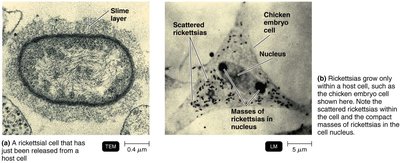
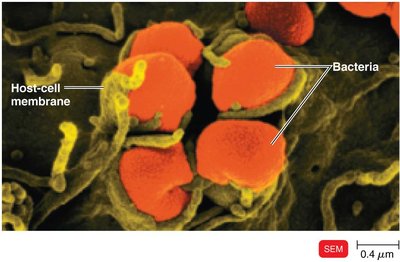
Rickettsia: Obligate intracellular parasites; cause spotted fevers; transmitted by insects and ticks.
Ehrlichia: Tick-borne pathogens causing ehrlichiosis.
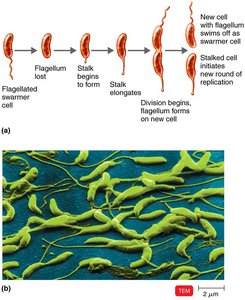
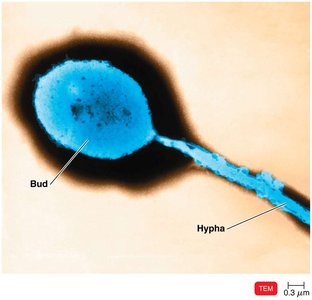
Caulobacter & Hyphomicrobium: Aquatic, low-nutrient environments; reproduce by budding.
Rhizobium & Bradyrhizobium: Nitrogen-fixing symbionts in legume roots.
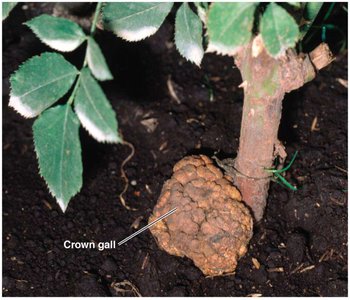
Agrobacterium: Plant pathogen; induces crown gall by plasmid insertion.
Bartonella: Human pathogen; causes cat-scratch disease.
Brucella: Mammalian parasite; causes brucellosis.
Nitrobacter & Nitrosomonas: Chemoautotrophic; involved in nitrogen cycle.
Wolbachia: Endosymbiont affecting insect reproduction.
Betaproteobacteria
Betaproteobacteria include diverse genera found in aquatic environments and as pathogens.
Acidithiobacillus: Oxidizes sulfur to sulfates; chemoautotrophic.
Spirillum: Freshwater bacterium; motile via flagella.
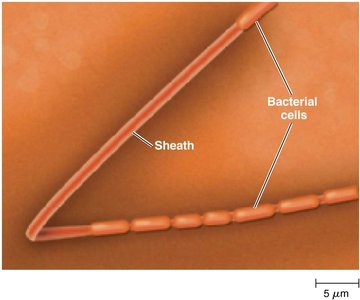
Sphaerotilus: Forms protective sheaths; found in freshwater and sewage.
Burkholderia: Degrades organic molecules; includes pathogens.
Bordetella: Non-motile rods; cause whooping cough.
Neisseria: Gram-negative cocci; cause gonorrhea and meningitis.
Zoogloea: Important in wastewater treatment (activated sludge).
Gammaproteobacteria
This class includes many medically and ecologically important bacteria.
Thiotrichales: Beggiatoa (sulfur oxidizer), Francisella (causes tularemia).
Pseudomonadales: Pseudomonas (opportunistic pathogens), Azotobacter (nitrogen-fixing), Moraxella, Acinetobacter.
Legionellales: Legionella (legionellosis), Coxiella (Q fever).
Vibrionales: Vibrio cholerae (cholera), V. parahaemolyticus (gastroenteritis).
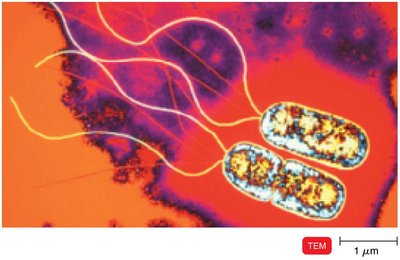
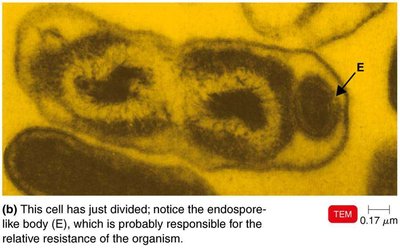
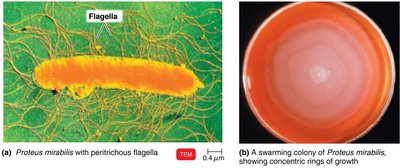
Enterobacteriales: Enterics; inhabit intestines, ferment carbohydrates. Includes Escherichia, Salmonella, Shigella, Klebsiella, Serratia, Proteus, Yersinia, Erwinia, Enterobacter, Cronobacter.
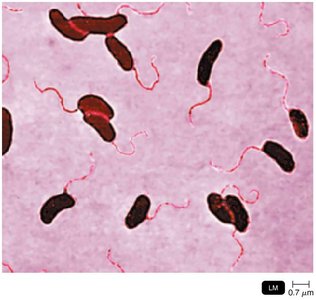
Pasteurellales: Pasteurella (animal pathogens), Haemophilus (requires X and V factors; causes meningitis, earaches).
Deltaproteobacteria
Deltaproteobacteria are notable for their predatory and complex life cycles.
Bdellovibrio: Attacks other Gram-negative bacteria.
Desulfovibrionales: Use sulfur compounds as electron acceptors; found in anaerobic environments.
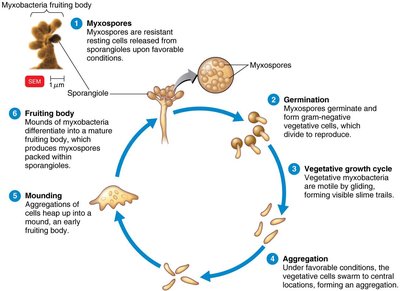
Myxococcales: Gliding motility; form fruiting bodies and myxospores.
Epsilonproteobacteria
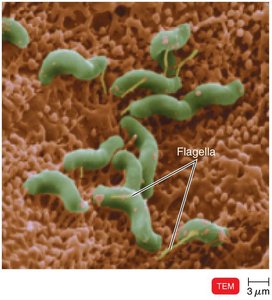
Epsilonproteobacteria are helical or curved, often microaerophilic, and include important pathogens.
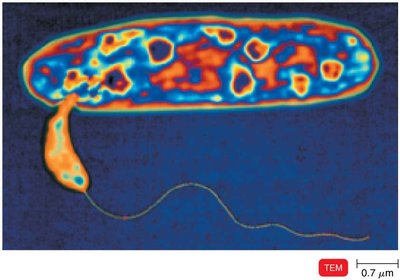
Campylobacter: One polar flagellum; causes foodborne intestinal disease.
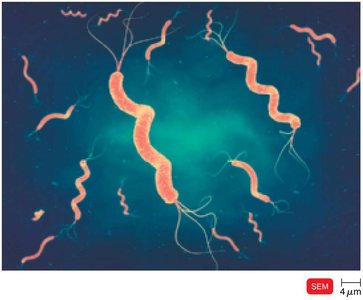
Helicobacter: Multiple flagella; causes peptic ulcers and stomach cancer.
Nonproteobacteria (Gram-Negative Bacteria)
Cyanobacteria
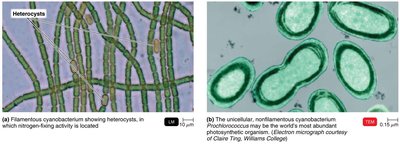
Cyanobacteria are oxygenic photosynthetic bacteria, contributing to global carbon and nitrogen cycles.
Carry out oxygenic photosynthesis:
Contain heterocysts for nitrogen fixation.
Possess gas vesicles for buoyancy.
Can be unicellular or filamentous.
Chlorobi and Chloroflexi (Anoxygenic Photosynthetic Bacteria)
These bacteria perform anoxygenic photosynthesis, using sulfur compounds as electron donors.
Green sulfur (Chlorobi) and green nonsulfur (Chloroflexi).
Purple sulfur and purple nonsulfur bacteria are proteobacteria.
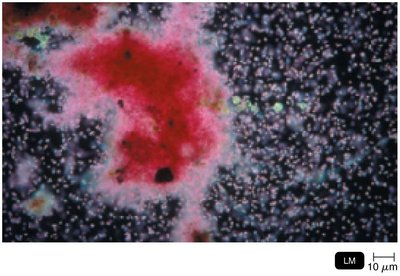
Anoxygenic photosynthesis:
 sa,l
sa,l
Chlamydiae
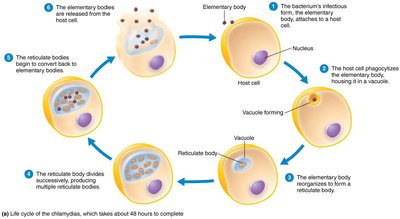
Chlamydiae lack peptidoglycan and are obligate intracellular pathogens.
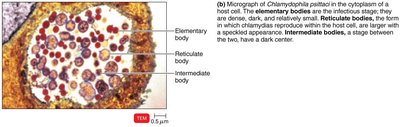
Form elementary bodies (infective) and reticulate bodies (reproductive).
Chlamydia trachomatis: causes trachoma and urethritis.
Chlamydophila psittaci: causes respiratory psittacosis.
Chlamydophila pneumoniae: causes mild pneumonia.cccccccccccccccccccccccccccccc
Planctomycetes
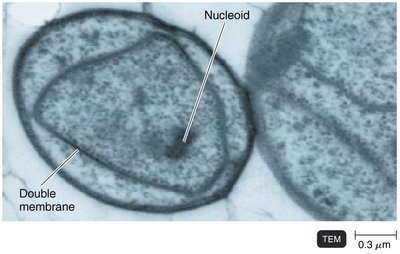
Planctomycetes are aquatic bacteria, some with unique cellular structures resembling eukaryotic nuclei.
Gemmata obscuriglobus: has a membrane around DNA.
Bacteroidetes and Fusobacteria
These phyla include anaerobic bacteria found in the mouth, intestines, and soil.
Bacteroides: common in mouth and large intestine.
Cytophaga: degrades cellulose in soil.
Fusobacteria: cause dental abscesses.
Spirochaetes
Spirochaetes are coiled bacteria that move via axial filaments.
Treponema pallidum: causes syphilis.
Borrelia: causes relapsing fever and Lyme disease.
Leptospira: excreted in animal urine.
Deinococcus-Thermus
These bacteria are notable for their resistance to extreme conditions.
Deinococcus radiodurans: highly resistant to radiation.
Thermus aquaticus: source of Taq polymerase, used in PCR.
Gram-Positive Bacteria
Firmicutes (Low G + C Gram-Positive Bacteria)
Firmicutes include endospore-forming and lactic acid-producing bacteria.
Clostridiales: Clostridium (endospore-producing, obligate anaerobes; causes tetanus, botulism, gas gangrene, and C. difficile infections).
Epulopiscium: Large bacterium; daughter cells form within parent cell.
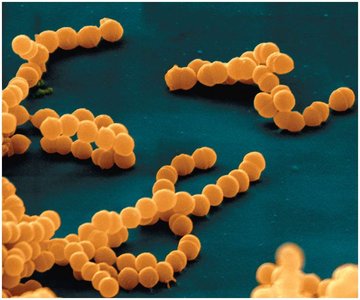
Bacillales: Bacillus (anthrax, insect pathogen, food poisoning), Staphylococcus (wound infections, antibiotic resistance).
Lactobacillales: Lactobacillus (food production), Streptococcus (beta-hemolytic and non-beta-hemolytic species), Enterococcus (intestinal tract, hospital contaminants), Listeria (food contamination).
Tenericutes (Low G + C Gram-Positive Bacteria)
Tenericutes lack cell walls and are pleomorphic.
Mycoplasma pneumoniae: causes mild pneumonia.
Actinobacteria (High G + C Gram-Positive Bacteria)
Actinobacteria are often pleomorphic and produce branching filaments. Many are important in soil and medicine.
Mycobacterium: waxy, water-resistant cell wall; causes tuberculosis and leprosy.
Corynebacterium: causes diphtheria.
Propionibacterium: causes acne.
Gardnerella: causes vaginitis.
Frankia: forms nitrogen-fixing nodules on tree roots.
Streptomyces: produces most antibiotics.
Actinomyces: forms filaments in mouth and throat; destroys tissue.
Nocardia: acid-fast, causes pulmonary infections.
Diversity within the Archaea
Archaeal Groups and Habitats
Archaea are distinct from bacteria, lacking peptidoglycan and often inhabiting extreme environments.
Halophiles: Require high salt concentrations (>25%).
Thermophiles: Require high temperatures (>80°C).
Methanogens: Anaerobic, produce methane.
Microbial Diversity and Detection
Limits of Microbial Diversity Knowledge
Microbial diversity is vast, with many species uncultured and only detected by molecular methods.
Bacteria range in size from Thiomargarita (750 µm) to Carsonella ruddii (182 genes).
PCR and molecular techniques reveal thousands of species per gram of soil.
Many bacteria are part of complex food chains and cannot be cultured independently.
Summary Table: Photosynthesizing Bacteria
Common Name | Example | Phylum | Comments | Electron Donor | Oxygenic/Anoxygenic |
|---|---|---|---|---|---|
Cyanobacteria | Anabaena | Cyanobacteria | Plantlike photosynthesis; some anaerobic | H2O | Oxygenic |
Green nonsulfur bacteria | Chloroflexus | Chloroflexi | Grow chemoheterotrophically | Organic compounds | Anoxygenic |
Green sulfur bacteria | Chlorobium | Chlorobi | Deposit sulfur granules inside cells | H2S | Anoxygenic |
Purple nonsulfur bacteria | Rhodospirillum | Proteobacteria | Can grow chemoheterotrophically | Organic compounds | Anoxygenic |
Purple sulfur bacteria | Chromatium | Proteobacteria | Deposit sulfur granules inside cells | H2S | Anoxygenic |
Additional info: These notes expand brief slide points into full academic explanations, add definitions, examples, and relevant images to reinforce key concepts. All tables are recreated for clarity and completeness.
