 Back
BackStudy Notes: Medically Important Parasites and Protozoa
Study Guide - Smart Notes
 Tailored notes based on your materials, expanded with key definitions, examples, and context.
Introduction to Parasitology
What Are Parasites?
Parasites are organisms that live in close association with a host, relying on the host for survival. The degree of harm caused to the host varies among different parasites, ranging from minimal to severe damage.
Definition: An organism that lives on or in a host organism and gets its food from or at the expense of its host.
Types of Harm: Some parasites cause little harm, while others can severely damage the host.
Importance of Parasitism
Parasitic infections have been a significant health concern throughout history, with millions of deaths annually attributed to these infections or their complications.
Global Impact: Approximately 15 million people die each year due to parasitic infections.
Symptoms: Chronic illness, allergies, gastrointestinal issues, weight changes, low immunity, fatigue, joint/muscle pain, fever, rashes, and sleep disturbances.
Transmission and Economic Impact
Parasites are a global problem, affecting both developed and developing regions. They can be transmitted through contaminated food, water, and contact with infected animals or people.
Transmission: Ingestion of contaminated food or water, poor hygiene, and contact with infected animals.
Economic Impact: Parasites can render land unsuitable for cultivation and debilitate populations, worsening malnutrition and poverty.
Host-Parasite Relationships
Types of Parasites
Ectoparasites: Live on the surface of the host (e.g., ticks, lice).
Endoparasites: Live inside the host's body (e.g., protozoa, worms).
Types of Hosts
Definitive Host: Harbors the parasite during sexual reproduction (e.g., female Anopheles mosquito for Plasmodium).
Intermediate Host: Harbors the parasite during other developmental stages (e.g., humans for malarial parasite).
Adaptations of Parasites
Parasites have evolved specialized adaptations to survive within their hosts, including loss of certain functions and development of new structures.
Loss of Digestive/Sensory Functions: Many parasites have reduced or lost these systems due to their reliance on the host.
Attachment Structures: Hooks and suckers for attachment (e.g., tapeworm scolex).
Increased Reproductive Capacity: High egg production to ensure transmission (e.g., tapeworms lay up to 1,000,000 eggs/day).
Survival Mechanisms: Formation of cysts (protozoa), protective egg coatings (worms), and complex life cycles involving multiple hosts.
Mechanisms for Evading Host Defenses
Encystment
Many parasites form cysts with thick outer coverings to survive harsh conditions and evade host defenses. Cysts facilitate transmission and attachment to new hosts.
Antigenic Variation
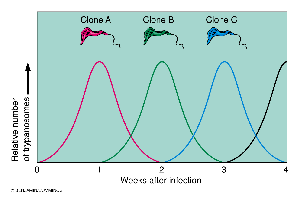
Some parasites, such as trypanosomes, frequently change their surface antigens, allowing them to evade the host's immune response.
Invasion of Host Cells
Parasites may hide within host cells, making them less accessible to the immune system.
Damage Caused by Parasites
Loss of Nutrients: Parasites may deprive the host of essential nutrients.
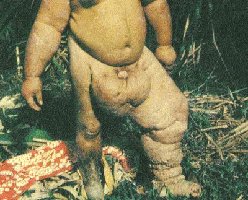
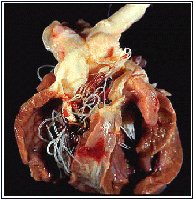
Cell and Tissue Damage: Can cause ulcers, tissue destruction, and blockages in vessels.
Immunological Reactions: Host immune responses to parasites can cause additional tissue damage.
Medically Important Protozoa
General Characteristics
Protozoa are unicellular eukaryotic organisms, often found in aquatic environments. They reproduce asexually by fission, budding, or schizogony, and are classified by their means of locomotion.
Rhizopodia (Amoebas)
Locomotion: Move by pseudopodia ("false feet").
Life Cycle: Alternate between trophozoite (active) and cyst (dormant) stages.
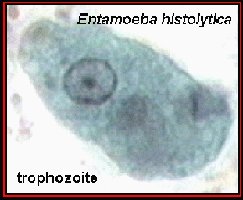
Entamoeba histolytica
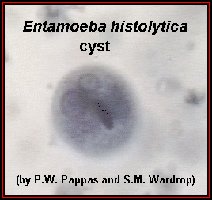
This protozoan causes amoebic dysentery, colitis, and liver abscesses. It is the third most common cause of death from parasitic disease worldwide.
Pathology: Causes flask-shaped ulcers in the intestine, can spread to liver, lungs, and other tissues.
Life Cycle: Involves ingestion of cysts, excystation in the small intestine, multiplication of trophozoites in the large intestine, and formation of new cysts excreted in feces.
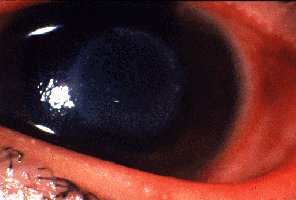
Acanthamoeba
Found in water and soil, Acanthamoeba can cause keratitis (eye infection) and, rarely, brain infections. Poor contact lens hygiene is a major risk factor.
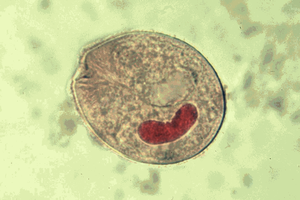
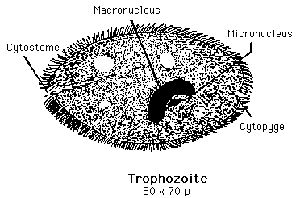
Ciliophora (Ciliates)
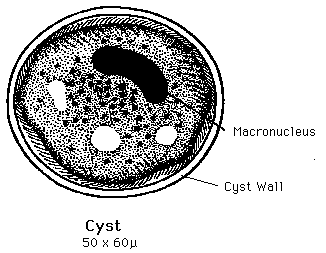
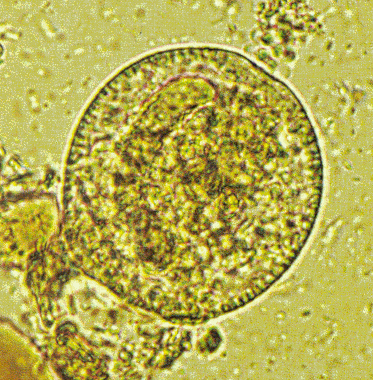
Ciliates use cilia for movement and feeding. The only human parasite in this group is Balantidium coli, which causes severe dysentery.
Reservoirs: Pigs and monkeys.
Transmission: Contaminated water, especially with pig feces.
Archaezoa
Giardia lamblia
Giardia lamblia causes giardiasis, a diarrheal disease. It is resistant to chlorine and requires filtration for removal from water supplies.
Symptoms: Frothy diarrhea, bowel inflammation, occasional joint inflammation, and rash.
Transmission: Ingestion of cysts from contaminated water or food.
Trichomonas vaginalis
This protozoan causes vaginitis and urinary tract infections, primarily transmitted through sexual contact. It exists only as a trophozoite.
Symptoms in Females: Vaginitis, discharge, painful urination, itching.
Symptoms in Males: Usually asymptomatic.
Apicomplexa
Obligate intracellular parasites with complex life cycles involving sexual and asexual stages. Notable genera include Cryptosporidium, Plasmodium (malaria), and Toxoplasma gondii.
Cryptosporidium
Causes cryptosporidiosis, a waterborne diarrheal disease. Oocysts are resistant to standard water treatment methods.
Malaria (Plasmodium spp.)
Species Infecting Humans: P. vivax, P. ovale, P. malariae, P. falciparum
Transmission: Bite of infected female Anopheles mosquito.
Pathology: Destruction of erythrocytes, anemia, jaundice, organ enlargement, renal failure.
Toxoplasma gondii
Causes toxoplasmosis, which is usually asymptomatic but can be severe in immunocompromised individuals and fetuses (congenital infection).
Euglenozoa: Hemoflagellates
Trypanosomes
Blood parasites transmitted by insect vectors, causing diseases such as African sleeping sickness and Chagas disease.
African Sleeping Sickness: Caused by Trypanosoma brucei, transmitted by tsetse flies.
Chagas Disease: Caused by Trypanosoma cruzi, transmitted by reduviid bugs (kissing bugs).
Antigenic Variation: Trypanosomes evade the immune system by changing surface antigens.
Kingdom Animalia: Helminths
Platyhelminthes (Flatworms)
Trematodes (Flukes): Leaf-shaped, incomplete digestive tract, feed on host fluids.
Cestodes (Tapeworms): Ribbon-like, segmented, with scolex and proglottids.
Nematodes (Roundworms)
Body Structure: Cylindrical, complete digestive tract, separate sexes.
Common Infections: Trichinosis (Trichinella spiralis), Pinworm (Enterobius vermicularis), Ascariasis (Ascaris lumbricoides).
Summary Table: Key Protozoan Parasites
Organism | Mode of Transmission | Main Disease(s) | Key Features |
|---|---|---|---|
Entamoeba histolytica | Fecal-oral (cysts in contaminated food/water) | Amoebic dysentery, liver abscess | Trophozoite and cyst stages; flask-shaped ulcers |
Balantidium coli | Fecal-oral (cysts in contaminated water) | Balantidiasis (dysentery) | Only ciliate infecting humans; pigs as reservoir |
Giardia lamblia | Fecal-oral (cysts in water/food) | Giardiasis (diarrhea) | Resistant to chlorine; adhesive disk |
Trichomonas vaginalis | Sexual contact | Vaginitis, urethritis | No cyst stage; only trophozoite |
Plasmodium spp. | Anopheles mosquito bite | Malaria | Complex life cycle; erythrocyte destruction |
Toxoplasma gondii | Oocysts (cat feces), undercooked meat | Toxoplasmosis | Congenital infection risk |
Trypanosoma brucei | Tsetse fly bite | African sleeping sickness | Antigenic variation |
Trypanosoma cruzi | Reduviid bug bite | Chagas disease | Heart and digestive tract damage |
