 Back
The Central Dogma and Protein Structure: Foundations of Microbial Genetics
Study Guide - Smart Notes
 Tailored notes based on your materials, expanded with key definitions, examples, and context.
The Central Dogma of Molecular Biology
Overview
The Central Dogma describes the flow of genetic information within a biological system. It explains how DNA encodes instructions for life, which are transcribed into RNA and then translated into proteins. This process is fundamental to all living organisms, including microbes.
DNA is the hereditary material and blueprint for all cellular functions.
Replication: DNA is copied to pass genetic information to daughter cells.
Transcription: DNA is transcribed into messenger RNA (mRNA).
Translation: mRNA is translated into proteins, which perform cellular functions.
Key Enzymes: DNA polymerase (replication), RNA polymerase (transcription), ribosomes (translation).
Proteins: Structure and Function
Introduction to Proteins
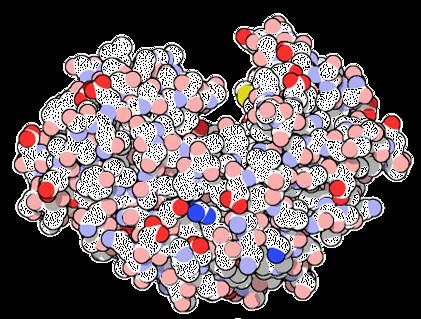
Proteins are essential macromolecules in all cells, serving as enzymes, structural components, hormones, and more. Their function is determined by their three-dimensional structure, which is dictated by the sequence of amino acids.
Examples: Collagen (skin), keratin (hair, nails), pepsin (digestive enzyme), insulin (hormone).
Amino Acids: The Building Blocks
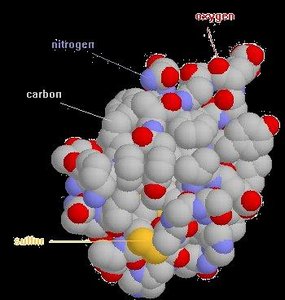
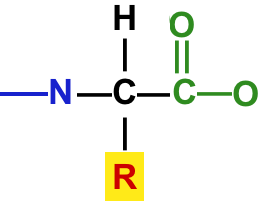
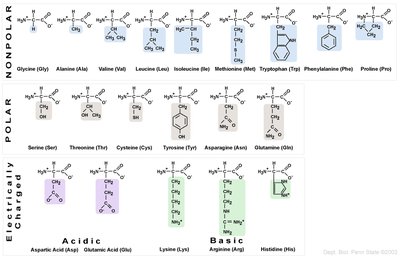
Proteins are polymers of amino acids. There are 20 naturally occurring amino acids, each with a unique side chain (R group) that determines its properties.
Structure: Central carbon (C), amino group (NH2), carboxyl group (COOH), hydrogen atom, and variable R group.
Essential amino acids: Cannot be synthesized by the body and must be obtained from the diet.
Protein Structure Levels
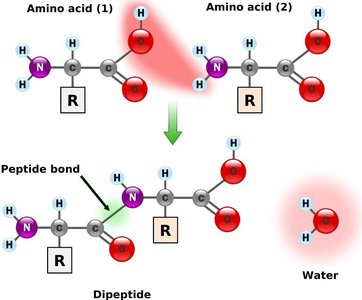
Primary Structure: Linear sequence of amino acids in a polypeptide chain.
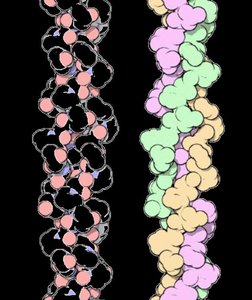
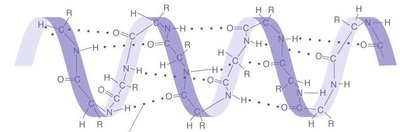
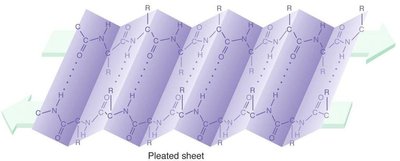
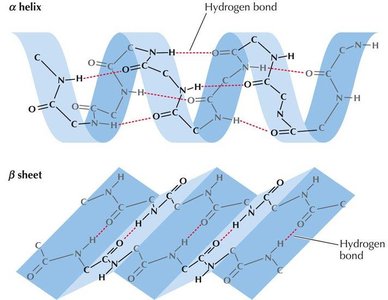
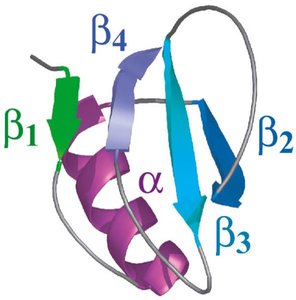
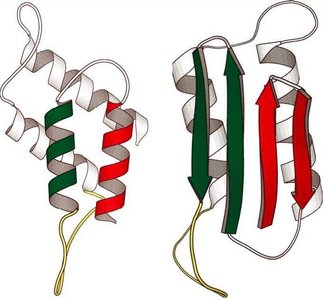
Secondary Structure: Local folding into alpha helices and beta sheets, stabilized by hydrogen bonds.
Tertiary Structure: Overall three-dimensional shape formed by interactions among R groups (hydrophobic interactions, disulfide bridges, ionic bonds, hydrogen bonds).
Quaternary Structure: Assembly of multiple polypeptide chains into a functional protein complex (e.g., hemoglobin).
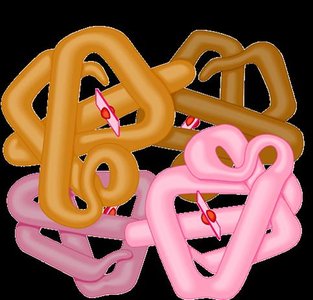
Protein Denaturation
Denaturation is the loss of secondary, tertiary, or quaternary structure due to external stress (heat, pH, chemicals), resulting in loss of function.
Examples: Cooking an egg, sterilizing instruments, pasteurizing milk.
Nucleic Acids: DNA and RNA
DNA Structure and Function
DNA (deoxyribonucleic acid) stores genetic information. It is composed of nucleotides, each containing a deoxyribose sugar, a phosphate group, and a nitrogenous base (adenine, guanine, cytosine, thymine).
Double helix: Two antiparallel strands held together by complementary base pairing (A-T, G-C).
Polarity: Each strand has a 5' and 3' end.
Chargaff’s Rule: Amount of A = T, G = C.
RNA Structure and Function
RNA (ribonucleic acid) is usually single-stranded and contains ribose sugar. It uses uracil instead of thymine.
Types of RNA:
mRNA (messenger RNA): Carries genetic code from DNA to ribosomes.
tRNA (transfer RNA): Brings amino acids to ribosomes during translation.
rRNA (ribosomal RNA): Structural and catalytic component of ribosomes.
Gene Expression: Transcription and Translation
Transcription (DNA to RNA)
Transcription is the synthesis of RNA from a DNA template. RNA polymerase binds to the promoter, synthesizes RNA in the 5' to 3' direction, and stops at the terminator sequence.
Initiation: RNA polymerase binds to promoter.
Elongation: RNA strand is synthesized.
Termination: RNA polymerase releases the completed RNA transcript.
Translation (RNA to Protein)
Translation is the process by which ribosomes synthesize proteins using the mRNA template. Each set of three nucleotides (codon) codes for a specific amino acid.
Initiation: Ribosome assembles at the start codon (AUG).
Elongation: tRNAs bring amino acids to the ribosome, which are added to the growing polypeptide chain.
Termination: Ribosome reaches a stop codon (UAA, UAG, UGA) and releases the completed protein.
Regulation of Gene Expression
Operons in Prokaryotes
Operons are clusters of genes under the control of a single promoter, allowing coordinated regulation. Classic examples include the lac operon (inducible) and trp operon (repressible) in E. coli.
lac Operon: Induced in the presence of lactose and absence of glucose; encodes proteins for lactose metabolism.
trp Operon: Repressed in the presence of tryptophan; encodes enzymes for tryptophan synthesis.
Mutations and Genetic Variation
Types of Mutations
Point Mutations: Affect a single nucleotide (substitution, insertion, deletion).
Frameshift Mutations: Insertions or deletions that shift the reading frame.
Chromosomal Mutations: Large-scale changes affecting multiple genes.
Effects: Silent (no change in protein), missense (change in amino acid), nonsense (early stop codon).
Genetic Recombination in Microbes
Transformation: Uptake of free DNA from the environment.
Transduction: Transfer of DNA by bacteriophages (viruses).
Conjugation: Direct transfer of DNA between bacteria via pili (F plasmids).
Transposition: Movement of DNA segments (transposons) within the genome.
Summary Table: DNA vs. RNA
DNA | RNA | |
|---|---|---|
Pentose sugar | Deoxyribose | Ribose |
Base Composition | Adenine (A), Guanine (G), Cytosine (C), Thymine (T) | Adenine (A), Guanine (G), Cytosine (C), Uracil (U) |
Number of strands | Double stranded (forms a double helix) | Single stranded |
Applications and Microbial Impact
Biotechnology: Use of microbes in genetic engineering, medicine, and industry.
Bioremediation: Microbial breakdown of pollutants.
Restriction Enzymes: Bacterial defense against foreign DNA, essential tools in molecular biology.
