 Back
BackThe Chemistry of Microbiology: Foundations for Life and Cellular Function
Study Guide - Smart Notes
 Tailored notes based on your materials, expanded with key definitions, examples, and context.
Chapter 2: The Chemistry of Microbiology
Atoms and Atomic Structure
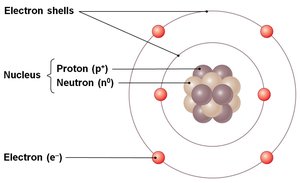
The study of microbiology requires an understanding of the chemical foundations of life, beginning with atoms—the smallest units of matter. Atoms consist of a nucleus containing protons (positively charged) and neutrons (uncharged), surrounded by electrons (negatively charged) in electron shells. The atomic number is defined by the number of protons, while atomic mass is the sum of protons and neutrons.
Element: A substance composed of only one type of atom.
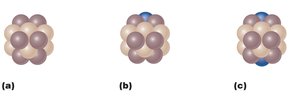
Isotopes: Atoms of the same element with different numbers of neutrons. Some isotopes, such as Carbon-14, are radioactive and undergo decay.
Electron Configuration: The arrangement of electrons in shells determines an atom’s reactivity.
Common Elements of Life
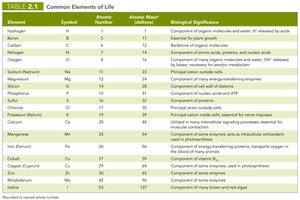
Living organisms are primarily composed of a few key elements, each with specific biological roles. These include hydrogen, carbon, nitrogen, oxygen, phosphorus, sulfur, and others.
Hydrogen: Component of organic molecules and water.
Carbon: Backbone of organic molecules.
Nitrogen: Component of amino acids, proteins, and nucleic acids.
Oxygen: Component of water and organic molecules; required for aerobic respiration.
Phosphorus: Component of nucleic acids and ATP.
Sulfur: Component of some amino acids and vitamins.
Element | Symbol | Atomic Number | Atomic Mass | Biological Significance |
|---|---|---|---|---|
Hydrogen | H | 1 | 1 | Component of organic molecules and water |
Carbon | C | 6 | 12 | Backbone of organic molecules |
Nitrogen | N | 7 | 14 | Component of amino acids, proteins, nucleic acids |
Oxygen | O | 8 | 16 | Component of water, organic molecules; aerobic respiration |
Phosphorus | P | 15 | 31 | Component of nucleic acids, ATP |
Sulfur | S | 16 | 32 | Component of some amino acids, vitamins |
Chemical Bonds
Atoms interact to form molecules and compounds through chemical bonds. The type of bond formed depends on the electron configuration and electronegativity of the atoms involved.
Nonpolar Covalent Bonds: Electrons are shared equally between atoms.
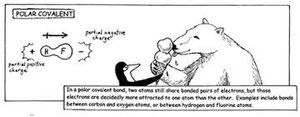
Polar Covalent Bonds: Electrons are shared unequally, resulting in partial charges.
Ionic Bonds: Electrons are transferred from one atom to another, forming charged ions.
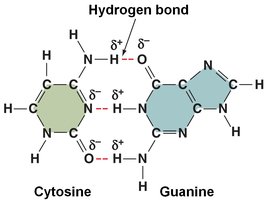
Hydrogen Bonds: Weak attractions between a transiently positive hydrogen atom and a negative atom; important for stabilizing large molecules like DNA.
Type of Bond | Description | Relative Strength |
|---|---|---|
Nonpolar covalent | Pair of electrons is nearly equally shared | Strong |
Polar covalent | Electrons spend more time around one atom | Strong |
Ionic | Electrons are stripped from a cation by an anion | Weaker in aqueous environments |
Hydrogen | Partial positive charges on hydrogen atoms are attracted to full/partial negative charges | Weaker than ionic |


Chemical Reactions
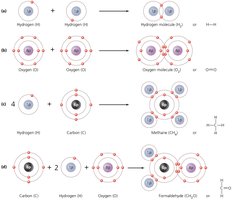
Chemical reactions involve the making or breaking of bonds between atoms or molecules, resulting in new products. In living organisms, these reactions are collectively referred to as metabolism.
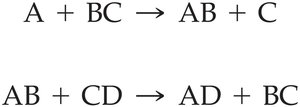
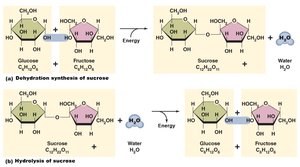
Synthesis Reactions: Combine smaller molecules to form larger, more complex molecules. Often endothermic (require energy).
Decomposition Reactions: Break down larger molecules into smaller components. Often exothermic (release energy).
Exchange Reactions: Atoms or groups are transferred between molecules.


Water, Acids, Bases, and Salts
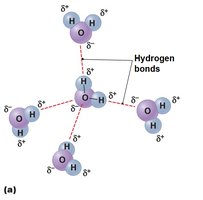
Inorganic compounds such as water, acids, bases, and salts are essential for life. Water is a universal solvent, participates in chemical reactions, and exhibits cohesion due to hydrogen bonding. Acids and bases influence pH, which is critical for biological processes.
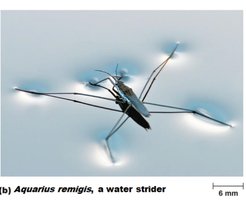
Water: Cohesive, excellent solvent, essential for chemical reactions.
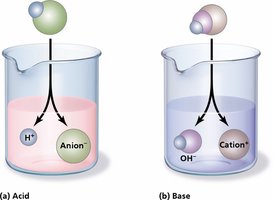
Acids: Release hydrogen ions (H+) in solution.
Bases: Release hydroxyl ions (OH–) and bind H+.
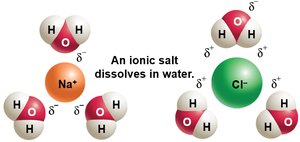
Salts: Dissociate into cations and anions, important for electrical gradients and electron transfer.
pH Scale: Measures the concentration of H+; organisms maintain pH within a narrow range using buffers.

Organic Macromolecules
Organic macromolecules are large, complex molecules essential for metabolism and cellular structure. They are composed of carbon frameworks with functional groups and are classified into four main types: lipids, carbohydrates, proteins, and nucleic acids.
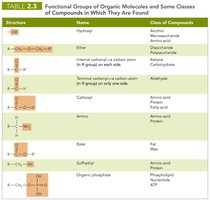
Functional Groups: Specific arrangements of atoms that confer unique properties to molecules.
Monomers and Polymers: Macromolecules are built from monomers linked into polymers.
Lipids
Lipids are hydrophobic molecules composed mainly of carbon and hydrogen. They include fats, phospholipids, waxes, and steroids.
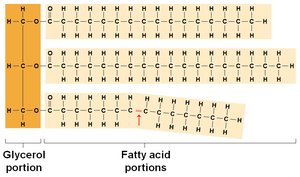
Fatty Acids: Saturated (single bonds, solid, animal origin) and unsaturated (double bonds, liquid, plant origin).
Triglycerides: Glycerol + 3 fatty acids; major energy storage.
Phospholipids: Glycerol + 2 fatty acids + phosphate; form cell membranes.
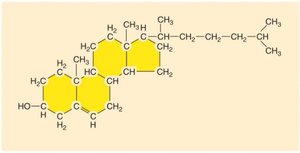
Steroids: Four-ring structure; includes cholesterol, hormones.



Carbohydrates
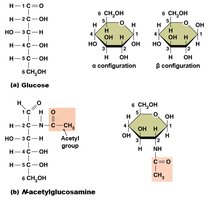
Carbohydrates are composed of carbon, hydrogen, and oxygen in a 1:2:1 ratio. They serve as energy sources and structural components.
Monosaccharides: Simple sugars (glucose, fructose).
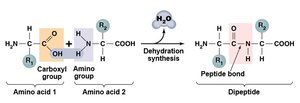
Disaccharides: Two monosaccharides linked by dehydration synthesis (sucrose, lactose).
Polysaccharides: Long chains of monosaccharides (cellulose, glycogen).
Proteins
Proteins are polymers of amino acids and are the most complex macromolecules. They serve structural, enzymatic, transport, and defensive functions.
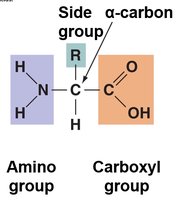
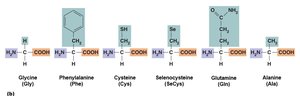
Amino Acids: Central carbon, amino group, carboxyl group, hydrogen, and variable side group (R).
Peptide Bonds: Link amino acids into polypeptides.
Protein Structure: Primary, secondary, tertiary, and quaternary levels; structure determines function.
Denaturation: Loss of structure leads to loss of function.
Nucleotides and Nucleic Acids
Nucleic acids (DNA and RNA) are polymers of nucleotides, which consist of a phosphate group, pentose sugar, and nitrogenous base. DNA stores genetic information, while RNA is involved in protein synthesis.
Nucleotide Structure: Phosphate, sugar (deoxyribose or ribose), nitrogenous base (A, G, C, T, U).
DNA Structure: Double helix, antiparallel strands, hydrogen bonds between bases (A-T, G-C).
RNA: Single-stranded, diverse functions in protein synthesis.
ATP (Adenosine Triphosphate)
ATP is the primary short-term energy storage molecule in cells, composed of adenine, ribose, and three phosphate groups. Hydrolysis of ATP releases energy for cellular processes.
Structure: Adenine base, ribose sugar, three phosphates.
Function: Energy transfer and storage.
