 Back
BackThe Chemistry of Microbiology: Structured Study Notes
Study Guide - Smart Notes
 Tailored notes based on your materials, expanded with key definitions, examples, and context.
Chapter 2: The Chemistry of Microbiology
Atoms and Elements
Atoms are the fundamental units of matter, and elements are substances composed of only one type of atom. Understanding atomic structure is essential for grasping the chemical basis of life.
Matter: Anything that takes up space and has mass.
Elements: Substances that cannot be broken down by ordinary chemical methods.
Atoms: Smallest unit of matter retaining the properties of an element.
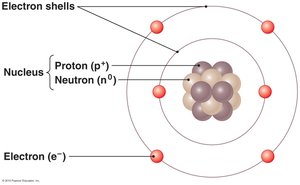
Subatomic particles: Protons (+, 1 amu), Neutrons (0, 1 amu), Electrons (–, ~0 amu).
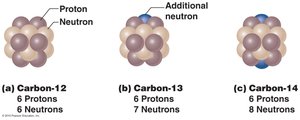
Atomic number: Number of protons in the nucleus; determines the element.
Mass number: Sum of protons and neutrons.
Isotopes: Atoms of the same element with different numbers of neutrons; can be stable or radioactive.
Electron Configuration and Chemical Behavior
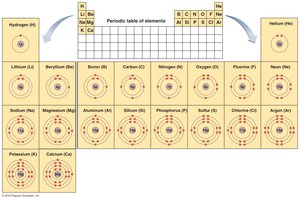
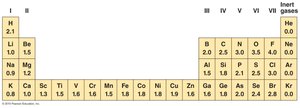
The arrangement of electrons in shells determines how atoms interact and form chemical bonds. Only the electrons in the outermost shell (valence electrons) participate in chemical reactions.
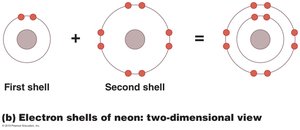
Electron shells: Energy levels where electrons reside; each shell holds a specific number of electrons.
Valence electrons: Electrons in the outermost shell; determine chemical reactivity.
Chemical Bonds
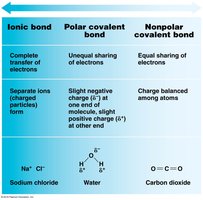
Chemical bonds are formed when atoms share or transfer electrons. The three main types are ionic, covalent, and hydrogen bonds.
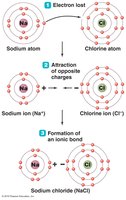
Ionic bonds: Formed by transfer of electrons, resulting in charged ions (cations and anions).
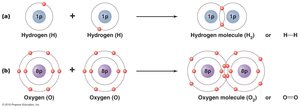
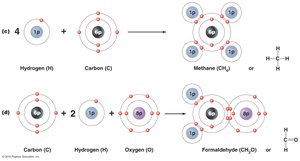
Covalent bonds: Formed by sharing electrons; can be single, double, or triple bonds.
Nonpolar covalent bonds: Electrons shared equally; no charge separation.
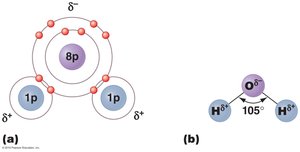
Polar covalent bonds: Electrons shared unequally; results in partial charges.
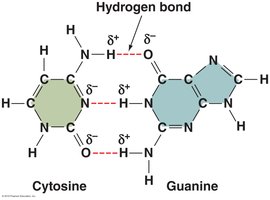
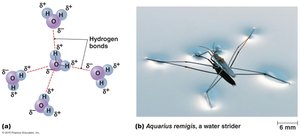
Hydrogen bonds: Weak attractions between partially charged hydrogen and electronegative atoms (O, N, F).
Chemical Reactions
Chemical reactions involve the making and breaking of bonds. They are fundamental to biochemistry and metabolism.
Synthesis reactions: Combine molecules to form larger ones; often require energy (anabolism).
Decomposition reactions: Break down molecules into smaller units; release energy (catabolism).
Exchange reactions: Involve both synthesis and decomposition; atoms are rearranged.
Neutralization reactions: Acid and base react to form salt and water.
Combustion reactions: Organic compound reacts with oxygen, producing CO2 and H2O.



Water, Acids, Bases, and Salts
Water is the most abundant compound in living organisms and is essential for life. Acids, bases, and salts are important for maintaining cellular function and metabolic balance.
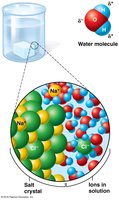
Water: Polar molecule; excellent solvent; high heat capacity; cohesive behavior.
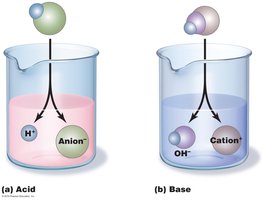
Acids: Release H+ ions in solution; increase hydrogen ion concentration.
Bases: Release OH– ions or bind H+; decrease hydrogen ion concentration.
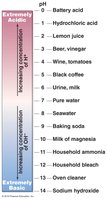
pH scale: Measures hydrogen ion concentration; logarithmic scale from 0 (acidic) to 14 (basic).
Buffers: Maintain stable pH; essential for metabolic processes.
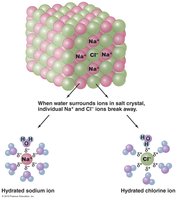
Salts: Dissociate into cations and anions; important for electrical balance and enzyme function.
Organic Macromolecules
Organic macromolecules are large, complex molecules essential for life. They include lipids, carbohydrates, proteins, and nucleic acids.
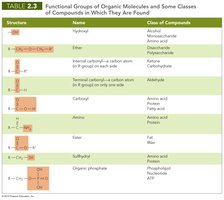
Functional groups: Specific groups of atoms attached to carbon skeletons; determine chemical properties.
Macromolecules: Polymers made from monomers (except lipids).
Lipids
Lipids are hydrophobic molecules that include fats, phospholipids, waxes, and steroids. They are important for energy storage, membrane structure, and signaling.
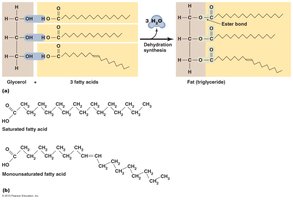
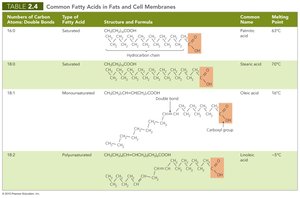
Fats (triglycerides): Composed of glycerol and fatty acids; store energy.
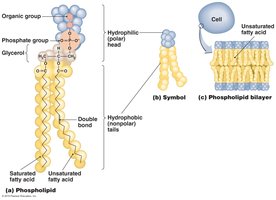
Phospholipids: Major component of cell membranes; form bilayers.
Waxes: Long-chain fatty acid and alcohol; prevent desiccation.
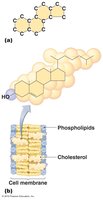
Steroids: Four fused rings; include cholesterol and hormones.
Carbohydrates
Carbohydrates are organic molecules composed of carbon, hydrogen, and oxygen. They serve as energy sources and structural components.
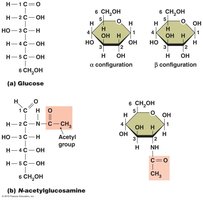
Monosaccharides: Simple sugars; main fuel for cells (e.g., glucose).
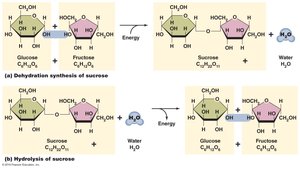
Disaccharides: Two monosaccharides linked by dehydration synthesis (e.g., sucrose).
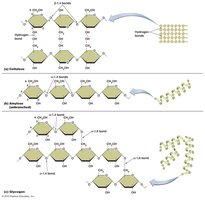
Polysaccharides: Long chains of monosaccharides; storage and structural roles (e.g., starch, cellulose, glycogen, chitin).
Proteins
Proteins are polymers of amino acids and perform a wide range of functions, including catalysis, structure, regulation, and defense.
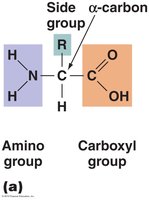
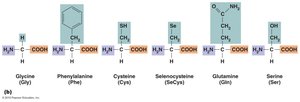
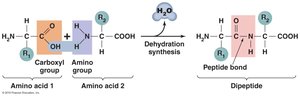
Amino acids: Monomers with a central carbon, amino group, carboxyl group, and side chain.
Peptide bonds: Covalent bonds linking amino acids.
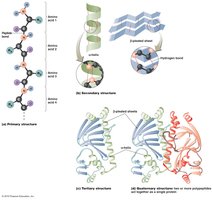
Protein structure: Four levels—primary (sequence), secondary (coils/folds), tertiary (3D shape), quaternary (multiple polypeptides).
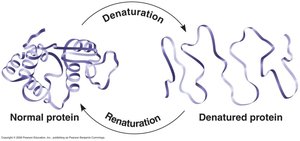
Denaturation: Loss of protein structure due to environmental changes; can be reversible or irreversible.
Nucleic Acids
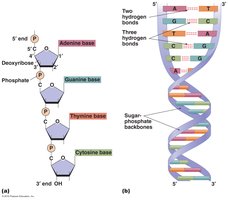
Nucleic acids (DNA and RNA) store and transmit genetic information. They are polymers of nucleotides, each consisting of a sugar, phosphate, and nitrogenous base.
DNA: Double-stranded helix; stores genetic blueprint.
RNA: Single-stranded; involved in protein synthesis.
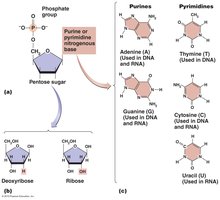
Nucleotides: Monomers with pentose sugar, phosphate, and nitrogenous base (A, G, C, T, U).
Base pairing: A-T (2 H bonds), C-G (3 H bonds).
ATP (Adenosine Triphosphate)
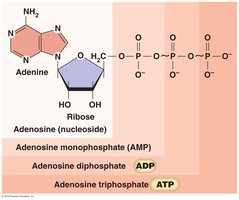
ATP is the primary energy carrier in cells. It is a nucleotide with three phosphate groups, and its hydrolysis releases energy for cellular work.
Structure: Adenine, ribose, and three phosphate groups.
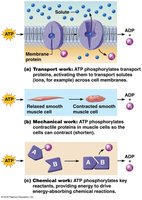
Function: Powers transport, mechanical, and chemical work in cells.
Phosphorylation: Transfer of phosphate group to other molecules.
Tables
Key tables for reference:
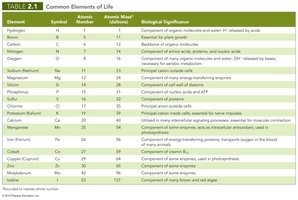
Element | Symbol | Atomic Number | Atomic Mass | Biological Significance |
|---|---|---|---|---|
Hydrogen | H | 1 | 1 | Component of organic molecules and water; released by acids |
Carbon | C | 6 | 12 | Backbone of all organic molecules |
Nitrogen | N | 7 | 14 | Component of amino acids, proteins, and nucleic acids |
Oxygen | O | 8 | 16 | Component of water and organic molecules; released by bases |
Sodium | Na | 11 | 23 | Principal cation outside cells |
Chlorine | Cl | 17 | 35 | Principal anion outside cells |
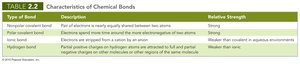
Type of Bond | Description | Relative Strength |
|---|---|---|
Nonpolar covalent bond | Pair of electrons is nearly equally shared between two atoms | Strong |
Polar covalent bond | Electrons spend more time with the more electronegative atom | Strong (weaker in aqueous environments) |
Ionic bond | Electrons are stripped from a cation by an anion | Medium (not constant in aqueous environments) |
Hydrogen bond | Partial positive charges on hydrogen atoms are attracted to full or partial negative charges on other atoms | Weaker than ionic |
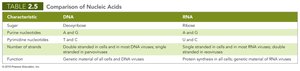
Characteristic | DNA | RNA |
|---|---|---|
Sugar | Deoxyribose | Ribose |
Purine nucleotides | A and G | A and G |
Pyrimidine nucleotides | T and C | U and C |
Number of strands | Double stranded in all cells and most DNA viruses; single stranded in a few viruses | Single stranded in all cells and in most RNA viruses; double stranded in a few viruses |
Function | Genetic material of all cells and DNA viruses | Protein synthesis in all cells; genetic material of RNA viruses |
Additional info: These notes expand on brief points with academic context, definitions, examples, and relevant tables for microbiology students.
