 Back
BackThe Chemistry of Microbiology: Structured Study Notes
Study Guide - Smart Notes
 Tailored notes based on your materials, expanded with key definitions, examples, and context.
The Chemistry of Microbiology
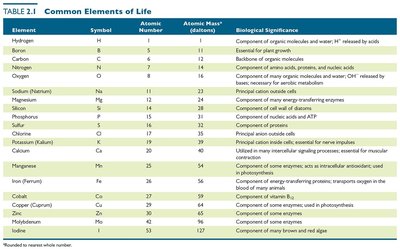
Common Elements of Life
The elements essential for life are fundamental to the structure and function of all living organisms. These elements participate in biochemical reactions and form the building blocks of macromolecules.
Key Point 1: Elements such as hydrogen, carbon, nitrogen, and oxygen are major components of organic molecules.
Key Point 2: Trace elements like iron, zinc, and copper are crucial for enzymatic activity and cellular processes.
Example: Magnesium is required for many enzymatic reactions, while iodine is essential for thyroid hormone production.
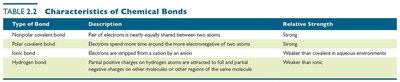
Characteristics of Chemical Bonds
Chemical bonds are the forces that hold atoms together in molecules. The type and strength of these bonds determine the properties and stability of biological molecules.
Key Point 1: Covalent bonds (nonpolar and polar) are strong and involve sharing of electrons.
Key Point 2: Ionic bonds involve transfer of electrons and are weaker in aqueous environments.
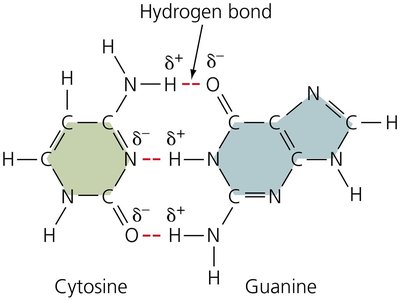
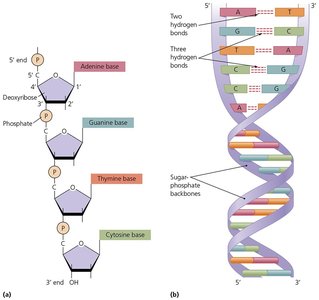
Key Point 3: Hydrogen bonds are weak interactions but are critical for the structure of DNA and proteins.
Chemical Reactions in Microbiology
Chemical reactions are central to metabolism, the sum of all biochemical processes in living organisms. These reactions include synthesis, decomposition, and exchange reactions.
Key Point 1: Synthesis reactions build larger molecules from smaller ones and require energy (anabolism).
Key Point 2: Decomposition reactions break down molecules and release energy (catabolism).
Key Point 3: Exchange reactions involve both breaking and forming bonds, redistributing atoms between molecules.
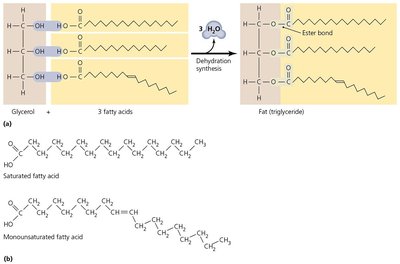
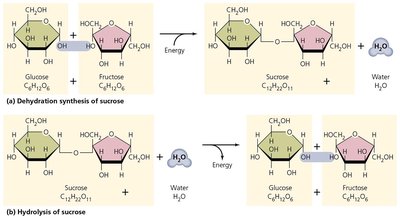
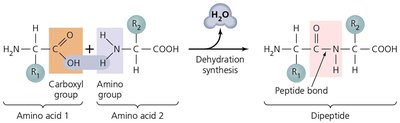
Example: Dehydration synthesis forms water as a byproduct, while hydrolysis uses water to break bonds.


Organic Macromolecules
Lipids
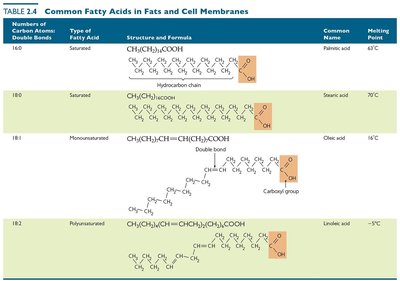
Lipids are hydrophobic molecules that serve as energy storage, structural components, and signaling molecules. They are not composed of regular subunits and include fats, phospholipids, waxes, and steroids.
Key Point 1: Fats (triglycerides) are formed by dehydration synthesis between glycerol and three fatty acids.
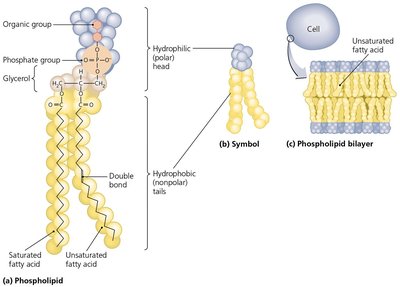
Key Point 2: Phospholipids have a hydrophilic head and hydrophobic tails, forming cell membranes.
Key Point 3: Waxes are completely insoluble in water and lack a hydrophilic head.
Key Point 4: Steroids are ring-shaped lipids involved in signaling and membrane structure.
Carbohydrates
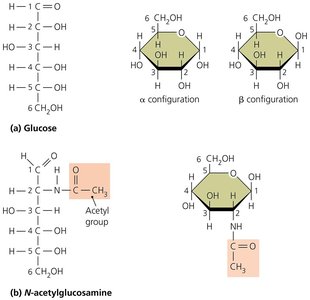
Carbohydrates are organic molecules composed of carbon, hydrogen, and oxygen. They function as energy sources, structural components, and are involved in cell signaling.
Key Point 1: Monosaccharides are simple sugars like glucose.
Key Point 2: Disaccharides are formed by joining two monosaccharides (e.g., sucrose).
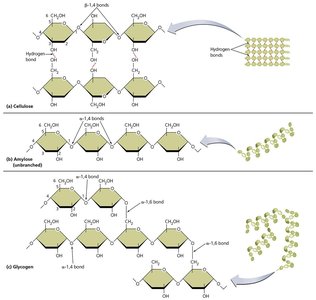
Key Point 3: Polysaccharides are long chains of monosaccharides (e.g., cellulose, starch, glycogen).
Example: Glucose is a ready energy source, while cellulose forms plant cell walls.
Proteins
Proteins are polymers of amino acids and perform a wide range of functions, including catalysis, regulation, transport, and defense. Their structure is determined by the sequence and interactions of amino acids.
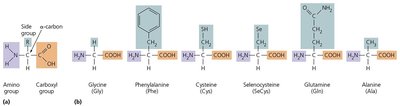
Key Point 1: Amino acids are the monomers of proteins; there are 21 commonly used in organisms.
Key Point 2: Peptide bonds link amino acids via dehydration synthesis.
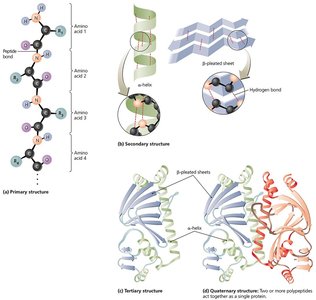
Key Point 3: Protein structure is organized into primary, secondary, tertiary, and quaternary levels.
Example: Enzymes are proteins that catalyze biochemical reactions.
Nucleotides and Nucleic Acids
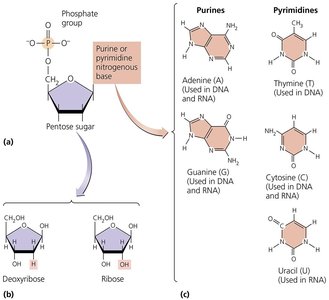
Nucleic acids (DNA and RNA) are polymers of nucleotides and serve as the genetic material of cells and viruses. Nucleotides consist of a phosphate group, a pentose sugar, and a nitrogenous base.
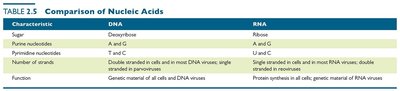
Key Point 1: DNA is double-stranded, with complementary and antiparallel strands.
Key Point 2: RNA is usually single-stranded and can act as an enzyme.
Key Point 3: Nucleic acid function: DNA carries genetic instructions; RNA is involved in protein synthesis.
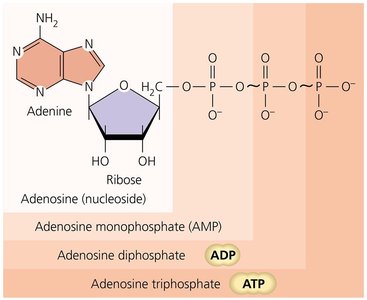
Example: ATP (adenosine triphosphate) is a nucleotide that stores energy for cellular processes.
Additional info:
Metabolism is the sum of all chemical reactions in an organism, including both anabolism and catabolism.
Hydrogen bonds, though weak, are essential for the stability of DNA and protein secondary structures.
Dehydration synthesis and hydrolysis are fundamental reactions for building and breaking down macromolecules.
