 Back
The Classification of Microorganisms: Taxonomy, Domains, and the Diversity of Life
Study Guide - Smart Notes
 Tailored notes based on your materials, expanded with key definitions, examples, and context.
The Classification of Microorganisms
Introduction to Microbial Classification
Microorganisms are classified to organize the immense diversity of life and to communicate effectively about different organisms. Classification systems have evolved to reflect genetic relationships and evolutionary history, providing a universal language for scientists.
Prokaryotes vs. Eukaryotes
Principal Differences
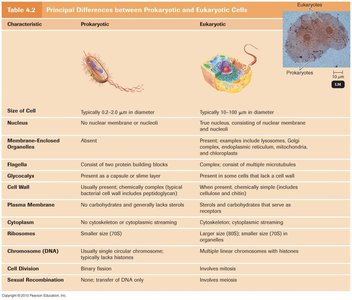
Prokaryotic and eukaryotic cells differ fundamentally in structure and function. Understanding these differences is essential for microbiology, as it underpins the classification and identification of microorganisms.
Characteristic | Prokaryotic | Eukaryotic |
|---|---|---|
Size of Cell | Typically 0.2–2.0 μm in diameter | Typically 10–100 μm in diameter |
Nucleus | No nuclear membrane or nucleoli | True nucleus, consisting of nuclear membrane and nucleoli |
Membrane-Enclosed Organelles | Absent | Present (e.g., mitochondria, ER, Golgi apparatus, lysosomes, chloroplasts) |
Flagella | Consist of two protein building blocks | Complex; consist of multiple microtubules |
Cell Wall | Usually present; chemically complex (contains peptidoglycan) | When present, chemically simple (cellulose and chitin) |
Plasma Membrane | No carbohydrates and usually lacks sterols | Sterols and carbohydrates serve as receptors |
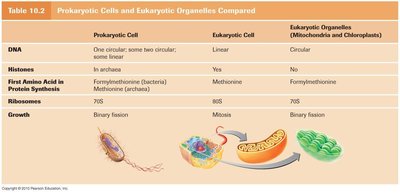
Ribosomes | Smaller size (70S) | Larger size (80S); smaller size (70S) in organelles |
Chromosome (DNA) | Usually single circular chromosome; no histones | Multiple linear chromosomes with histones |
Cell Division | Binary fission | Mitosis |
Sexual Recombination | None; transfer of DNA only | Involves meiosis |
Taxonomy and Binomial Nomenclature
Purpose and Structure
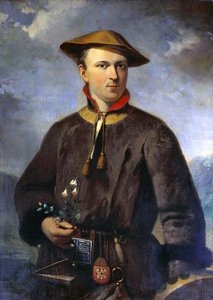
Taxonomy is the science of classifying organisms to reflect evolutionary relationships and to differentiate between groups. The binomial system, established by Carolus Linnaeus, assigns each organism a two-part scientific name: the genus (capitalized and italicized) and the species (lowercase and italicized). This system avoids confusion caused by common names and provides a universal language for scientists.
Genus: A group of related species.
Species: The most specific classification, differentiating organisms within a genus.
Example: Homo sapiens (human), Rhizopus stolonifer (bread mold).
Hierarchical Classification
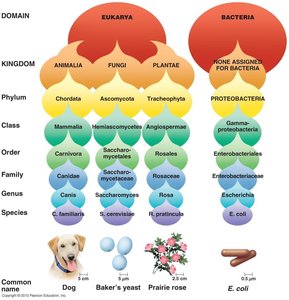
Organisms are classified in a hierarchy reflecting evolutionary relationships:
Domain
Kingdom
Phylum
Class
Order
Family
Genus
Species
Scientific Names: Descriptive and Honorific
Scientific names can describe characteristics or honor individuals. For example, Klebsiella pneumoniae honors Edwin Klebs and refers to pneumonia, while Streptococcus pyogenes describes chain-forming, pus-producing bacteria.
Phylogeny and Systematics
Evolutionary Relationships
Phylogeny is the study of evolutionary history and relationships among organisms. Systematics (or phylogenetic systematics) uses anatomical, genetic, and molecular data to group organisms based on common ancestry.
Similarities within taxa reflect evolutionary relatedness.
Modern classification relies heavily on DNA and rRNA analysis.
Fossil Evidence and Microbial Classification
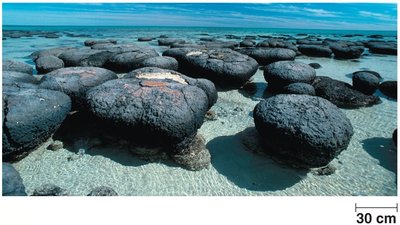
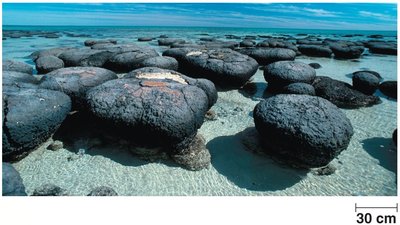
Fossils are useful for classifying larger organisms, but fossilized microorganisms are rare. Some ancient bacterial communities, such as stromatolites, provide evidence of early life.
The Three Domains of Life
Domain Classification
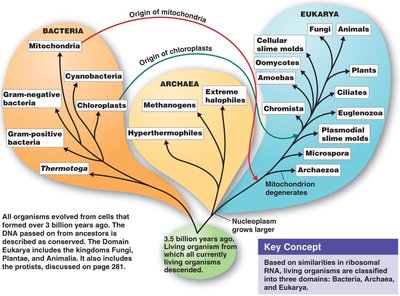
Based on cell type and molecular data, all life is classified into three domains:
Bacteria: Prokaryotes with peptidoglycan in cell walls; includes most known pathogenic and non-pathogenic prokaryotes.
Archaea: Prokaryotes lacking peptidoglycan; often found in extreme environments and with unique metabolic pathways.
Eukarya: All eukaryotic organisms, including animals, plants, fungi, and protists.
Comparing Domains
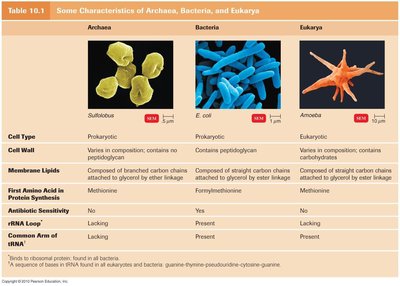
Characteristic | Archaea | Bacteria | Eukarya |
|---|---|---|---|
Cell Type | Prokaryotic | Prokaryotic | Eukaryotic |
Cell Wall | Varies; no peptidoglycan | Contains peptidoglycan | Varies; contains carbohydrates |
Membrane Lipids | Branched carbon chains attached to glycerol by ether linkage | Straight carbon chains attached to glycerol by ester linkage | Straight carbon chains attached to glycerol by ester linkage |
First Amino Acid in Protein Synthesis | Methionine | Formylmethionine | Methionine |
Antibiotic Sensitivity | No | Yes | No |
rRNA Loop | Lacking | Present | Lacking |
Common Arm of tRNA | Lacking | Present | Present |
Endosymbiotic Theory
Origin of Eukaryotic Organelles
The endosymbiotic theory proposes that eukaryotic organelles such as mitochondria and chloroplasts originated from free-living prokaryotes that were engulfed by ancestral eukaryotic cells. DNA evidence supports this theory, as these organelles contain their own circular DNA and replicate independently.
Defining Species in Microbiology
Species Concepts
Species definitions differ between prokaryotes and eukaryotes:
Prokaryotic species: Populations of cells with similar characteristics, often genetically identical (clones) due to binary fission.
Eukaryotic species: Groups of organisms that can interbreed and produce fertile offspring.
Strains are pure cultures of the same species that are not genetically identical and are identified by numbers, letters, or names following the species name.
Overview of Eukaryotic Kingdoms
Major Kingdoms
Animalia: Multicellular, no cell walls, ingest food.
Plantae: Multicellular, cellulose cell walls, photosynthetic.
Fungi: Unicellular or multicellular, chitin cell walls, absorb nutrients.
Protista: Mostly unicellular, diverse nutrition, grouped by rRNA clades.
Viruses: Non-Cellular Life Forms
Characteristics of Viruses
Viruses are not classified within the three domains because they are not composed of cells. They are obligate intracellular parasites, requiring a host cell for replication. Viral species are defined by similar characteristics and ecological niches.
Methods for Identifying Microorganisms
Identification Techniques
Morphological characteristics: Useful for eukaryotes.
Differential staining: Gram staining, acid-fast staining.
Biochemical tests: Detect presence of specific enzymes.
Phage typing: Determines bacterial susceptibility to specific bacteriophages.
DNA base composition: Compares G+C content for relatedness.
DNA fingerprinting: Uses electrophoresis to separate DNA fragments.
Ribotyping: Analyzes rRNA sequences for phylogenetic relationships.
Nucleic acid hybridization: Measures degree of genetic similarity.
References for Bacterial Identification
Bergey’s Manual of Systematic Bacteriology: Phylogenetic and identification information based on rRNA sequencing.
Bergey’s Manual of Determinative Bacteriology: Identification schemes based on morphology, staining, and biochemical tests.
Approved Lists of Bacterial Names: Official species names based on published articles.
Building Phylogenetic Trees
Cladistics and Molecular Data
Phylogenetic trees (cladograms) are constructed using molecular data such as rRNA sequences to visualize evolutionary relationships among organisms. Each branch point represents a common ancestor, and the degree of similarity reflects evolutionary distance.
