 Back
The Control of Microbial Growth: Principles and Methods
Study Guide - Smart Notes
 Tailored notes based on your materials, expanded with key definitions, examples, and context.
Chapter 7: The Control of Microbial Growth
Introduction
The control of microbial growth is essential in healthcare, food safety, and laboratory settings. This chapter explores the terminology, principles, and methods used to inhibit or eliminate microorganisms, including physical and chemical approaches.
Terminology of Microbial Control
Key Definitions
Sepsis: Microbial contamination.
Asepsis: Absence of significant contamination.
Sterilization: Removal of all microbial life, including endospores.
Commercial Sterilization: Killing Clostridium botulinum endospores in food products.
Disinfection: Removal of pathogens from inanimate objects.
Antisepsis: Removal of pathogens from living tissue.
Degerming: Mechanical removal of microbes from a limited area (e.g., skin before injection).
Sanitization: Lowering microbial counts on eating utensils to safe levels.
Biocide/Germicide: Agents that kill microbes.
Bacteriostasis: Inhibition of microbial growth without killing.
Patterns and Principles of Microbial Death
Microbial Death Curve
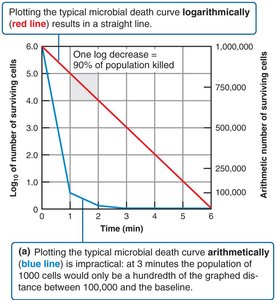
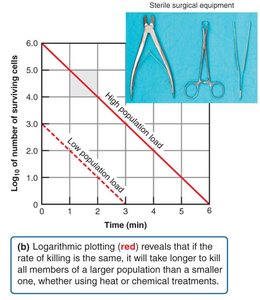
Microbial populations die at a constant logarithmic rate when exposed to antimicrobial agents or conditions. The effectiveness of a treatment is influenced by several factors:
Number of microbes present
Environmental factors (organic matter, temperature, biofilms)
Time of exposure
Microbial characteristics (e.g., endospore formation, cell wall structure)
Key Terms in Thermal Death
Thermal Death Point (TDP): Lowest temperature at which all cells in a culture are killed in 10 minutes.
Thermal Death Time (TDT): Time required to kill all cells in a culture at a given temperature.
Decimal Reduction Time (DRT): Minutes to kill 90% of a population at a given temperature.
Actions of Microbial Control Agents
Mechanisms of Action
Alteration of membrane permeability: Disrupts cell membranes, leading to leakage of cellular contents.
Damage to proteins: Denaturation by breaking hydrogen and covalent bonds.
Damage to nucleic acids: Interferes with DNA and RNA replication and function.
Physical Methods of Microbial Control
Heat
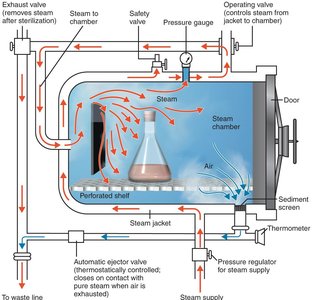
Moist Heat Sterilization: Utilizes steam under pressure (autoclave) to kill all organisms and endospores (except prions). Standard conditions: 121°C at 15 psi for 15 minutes. Steam must contact all surfaces.
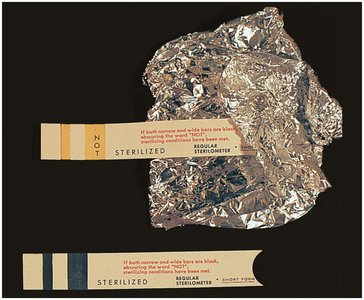
Indicators: Test strips are used to confirm sterility.
Pasteurization: Reduces spoilage organisms and pathogens in liquids (e.g., milk, juice). High-temperature short-time (HTST): 72°C for 15 sec. Ultra-high-temperature (UHT): 140°C for 4 sec (sterilizes, allows room temperature storage).
Dry Heat Sterilization: Kills by oxidation (e.g., flaming, incineration, hot-air oven at 170°C for 2 hours).
Filtration
Used for heat-sensitive materials. Substances pass through a screenlike material that removes microbes.
HEPA filters: Remove microbes >0.3 μm in diameter.
Membrane filters: Remove microbes >0.22 μm; special filters can remove viruses and large proteins.
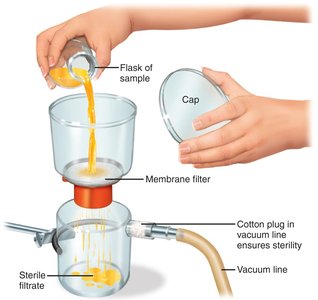
Other Physical Methods
Low Temperature: Bacteriostatic effect (refrigeration, deep-freezing, lyophilization).
High Pressure: Denatures proteins and alters carbohydrates.
Desiccation: Absence of water prevents metabolism.
Osmotic Pressure: High salt/sugar concentrations create hypertonic environments, causing plasmolysis.
Radiation
Ionizing Radiation: (X-rays, gamma rays, electron beams) Ionizes water to create reactive hydroxyl radicals, damaging DNA. Used for sterilizing pharmaceuticals, medical supplies, and food.
Nonionizing Radiation: (UV, 260 nm) Damages DNA by creating thymine dimers. Used for surface sterilization (e.g., hospital rooms).
Visible Blue Light (470 nm): Kills bacteria via singlet oxygen formation.
Microwaves: Kill by heat, not especially antimicrobial.
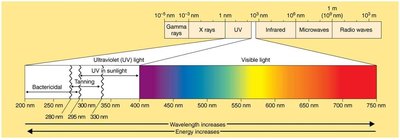
Chemical Methods of Microbial Control
Principles of Effective Disinfection
Concentration of disinfectant
Presence of organic matter
pH
Temperature
Time of exposure
Evaluating Disinfectants
Use-Dilution Test: Metal cylinders with dried bacteria are exposed to disinfectant, then transferred to culture media to check for survivors.
Disk-Diffusion Method: Filter paper disks with chemicals are placed on bacterial cultures; zones of inhibition indicate effectiveness.
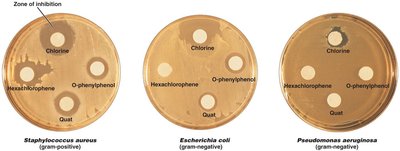
Major Classes of Chemical Agents
Phenol and Phenolics: Disrupt plasma membranes; active in presence of organic matter. Example: O-phenylphenol (Lysol®).
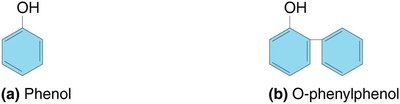
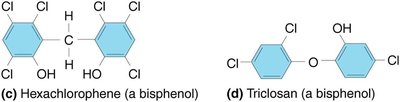
Bisphenols: Two phenol groups connected by a bridge; disrupt membranes. Examples: Hexachlorophene, Triclosan.
Biguanides: Disrupt membranes; effective against gram-positive, many gram-negative bacteria, and enveloped viruses. Example: Chlorhexidine.
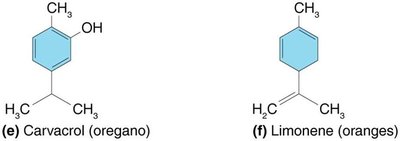
Essential Oils: Plant-derived, broad-spectrum activity, especially against gram-positive bacteria. Examples: Carvacrol (oregano), Limonene (oranges).
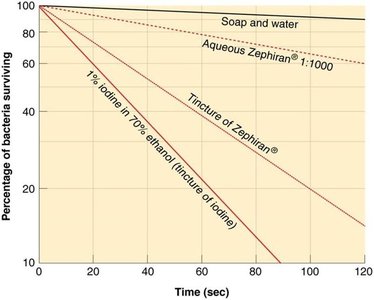
Halogens: Iodine (impairs protein synthesis, alters membranes; used as tincture or iodophor), Chlorine (oxidizing agent; used in bleach, water disinfection).
Alcohols: Denature proteins, dissolve lipids; ineffective against endospores and nonenveloped viruses. Examples: Ethanol, isopropanol.
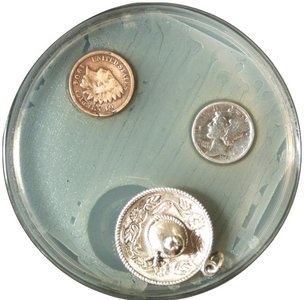
Heavy Metals: Oligodynamic action; denature proteins. Examples: Silver nitrate (prevents ophthalmia neonatorum), copper sulfate (algicide), zinc chloride (mouthwash).
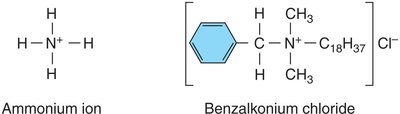
Surface-Active Agents: Soaps (degerming), acid-anionic sanitizers (food industry), quaternary ammonium compounds (quats; broad spectrum, not effective against endospores/mycobacteria).
Comparison of Antiseptics
Chemical Food Preservatives
Sulfur dioxide (prevents wine spoilage)
Organic acids (sorbic, benzoic, calcium propionate; prevent molds)
Nitrites/nitrates (prevent endospore germination in meats, preserve color)
Antibiotics in Food Preservation
Bacteriocins (e.g., nisin, natamycin) inhibit spoilage bacteria and fungi in cheese.
Aldehydes
Inactivate proteins by cross-linking functional groups. Examples: Formalin (preserves specimens), glutaraldehyde (liquid sterilant for medical equipment).
Gaseous Chemosterilants
Cause alkylation, cross-linking nucleic acids and proteins. Examples: Ethylene oxide (sterilizes heat-sensitive items), chlorine dioxide (building/water disinfection).
Other Methods
Plasma: Electrically excited gas; free radicals destroy microbes. Used for sterilizing tubular instruments.
Supercritical Fluids: CO2 in a supercritical state; used for food and medical implant sterilization.
Peroxygens: Oxidizing agents (hydrogen peroxide, peracetic acid, ozone) used for surface and equipment sterilization.
Microbial Characteristics and Microbial Control
Microbial Resistance
Gram-negative bacteria: More resistant due to outer membrane lipopolysaccharide.
Mycobacteria: Highly resistant; require special testing for tuberculocidal activity.
Bacterial endospores: Very resistant to many biocides.
Nonenveloped viruses: More resistant than enveloped viruses.
Prions: Extremely resistant; require NaOH and autoclaving for decontamination.
Chemical Agent | Effect against Endospores | Effect against Mycobacteria |
|---|---|---|
Glutaraldehyde | Fair | Good |
Chlorines | Fair | Fair |
Alcohols | Poor | Good |
Iodine | Poor | Good |
Phenolics | Poor | Good |
Chlorhexidine | None | Fair |
Bisphenols | None | None |
Quats | None | None |
Silver | None | None |
Summary: The control of microbial growth involves a variety of physical and chemical methods, each with specific applications, advantages, and limitations. Understanding the mechanisms and effectiveness of these methods is crucial for ensuring safety in medical, laboratory, and food industry settings.
