 Back
Back12 The Eukaryotes: Fungi, Algae, Protozoa, and Helminths – Study Notes
Study Guide - Smart Notes
 Tailored notes based on your materials, expanded with key definitions, examples, and context.
Fungi: General Characteristics
Defining Features of Fungi
Fungi are a diverse group of eukaryotic organisms that play essential roles in ecosystems as decomposers, symbionts, and pathogens. The study of fungi is known as mycology.
Cell Type: Eukaryotic
Nutrition: Chemoheterotrophs (obtain energy and carbon from organic compounds)
Cell Wall: Composed of glucans, mannans, and chitin (never peptidoglycan)
Cell Membrane: Contains sterols
Growth: Aerobic or facultative anaerobic
Symbiosis: Many plants form mutualistic associations with fungi called mycorrhizae to enhance mineral and water absorption
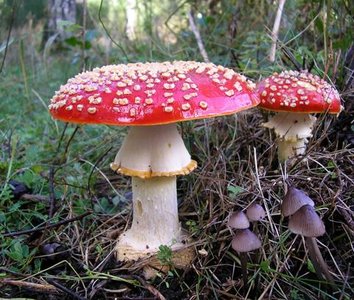
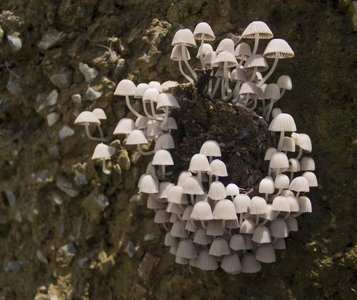
Comparison: Fungi vs. Bacteria
Feature | Fungi | Bacteria |
|---|---|---|
Cell Type | Eukaryotic | Prokaryotic |
Cell Membrane | Sterols present | Sterols absent (except Mycoplasma) |
Cell Wall | Glucans, mannans, chitin | Peptidoglycan |
Spores | Sexual and asexual reproductive spores | Endospores (not for reproduction); some asexual spores |
Metabolism | Heterotrophic; aerobic or facultative anaerobic | Heterotrophic, autotrophic; aerobic, facultative anaerobic, anaerobic |
Fungal Structure and Growth
Hyphae and Mycelium
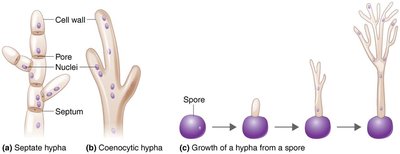
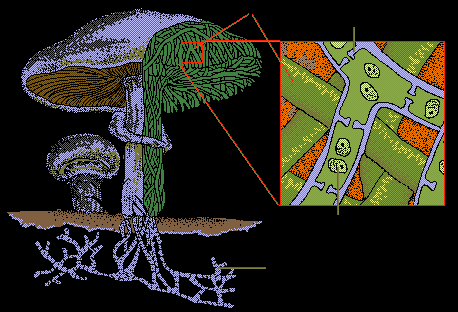
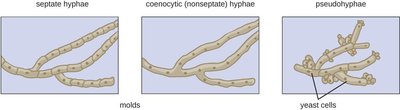
The main body of multicellular fungi is composed of filaments called hyphae. A mass of hyphae forms a mycelium. Hyphae can be:
Septate hyphae: Contain cross-walls (septa) dividing cells
Coenocytic hyphae: Lack septa, forming a continuous cytoplasmic mass with many nuclei
Growth: Occurs at the tips of hyphae
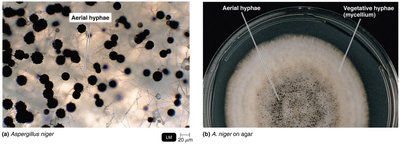
Aerial vs. Vegetative Hyphae
Vegetative hyphae: Involved in nutrient absorption
Aerial (reproductive) hyphae: Involved in reproduction, often bear spores
Yeasts
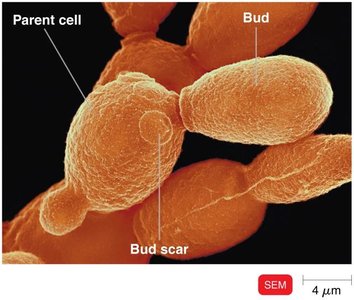
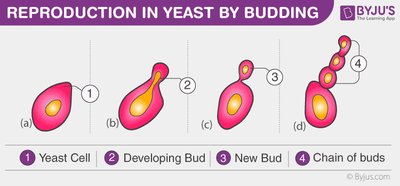
Yeasts are unicellular, non-filamentous fungi. They are typically spherical or oval and reproduce by budding or fission.
Budding yeast: Divide unevenly, forming a bud that may break off or remain as a pseudohypha
Fission yeast: Divide evenly to produce two new cells
Facultative anaerobes: Can use aerobic respiration or fermentation
Dimorphic Fungi
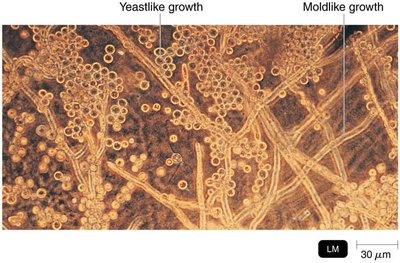
Dimorphic fungi can exist as either yeast or mold, depending on environmental conditions (often temperature).
Yeast form: Typically at 37°C (body temperature)
Mold form: Typically at 25°C (environmental temperature)
Fungal Reproduction and Life Cycle
Asexual Reproduction
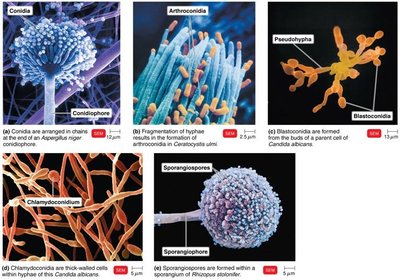
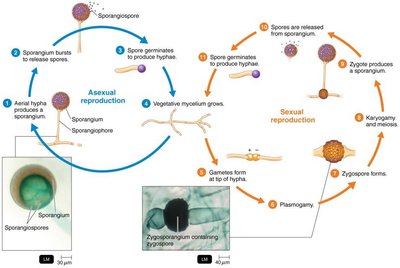
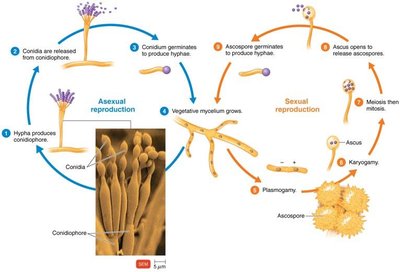
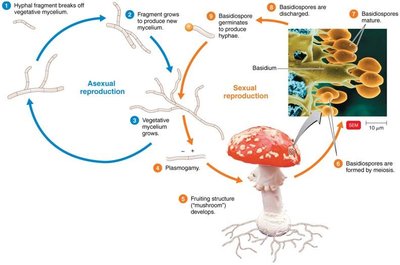
Asexual spores are produced by mitosis and are genetically identical to the parent. Main types include:
Conidiospore: Not enclosed in a sac
Arthroconidia: Formed by fragmentation of septate hyphae
Blastoconidia: Buds of the parent cell
Chlamydoconidium: Thick-walled spore within a hyphal segment
Sporangiospore: Enclosed in a sac (sporangium)
Sexual Reproduction
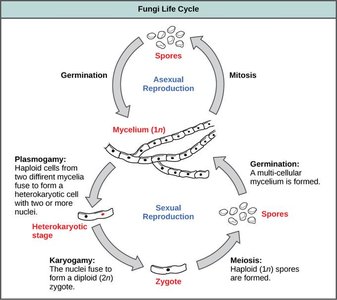
Sexual reproduction involves the fusion of nuclei from two opposite mating types, resulting in genetic recombination. The process includes:
Plasmogamy: Fusion of cytoplasm from two parent mycelia
Karyogamy: Fusion of nuclei to form a diploid zygote
Meiosis: Production of haploid sexual spores
Classification of Fungi
Major Fungal Phyla
Zygomycota (Conjugation Fungi): Coenocytic hyphae; asexual spores (sporangiospores); sexual spores (zygospores)
Ascomycota (Sac Fungi): Septate hyphae; asexual spores (conidiospores); sexual spores (ascospores in an ascus)
Basidiomycota (Club Fungi): Septate hyphae; asexual spores (conidiospores); sexual spores (basidiospores on a basidium)
Microsporidia: Obligate intracellular parasites; lack mitochondria; asexual reproduction observed
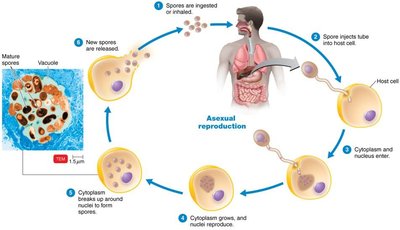
Fungal Diseases (Mycoses)
Types of Mycoses
Systemic mycoses: Deep within the body, often from soil fungi
Subcutaneous mycoses: Beneath the skin, usually from soil fungi
Cutaneous mycoses: Affect hair, skin, and nails (dermatophytes)
Superficial mycoses: Localized, e.g., hair shafts
Opportunistic mycoses: Normally harmless fungi become pathogenic in immunocompromised hosts
Economic Importance of Fungi
Saccharomyces cerevisiae: Used in bread, wine, and vaccine production
Trichoderma: Produces cellulase for fruit juice clarification
Taxomyces: Source of taxol, a cancer drug
Entomophaga: Biocontrol agent against insect pests
Lichens
Characteristics and Structure
Lichens are mutualistic associations between a fungus and a green alga or cyanobacterium. They are important pioneers in ecological succession and environmental indicators.
Thallus: Main body, composed of medulla (hyphae around algal cells), cortex (protective layer), and rhizines (holdfasts)
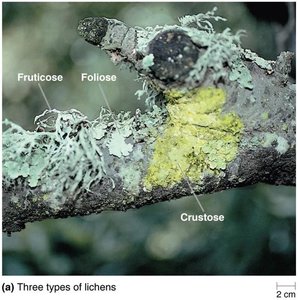
Three morphologies: Crustose (encrusted), foliose (leaflike), fruticose (fingerlike)
Nutrition: Alga provides carbohydrates via photosynthesis; fungus provides structure and protection
Algae
General Features
Algae are a diverse group of mostly aquatic, photosynthetic eukaryotes. They are not plants and lack true roots, stems, and leaves.
Cell Arrangement: Unicellular, colonial, or multicellular
Cell Wall: Usually cellulose
Photosynthetic Pigments: Chlorophylls and accessory pigments
Reproduction: Asexual (fragmentation, mitosis); sexual (alternation of generations in some)
Major Groups of Algae
Group | Cell Wall | Pigments | Storage | Pathogenicity |
|---|---|---|---|---|
Brown Algae (Phaeophyta) | Cellulose, alginic acid | Chlorophyll a, c, xanthophylls | Carbohydrate | None |
Diatoms (Bacillariophyta) | Pectin, silica | Chlorophyll a, c, carotene | Oil | Toxins |
Dinoflagellates | Cellulose | Chlorophyll a, c, carotene | Starch | Toxins |
Red Algae (Rhodophyta) | Cellulose | Chlorophyll a, d, phycobiliproteins | Glucose polymer | Some toxins |
Green Algae (Chlorophyta) | Cellulose | Chlorophyll a, b | Starch | None |
Roles of Algae in Nature
Primary producers: Fix CO2 into organic molecules
Oxygen production: Responsible for ~80% of Earth's oxygen
Algal blooms: Can produce toxins or deplete oxygen, affecting aquatic life
Symbiosis: Some algae live in mutualistic relationships with animals
Protozoa
General Characteristics
Protozoa are unicellular, eukaryotic organisms found in water and soil. They exhibit animal-like nutrition and complex life cycles, often involving multiple hosts.
Movement: By pseudopods, flagella, or cilia
Reproduction: Asexual (fission, budding); sexual (conjugation in ciliates)
Examples of Protozoa
Amebae: Move by pseudopods (e.g., Entamoeba histolytica causes amebic dysentery)
Plasmodium: Causes malaria, transmitted by mosquitoes
Helminths
General Features
Helminths are multicellular parasitic worms, classified into two main phyla:
Platyhelminthes: Flatworms (e.g., flukes, tapeworms)
Nematoda: Roundworms
They are specialized for parasitism, often with reduced digestive and nervous systems and complex reproductive cycles.
Life Cycles
Dioecious: Separate male and female individuals
Monoecious (hermaphroditic): Both reproductive organs in one individual
Arthropods as Vectors
Definition and Importance
Arthropods are animals with segmented bodies, exoskeletons, and jointed legs. Some act as vectors, transmitting pathogenic microorganisms to humans and animals.
Mechanical transmission: Pathogen is carried on the body surface
Biological transmission: Pathogen multiplies within the vector
Representative classes include Arachnida (ticks, mites), Crustacea (crabs, crayfish), and Insecta (mosquitoes, flies, lice).
Examples of Arthropod Vectors and Diseases
Vector | Disease |
|---|---|
Dermacentor (tick) | Rocky Mountain spotted fever |
Ixodes (tick) | Lyme disease, babesiosis, ehrlichiosis |
Aedes (mosquito) | Dengue, Zika virus disease, heartworm |
Anopheles (mosquito) | Malaria |
Glossina (tsetse fly) | African trypanosomiasis |
