 Back
BackThe Eukaryotes: Protozoa, Helminths, and Fungi – Comprehensive Study Notes
Study Guide - Smart Notes
 Tailored notes based on your materials, expanded with key definitions, examples, and context.
The Eukaryotes: Protozoa, Helminths, and Fungi
Protozoa
Protozoa are unicellular eukaryotic organisms that inhabit water and soil. They exhibit animal-like nutrition and have complex life cycles, often involving both asexual and sexual reproduction. Some protozoa can form cysts to survive adverse conditions.
Defining Characteristics: Unicellular, eukaryotic, require water, animal-like nutrition, complex life cycles.
Reproduction: Asexual (fission, budding, schizogony); Sexual (conjugation).
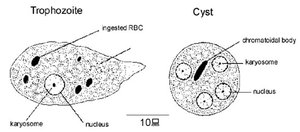
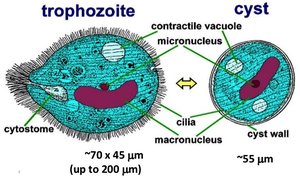
Feeding and Growth: The active, feeding stage is called a trophozoite. Some produce a protective cyst stage.
Specialized Structures: Ciliates use cilia to direct food into a cytostome; amoebae use pseudopods for phagocytosis; food is digested in vacuoles and wastes are expelled through an anal pore.
Medically Important Protozoa
Excavata
Diplomonads: Lack mitochondria, have multiple flagella.
Parabasalids: Possess an undulating membrane, lack a cyst stage.
Euglenozoa: Can be photoautotrophs or facultative chemotrophs; hemoflagellates are transmitted by blood-feeding insects.
Amoebae
Move by extending pseudopods.
Entamoeba histolytica: Causes amebic dysentery.
Naegleria fowleri: Causes fatal meningoencephalitis.
Acanthamoeba: Infects corneas, causing blindness.
Balamuthia: Causes granulomatous amebic encephalitis.
Apicomplexa
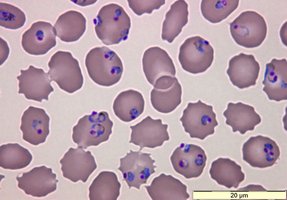
Nonmotile, obligate intracellular parasites with complex life cycles.
Toxoplasma gondii: Transmitted by cats, can cause fetal infections.
Cryptosporidium: Waterborne, causes gastrointestinal illness.
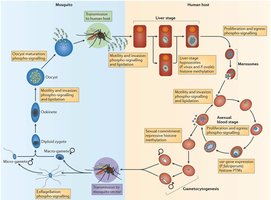
Plasmodium: Causes malaria; sexual reproduction occurs in the Anopheles mosquito, asexual reproduction in humans.
Ciliates
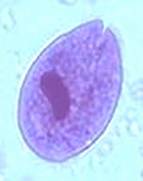
Move by cilia arranged in rows.
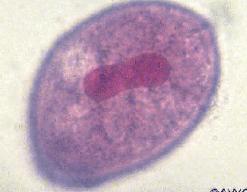
Balantidium coli: Only ciliate known to infect humans, causes dysentery.
Slime Molds
Slime molds are eukaryotic organisms with characteristics of both fungi and protozoa. They are classified as protozoa due to their amoeboid stage.
Cellular Slime Molds: Have an amoeba stage, ingest bacteria and fungi, aggregate to form stalks and spores.
Plasmodial Slime Molds: Large, multinucleate masses that move via cytoplasmic streaming to distribute nutrients and oxygen.
Helminths
Helminths are multicellular, eukaryotic parasitic worms. They are specialized to live in hosts and often have complex life cycles involving multiple hosts and developmental stages.
Phyla: Platyhelminthes (flatworms) and Nematoda (roundworms).
Adaptations: May lack digestive systems, have reduced nervous and locomotor systems, and complex reproductive systems.
Life Cycle: May be dioecious (separate sexes) or monoecious (hermaphroditic). Life stages include egg, larva(e), and adult.
Platyhelminthes
Trematodes (Flukes): Flat, leaf-shaped, have suckers, absorb food through a cuticle. Examples: Paragonimus (lung fluke), Schistosoma (blood fluke).
Cestodes (Tapeworms): Have a scolex (head) with suckers, absorb food through a cuticle, body composed of proglottids (segments with reproductive organs). Examples: Taenia solium (pork tapeworm), Echinococcus granulosus (hydatid disease).
Nematodes (Roundworms)
Cylindrical, complete digestive system, dioecious.
Eggs or larvae may be infective for humans.
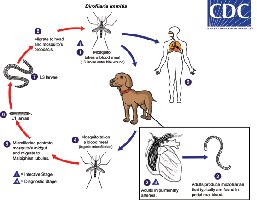
Examples: Ascaris lumbricoides (intestinal roundworm), Trichuris trichiura (whipworm), Enterobius vermicularis (pinworm), Necator americanus and Ancylostoma duodenale (hookworms), Dirofilaria immitis (heartworm in dogs, transmitted by mosquitoes).
Arthropods as Vectors
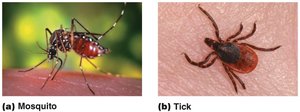
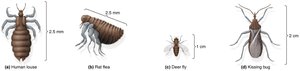
Arthropods are animals with segmented bodies, exoskeletons, and jointed legs. Some act as vectors, transmitting pathogenic microorganisms.
Vector Types: Mechanical (carry pathogens on body), Biological (pathogen multiplies in vector), Definitive host (sexual reproduction of microbe occurs in vector).
Representative Classes: Arachnida (e.g., ticks, 8 legs), Insecta (e.g., mosquitoes, 6 legs).
Fungi
Fungi are eukaryotic, chemoheterotrophic organisms that decompose organic matter. They can be unicellular (yeasts) or multicellular (molds, fleshy fungi) and reproduce by spores.
Nutrition: Heterotrophic, saprobic (decompose dead matter), some are parasitic but not obligate.
Structure: Molds have hyphae (filaments) forming a mycelium; hyphae may be septate or coenocytic. Yeasts are unicellular, reproduce by budding or fission. Dimorphic fungi can switch between yeast and mold forms depending on temperature.
Fungal Reproduction
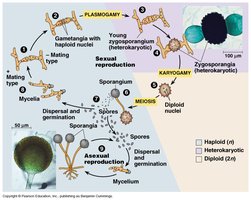
Asexual Spores: Produced by mitosis; types include conidiospores, arthroconidia, blastoconidia, chlamydoconidia, and sporangiospores.
Sexual Spores: Involve plasmogamy (fusion of cytoplasm), karyogamy (fusion of nuclei), and meiosis (formation of haploid spores).
Nutritional Adaptations
Grow well at acidic pH (around 5).
Resistant to high sugar/salt concentrations and low moisture.
Can metabolize complex carbohydrates.
Medically Important Fungi
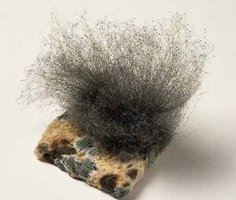
Zygomycota: Coenocytic hyphae; asexual spores are sporangiospores, sexual spores are zygospores.
Ascomycota: Sac fungi with septate hyphae; asexual spores are conidiospores, sexual spores are ascospores formed in an ascus.
Basidiomycota: Club fungi with septate hyphae; asexual spores are conidiospores, sexual spores are basidiospores formed on a basidium.
Fungal Diseases (Mycoses)
Systemic mycoses: Deep within the body.
Subcutaneous mycoses: Beneath the skin.
Cutaneous mycoses: Affect hair, skin, and nails.
Superficial mycoses: Localized, e.g., on hair shafts.
Opportunistic mycoses: Harmless in healthy hosts but pathogenic in immunocompromised individuals.
Economic Effects of Fungi
Saccharomyces cerevisiae: Used in bread, wine, and vaccine production.
Trichoderma: Produces cellulase for industrial use.
Taxomyces: Source of Taxol®️, a cancer drug.
Entomophaga: Used in biocontrol of insect pests.
Fungi are sources of important antibiotics, including penicillins and cephalosporins.
