 Back
BackThe Microbial World and You: Foundations of Microbiology
Study Guide - Smart Notes
 Tailored notes based on your materials, expanded with key definitions, examples, and context.
The Microbial World and You
Introduction to Microorganisms
Microorganisms, or microbes, are organisms too small to be seen with the unaided eye. They play essential roles in ecosystems, industry, and human health. While only a few are pathogenic, most microbes are beneficial, contributing to nutrient cycling, food production, and biotechnology.
Microorganisms: Include bacteria, archaea, fungi, protozoa, algae, viruses, and multicellular animal parasites.
Germ: Refers to a rapidly growing cell, often associated with disease but not always pathogenic.
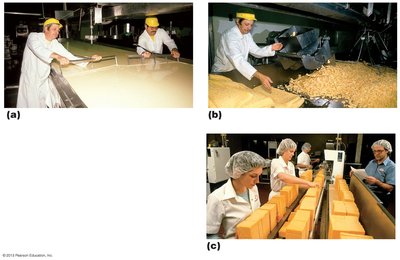
Applications: Microbes decompose organic waste, produce industrial chemicals (e.g., ethanol, acetone), fermented foods (e.g., cheese, bread), and products for manufacturing and medicine (e.g., insulin).
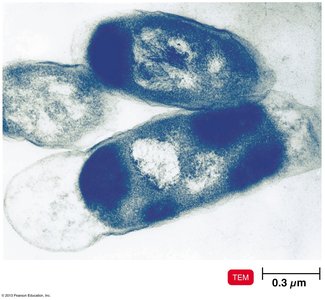
Example: Escherichia coli bacteria can be genetically engineered to produce indigo dye from tryptophan, demonstrating the industrial application of microbes.
Importance of Microbiology
Understanding microbes helps prevent food spoilage and disease.
Development of aseptic techniques in medicine and laboratories to prevent contamination.
Naming and Classifying Microorganisms
Scientific Nomenclature
The system of scientific nomenclature was established by Linnaeus. Each organism is given a two-part name: the genus and the specific epithet.
Genus: Capitalized and italicized (or underlined).
Specific epithet: Lowercase and italicized (or underlined).
Names are Latinized and used worldwide; may be descriptive or honor a scientist.
After first use, names may be abbreviated (e.g., E. coli for Escherichia coli).
Examples:
Escherichia coli: Honors Theodor Escherich; found in the colon.
Staphylococcus aureus: Describes clustered, spherical cells with gold-colored colonies.
Types of Microorganisms
Bacteria
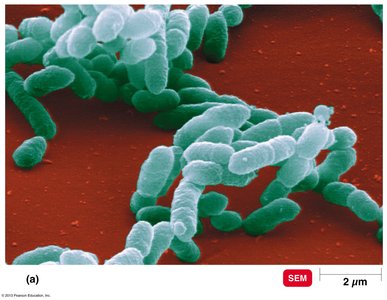
Bacteria are prokaryotic organisms characterized by the absence of a nucleus and the presence of peptidoglycan in their cell walls. They reproduce by binary fission and can utilize a variety of energy sources.
Prokaryotes: No nucleus or membrane-bound organelles.
Cell wall: Contains peptidoglycan.
Reproduction: Binary fission.
Energy sources: Organic chemicals, inorganic chemicals, or photosynthesis.
Archaea
Archaea are prokaryotic but lack peptidoglycan in their cell walls. They often inhabit extreme environments.
Types: Methanogens, extreme halophiles, extreme thermophiles.
Fungi
Fungi are eukaryotic organisms with chitin cell walls. They obtain energy by absorbing organic chemicals. Molds and mushrooms are multicellular, while yeasts are unicellular.
Cell wall: Chitin.
Structure: Mycelia composed of hyphae (in molds and mushrooms).
Protozoa
Protozoa are eukaryotic, unicellular organisms that absorb or ingest organic chemicals. They may be motile via pseudopods, cilia, or flagella.
Algae
Algae are eukaryotic organisms with cellulose cell walls. They use photosynthesis for energy and produce oxygen and organic compounds.
Viruses
Viruses are acellular entities consisting of a DNA or RNA core surrounded by a protein coat, sometimes enclosed in a lipid envelope. They replicate only within living host cells.
Multicellular Animal Parasites
These include eukaryotic multicellular animals such as helminths (parasitic flatworms and roundworms). They have microscopic stages in their life cycles.
Classification of Microorganisms
The Three-Domain System
Microorganisms are classified into three domains based on cellular organization:
Bacteria
Archaea
Eukarya: Includes protists, fungi, plants, and animals.
A Brief History of Microbiology
Early Observations and Cell Theory
1665: Robert Hooke observed cells in cork.
1673–1723: Anton van Leeuwenhoek described live microorganisms.
1858: Rudolf Virchow proposed that cells arise from preexisting cells (cell theory).
Spontaneous Generation vs. Biogenesis
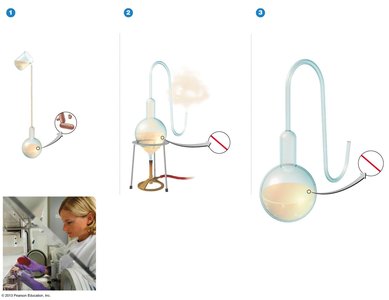
The debate over the origin of life centered on spontaneous generation (life from nonliving matter) versus biogenesis (life from preexisting life).
1668: Francesco Redi's experiments with meat and maggots supported biogenesis.
1745: John Needham's experiments seemed to support spontaneous generation.
1765: Lazzaro Spallanzani improved experimental design, supporting biogenesis.
1861: Louis Pasteur's swan-neck flask experiment definitively disproved spontaneous generation.
The Golden Age of Microbiology
Major Discoveries
Relationship between microbes and disease, immunity, and antimicrobial drugs established.
Development of fermentation and pasteurization processes by Pasteur.
Germ theory of disease: Microorganisms cause specific diseases.
Koch's postulates: Experimental steps to prove a specific microbe causes a specific disease.
Vaccination and Chemotherapy
1796: Edward Jenner developed the first vaccine (smallpox).
Modern chemotherapy: Use of chemicals to treat disease (e.g., antibiotics, synthetic drugs).
1928: Alexander Fleming discovered penicillin.
Modern Developments in Microbiology
Subfields of Microbiology
Bacteriology: Study of bacteria
Mycology: Study of fungi
Virology: Study of viruses
Parasitology: Study of protozoa and parasitic worms
Immunology: Study of immunity
Recombinant DNA Technology
Microbial genetics: Study of inheritance in microbes.
Molecular biology: Study of how DNA directs protein synthesis.
Genomics: Study of an organism’s genes.
Recombinant DNA: DNA from two different sources combined.
Microbes and Human Welfare
Microbial Ecology and Bioremediation
Bacteria recycle essential elements (carbon, nitrogen, sulfur, phosphorus).
Bioremediation: Use of microbes to degrade pollutants and waste.
Biological Insecticides and Biotechnology
Microbes as alternatives to chemical pesticides (e.g., Bacillus thuringiensis).
Biotechnology: Use of microbes to produce foods and chemicals.
Recombinant DNA technology enables production of proteins, vaccines, and enzymes.
Microbes and Human Disease
Normal Microbiota
Normal microbiota are microbes normally present in and on the human body. They prevent the growth of pathogens and produce essential growth factors (e.g., folic acid, vitamin K).
Resistance: The body’s ability to ward off disease, involving skin, stomach acid, and antimicrobial chemicals.
Biofilms
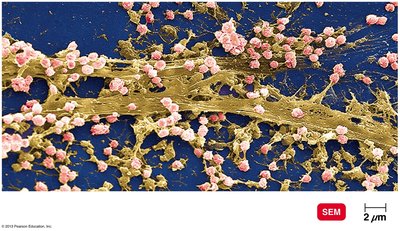
Biofilms are communities of microbes that attach to solid surfaces and grow into masses. They can form on rocks, pipes, teeth, and medical implants, often complicating infection control.
Infectious Diseases and Emerging Infectious Diseases (EIDs)
Disease results when a pathogen overcomes host resistance.
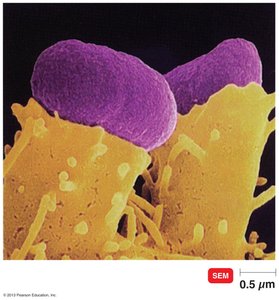
EIDs are new or increasing in incidence (e.g., Avian Influenza A, MRSA, West Nile Encephalitis, E. coli O157:H7, AIDS).
Additional info: This guide covers foundational concepts from "The Microbial World and You," including microbial diversity, history, applications, and their impact on human health and society.
