 Back
Back1 The Microbial World and You: Foundations of Microbiology
Study Guide - Smart Notes
 Tailored notes based on your materials, expanded with key definitions, examples, and context.
Chp 1. The Microbial World and You
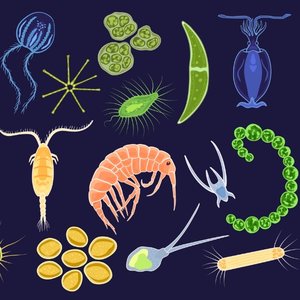
Roles and Applications of Microbes
Microorganisms are essential to life on Earth, playing critical roles in ecological, industrial, and health-related processes. They are found in diverse environments and contribute to the cycling of nutrients, food production, and biotechnology.
Ecological Roles: Marine and freshwater microbes form the base of aquatic food chains, while soil microbes recycle chemical elements and fix nitrogen.
Photosynthesis: Certain microbes generate food and oxygen, supporting life on Earth.
Commercial Applications: Microbes are used in the synthesis of drugs and in the food industry to produce cheese, yogurt, and bread.


The Human Microbiome
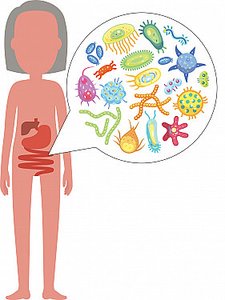
The human microbiome (or microbiota) consists of all the microbes that live stably in or on the human body. These microbes are crucial for maintaining health by aiding digestion, preventing pathogenic microbe growth, and training the immune system.
An adult human contains about 30 trillion body cells and harbors about 40 trillion bacterial cells.
Microbiota can be normal (permanent residents) or transient (temporary residents).
Factors such as temperature, pH, and chemical presence influence microbial colonization.
The Human Microbiome Project (2007) aimed to characterize typical microbiota and their relationship to health and disease.
Naming and Classifying Microbes
Binomial Nomenclature
Nomenclature is the system of naming organisms, established by Carolus Linnaeus in 1735. Scientific names are Latinized and consist of two parts: the genus (capitalized) and the species epithet (not capitalized). For example, Yersinia pestis is the bacterium that causes bubonic plague.
Names may describe the organism, honor a researcher, or indicate habitat.
Microorganism | Source of Genus Name | Source of Species Name |
|---|---|---|
Salmonella enterica | Honors Daniel Salmon | Found in intestines (entero-) |
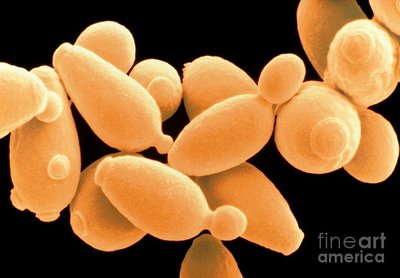
Saccharomyces cerevisiae | Fungus that uses sugar (saccharo-) | Makes beer (cerevisiae) |
Trypanosoma cruzi | Corkscrew-shaped (trypano-) | Honors Oswaldo Cruz |
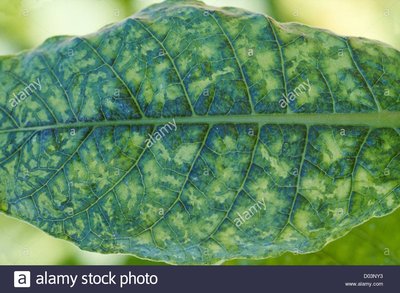
Tobacco mosaic virus | First plant virus found | Describes symptoms/type |
Types of Microorganisms
Overview of Microbial Diversity
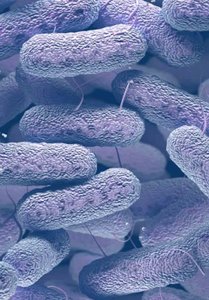
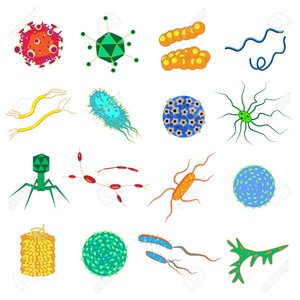
Understanding the different types of microorganisms is essential in healthcare and environmental science. The main groups include bacteria, archaea, fungi, protozoa, algae, viruses, and multicellular animal parasites.
Bacteria
Archaea
Fungi
Protozoa
Algae
Viruses
Multicellular animal parasites
Prokaryotes vs. Eukaryotes
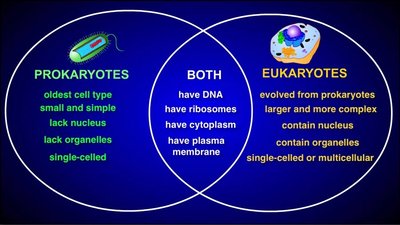
Microorganisms are classified based on cellular organization into prokaryotes and eukaryotes.
Prokaryotes: Lack a nucleus and membrane-bound organelles; include bacteria and archaea.
Eukaryotes: Have a nucleus and organelles; include fungi, protozoa, algae, and multicellular parasites.
Bacteria
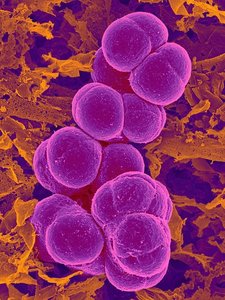
Bacteria are unicellular prokaryotes with diverse shapes and metabolic capabilities. Their cell walls contain peptidoglycan, and they reproduce by binary fission. Many bacteria are motile via flagella.
Nutrition: Use organic chemicals, inorganic substances, or photosynthesis.
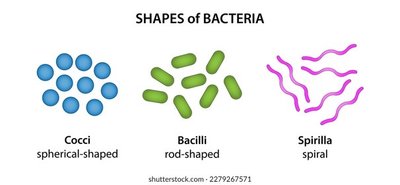
Shapes: Cocci (spherical), bacilli (rod-shaped), spirilla (spiral).
Archaea
Archaea are prokaryotic cells that often inhabit extreme environments. Their cell walls lack peptidoglycan. Major groups include methanogens, extreme halophiles, and extreme thermophiles. Archaea are not known to cause human diseases.

Fungi
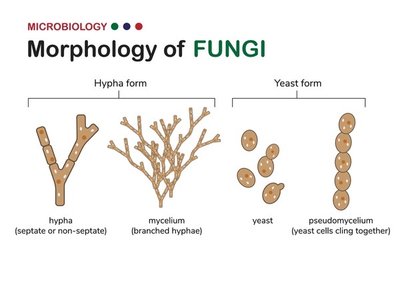
Fungi are eukaryotic organisms that can be unicellular (yeasts) or multicellular (molds, mushrooms). Their cell walls are primarily composed of chitin. Fungi obtain nutrients by absorbing organic material from their environment.
Protozoa
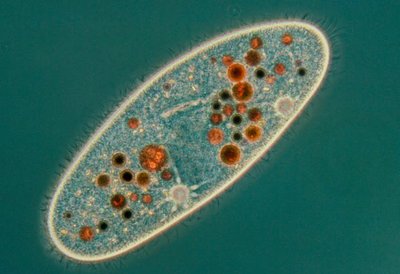
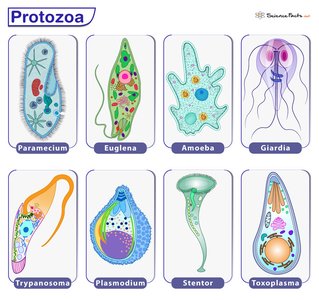
Protozoa are unicellular eukaryotes that move by pseudopods, flagella, or cilia. They may live freely or as parasites, and can reproduce sexually or asexually. Some protozoa are photosynthetic.
Algae
Algae are photosynthetic eukaryotes, mostly unicellular, with cell walls made of cellulose. They are abundant in aquatic environments and produce oxygen and carbohydrates through photosynthesis.
Viruses
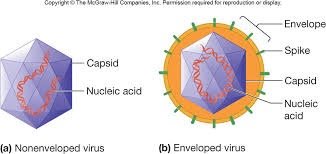
Viruses are acellular entities, visible only with electron microscopes. They consist of a nucleic acid core (DNA or RNA) surrounded by a protein coat (capsid), and sometimes a lipid envelope. Viruses replicate only inside host cells.
Multicellular Animal Parasites
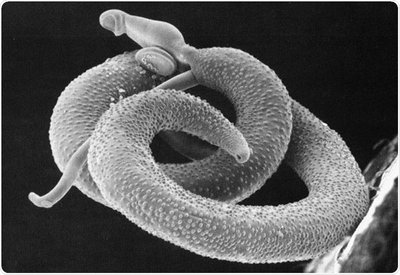
These include parasitic worms (helminths) such as flatworms and roundworms. Although not strictly microorganisms, some life stages are microscopic and of medical importance.
Classification of Microorganisms
The Three Domains of Life
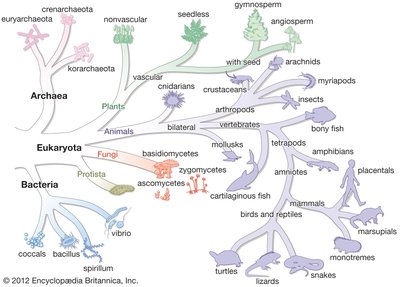
In 1978, Carl Woese proposed a classification system based on cellular organization, dividing life into three domains: Bacteria, Archaea, and Eukarya.
Foundations of Microbiology
Hooke and The Cell Theory
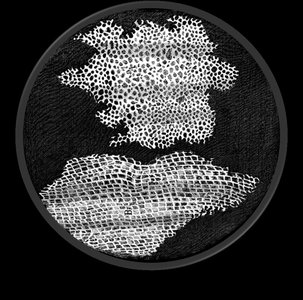
Robert Hooke's observation of cells in cork (1665) led to the development of the Cell Theory, which states that all living things are composed of cells.
Leeuwenhoek and The Animalcules
Anton van Leeuwenhoek was the first to observe live microorganisms, which he called "animalcules," using handcrafted microscopes.
Spontaneous Generation vs. Biogenesis
Spontaneous generation was the belief that life could arise from nonliving matter. Experiments by Redi, Needham, Spallanzani, and Pasteur ultimately disproved this, leading to the acceptance of biogenesis—the idea that living cells arise only from preexisting cells.
Aseptic Techniques
Pasteur's work demonstrated that microbial contamination could be prevented by heat and exclusion of airborne microbes, forming the basis of aseptic techniques in laboratories and medicine.
The Golden Ages of Microbiology
The First Golden Age (1857–1914)
This period saw major discoveries in microbial metabolism, microscopy, culturing, vaccines, and surgical techniques. The germ theory of disease emerged, linking microbes to disease.
Fermentation and Pasteurization
Pasteur discovered that yeasts ferment sugars to alcohol, while bacteria can spoil alcohol by converting it to vinegar. Pasteurization involves heating to kill spoilage microbes.
The Germ Theory of Disease
The realization that microbes cause fermentation led to the hypothesis that they might also cause disease. Joseph Lister applied this theory to surgery, reducing infections by using phenol as a disinfectant.
Koch’s Postulates
Robert Koch established a series of experimental steps (Koch’s postulates) to directly link specific microbes to specific diseases, using Bacillus anthracis as a model.
Vaccination and Immunity
Edward Jenner developed the first vaccine (against smallpox) using material from cowpox lesions. Pasteur later coined the term "vaccine" and demonstrated that avirulent microbes could induce immunity.
The Second Golden Age: Chemotherapy and Antibiotics
After linking microbes to disease, scientists searched for chemicals to destroy pathogens without harming the host. Paul Ehrlich developed the first synthetic drug (salvarsan) for syphilis, and Alexander Fleming discovered penicillin, the first antibiotic.
Modern Microbiology and Molecular Genetics
New Scientific Disciplines
Bacteriology: Study of bacteria
Mycology: Study of fungi
Parasitology: Study of protozoa and parasitic worms
Immunology: Study of immunity
Virology: Study of viruses
Molecular Genetics and Genomics
Key discoveries include the identification of DNA as hereditary material, the structure of DNA, and the genetic code. Molecular biology studies how genetic information is carried and expressed, while genomics analyzes all genes in an organism.
Recombinant DNA Technology
Recombinant DNA (rDNA) technology allows genes from one organism to be inserted into another, enabling the production of medically important proteins and genetically modified organisms.
Microbes and Human Welfare
Beneficial Roles of Microbes
Recycle vital elements (carbon, nitrogen)
Bioremediation: Remove toxins from the environment
Biological control: Use of microbes to control pests
Biotechnology: Industrial and medical applications, including gene therapy
Microbes and Human Disease
Infectious Diseases and Immunity
The balance between host defenses and microbial pathogenicity determines health or disease. Resistance is provided by physical barriers, immune responses, and antimicrobial chemicals.
Emerging Infectious Diseases (EIDs): New or changing diseases increasing in incidence, such as Zika virus disease and Middle East Respiratory Syndrome (MERS).
